

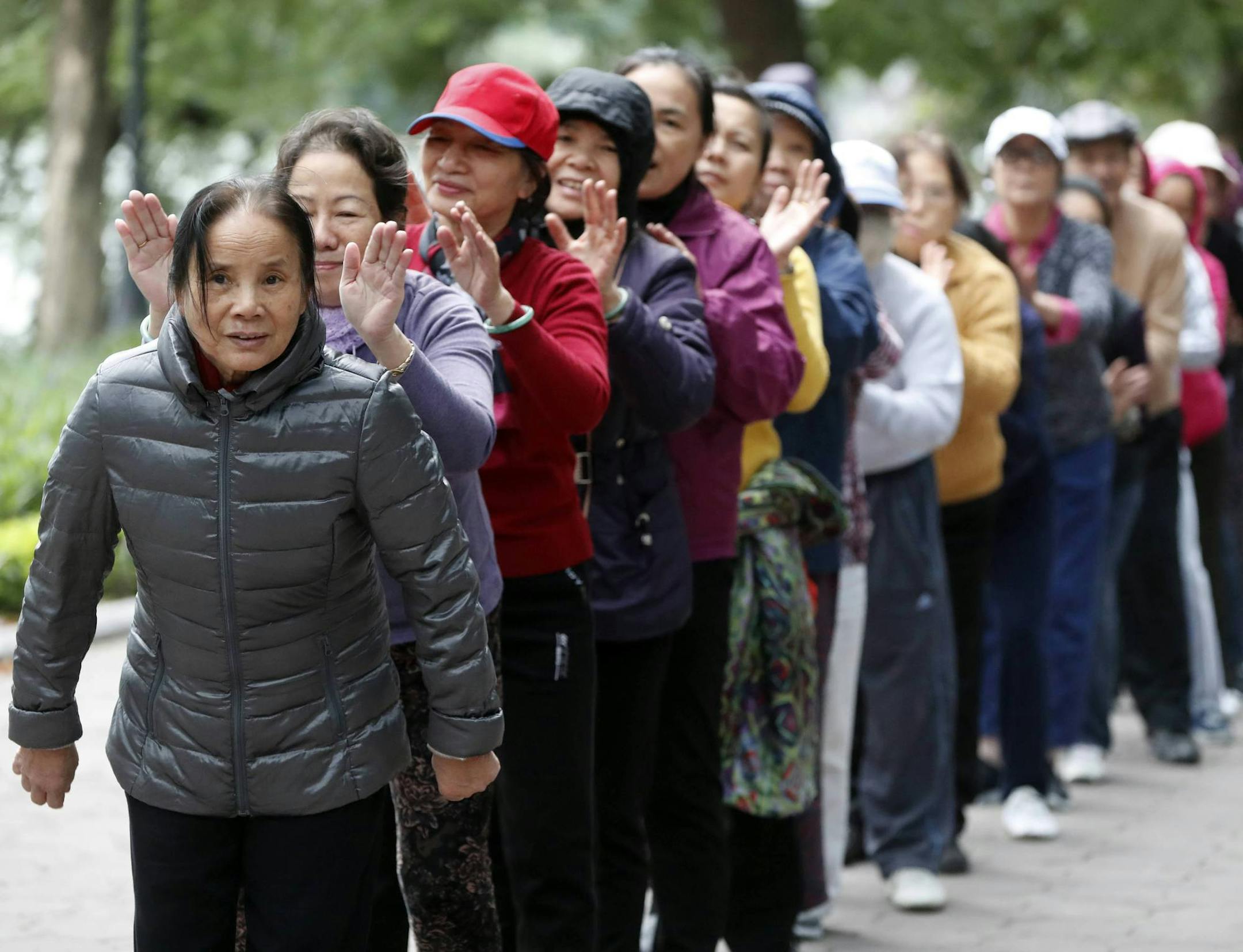
As dawn breaks in Hanoi the botanical gardens start to fill up. Hundreds of old people come every morning to exercise before the tropical heat makes sport unbearable. Groups of fitness enthusiasts proliferate. Elderly ladies in floral silks do tai chi in a courtyard.
In the shade of a tall tree, dozens of ballroom dancers sway to samba music. Others work up a sweat on an outdoor exercise machine. Tho, an 83-year-old with a neat white mustache, said he comes to walk round the lake every day, rain or shine.
In the next few decades the gardens will become busier still. Vietnam has a median age of only 26. But it is graying fast.
Over-60s make up 12 percent of the population, a share that is forecast to jump to 21 percent by 2040, one of the quickest increases in the world. That is partly because life expectancy has increased from 60 years in 1970 to 76 today, thanks to rising incomes.
Growing prosperity has also helped bring down the fertility rate in the same period from about seven children per woman to fewer than two.
In the 1980s the ruling Communist Party started to enforce a one-child policy. Though less strict than China's, it has hastened the decline.
Demography is changing in similar ways in many Asian countries. But in Vietnam it is happening while the country is still poor.
When the share of the population of working age climbed to its highest in South Korea and Japan, annual GDP per person (in real terms, adjusted for purchasing power) stood at $32,585 and $31,718 respectively. Even China managed to reach $9,526.


