Vets-only camp: War and peace

Veterans can get much-needed quiet time at a Washington County vets-only camp, which has expanded to cater to a new wave of returning troops.

July 16, 2008 at 1:02AM
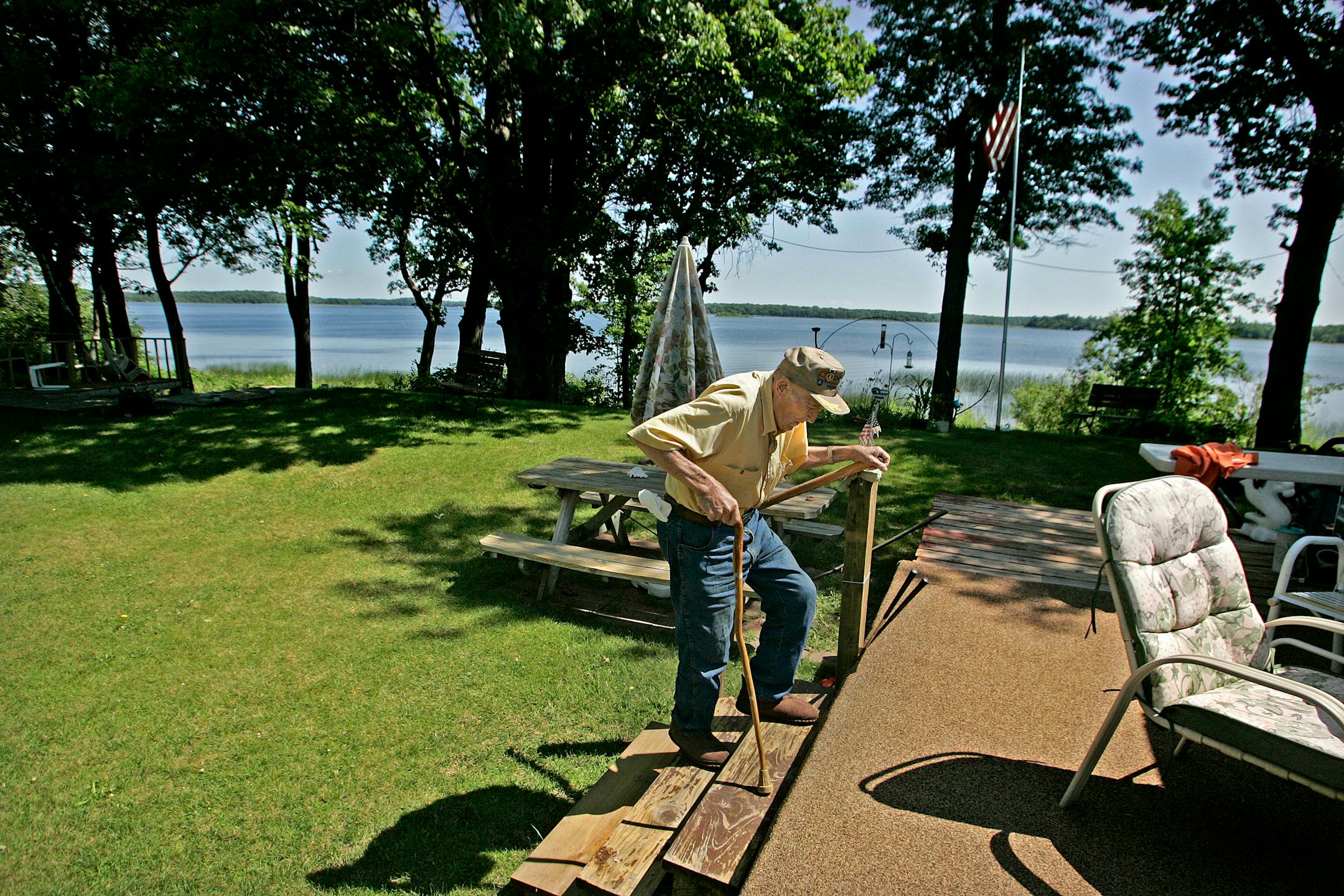
Ray Ellis, 85, made his way up the stairs to his camping trailer at the Disabled Veterans Rest Camp in northern Washington County. Ellis, a six-time purple heart recipient, is one of three World War II veterans who vacation regularly at the camp, which gives veterans a way to recuperate from the stress of war.
Ray Ellis, 85, made his way up the stairs to his camping trailer at the Disabled Veterans Rest Camp in northern Washington County. Ellis, a six-time purple heart recipient, is one of three World War II veterans who vacation regularly at the camp, which gives veterans a way to recuperate from the stress of war. (Star Tribune/The Minnesota Star Tribune)

Veteran Don Drigans knows not all battle scars are visible.

And some take a little peace and quiet to heal. "When they say the war is over, it's not over. Not for these people," Drigans said of the many military veterans he's seen who suffer from post-traumatic stress disorder.

Enter the Disabled Veterans Rest Camp, a 69-acre wooded campground in northern Washington County exclusively for veterans and their families.

One of only two veterans recreation camps in Minnesota, the Disabled Veterans Rest Camp is now expanding to reach out to more vets -- especially the newest ones returning from Iraq and Afghanistan.

Last summer, nearly 3,000 troops from the Minnesota National Guard came home after serving in Iraq. Each received a brochure about the camp and a coupon, said Drigans, a member of the camp's board of directors. The board doesn't keep numbers on how many vets from Iraq and Afghanistan have visited the camp, but Drigans said he's noticed more young children there this summer -- an indication, perhaps, that younger vets are there.

"For a long time it was the best-kept secret in the world," he said. "We're trying to get the word out. We don't want it to be the best-kept secret anymore."

The camp, established in 1926, started out as a dormitory attached to a farmhouse. For $1.25 a day, veterans could stay there and receive three meals a day and medical care from staff nurses. They came to rest their weary minds and bodies and to reflect against the backdrop of Big Marine Lake.

"Shell shock" was the term used during World War I to describe symptoms experienced by soldiers including flashbacks of traumatic experiences, feeling emotionally detached and hyper-alert to danger.
"Battle fatigue" became the name associated with the same ailment that plagued World War II veterans.

Today, it's known as "post-traumatic stress disorder," or PTSD.

"It's the same affliction and we're doing the same thing," Drigans said of the camp's therapeutic value for today's veterans. "Our motto is 'veterans helping veterans.' The camaraderie and peace of mind you get up here is hard to explain."

The expansion began after organizers successfully lobbied the Legislature to pass a law in 2005 protecting the Disabled Veterans Rest Camp from being absorbed into the surrounding Big Marine Park.

At the time, camp organizers feared that Washington County officials might try to acquire their land through eminent domain.

The law in 2005 not only protected the camp -- it also gave organizers the freedom to expand.

A look around the campgrounds reveals the progress made so far:

• A new, open-air pavilion.

• Foundations for two of the several new duplex cabins that will be built.

• 45 new RV sites.

• 4,700 feet of walking trail leading into a pristine wooded area.

• 32 new boat slips and a kids' swimming beach.

Drigans said the improvements are the result of donated labor from volunteers -- both veterans and non-veterans. One of the campers, Ricky DeRose, has been coming to the Vets Camp since 1998. He is an Army veteran who served in Panama and the Persian Gulf region.

Initially, they chose the Disabled Veterans Rest Camp because it was vets-oriented, near their New Brighton home at the time and less expensive than other resorts, he said.

They liked it so much that they chose to live at the campground from May through September, when it's open, and then head to Arizona for the winter. Recently, they moved from their old RV site in the vets camp to one of the new sites created with the expansion.

DeRose said he prefers to live at the camp because he enjoys being around other veterans. "You can trust them," he said. "Everyone's accepted here and there's respect here. It's like a piece of heaven."

Allie Shah • 651-298-1550.

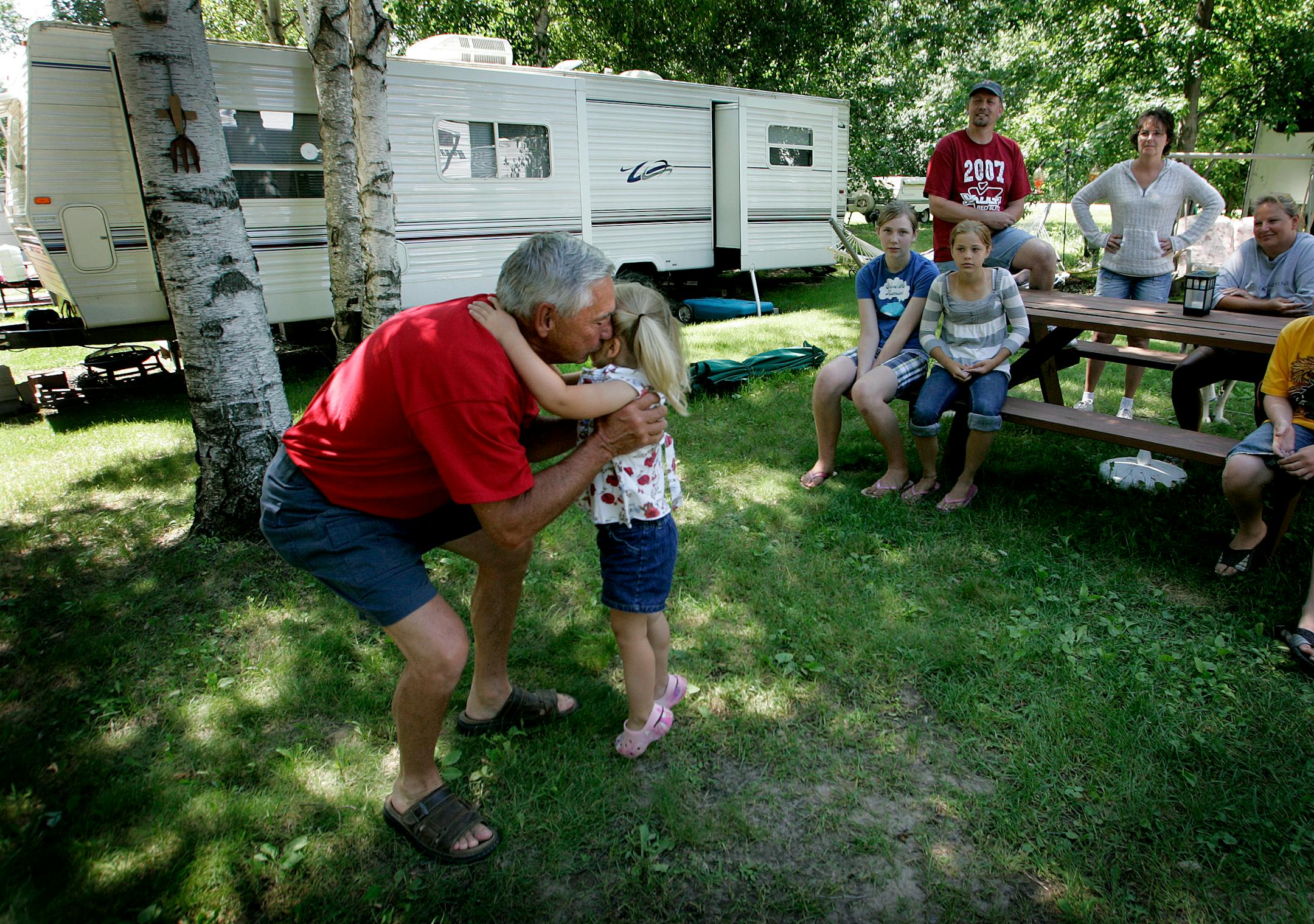
Chuck Cronquist, a Vietnam veteran and organizer of the camp, hugged his granddaughter Jennifer Sievers, 3, near his family's camper. "We know how to take care of people with a lot of problems because we came from the same place," he said. "We're all related because we were all in the service."
Chuck Cronquist, a Vietnam veteran and organizer of the camp, hugged his granddaughter Jennifer Sievers, 3, near his family’s camper. “We know how to take care of people with a lot of problems because we came from the same place,” he said. “We’re all related because we were all in the service.” (Star Tribune/The Minnesota Star Tribune)
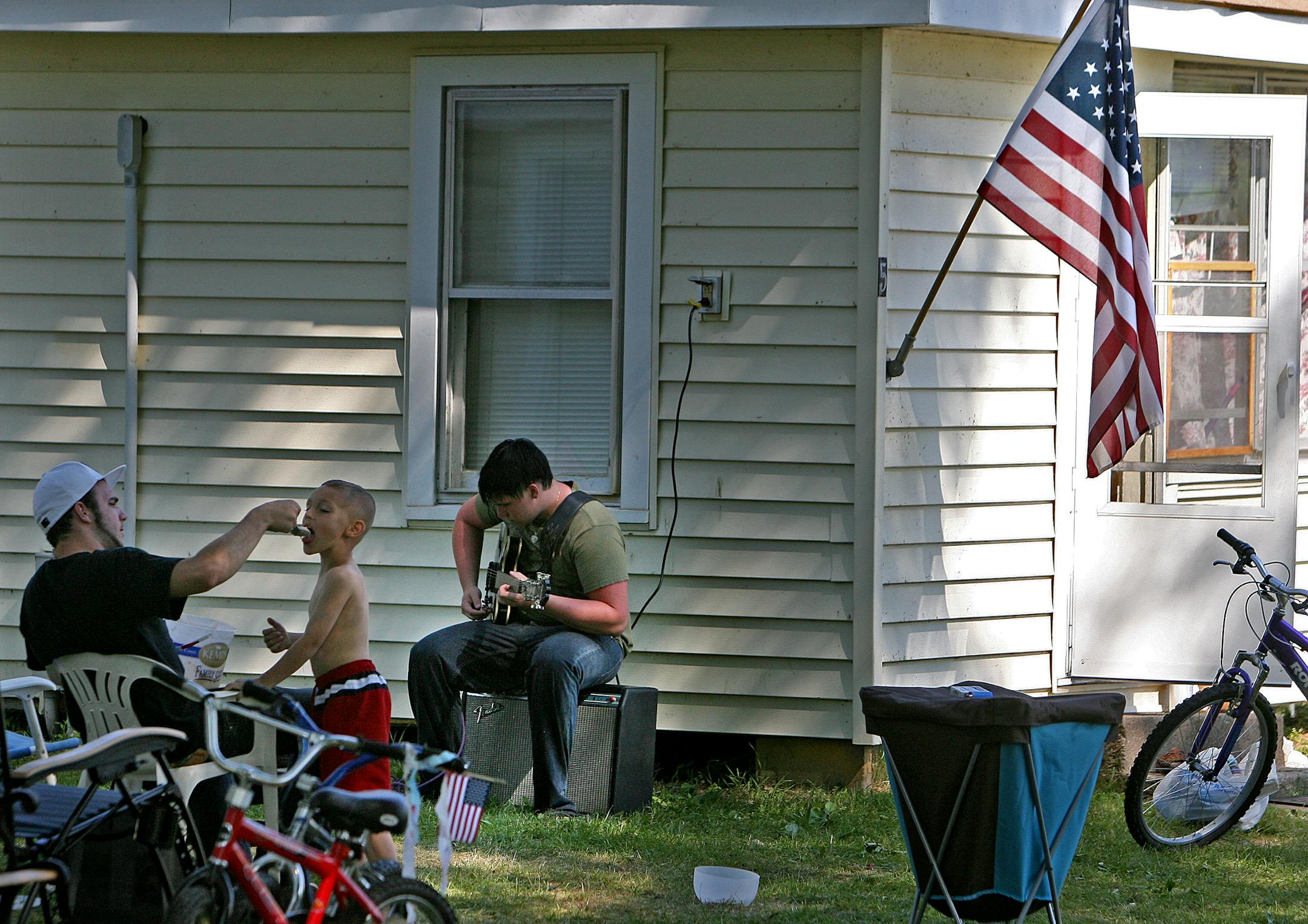
Rich Salsbury, left, fed Blake Griffin, 6, ice cream as his friend Mario Curro, right, played the guitar. The boys are family members of veterans who use the camp. The cabins were nurses' quarters when the camp was a veteran's hospital. Back then, veterans could stay for $1.25 a day.
Rich Salsbury, left, fed Blake Griffin, 6, ice cream as his friend Mario Curro, right, played the guitar. The boys are family members of veterans who use the camp. The cabins were nurses’ quarters when the camp was a veteran’s hospital. Back then, veterans could stay for $1.25 a day. (Star Tribune/The Minnesota Star Tribune)
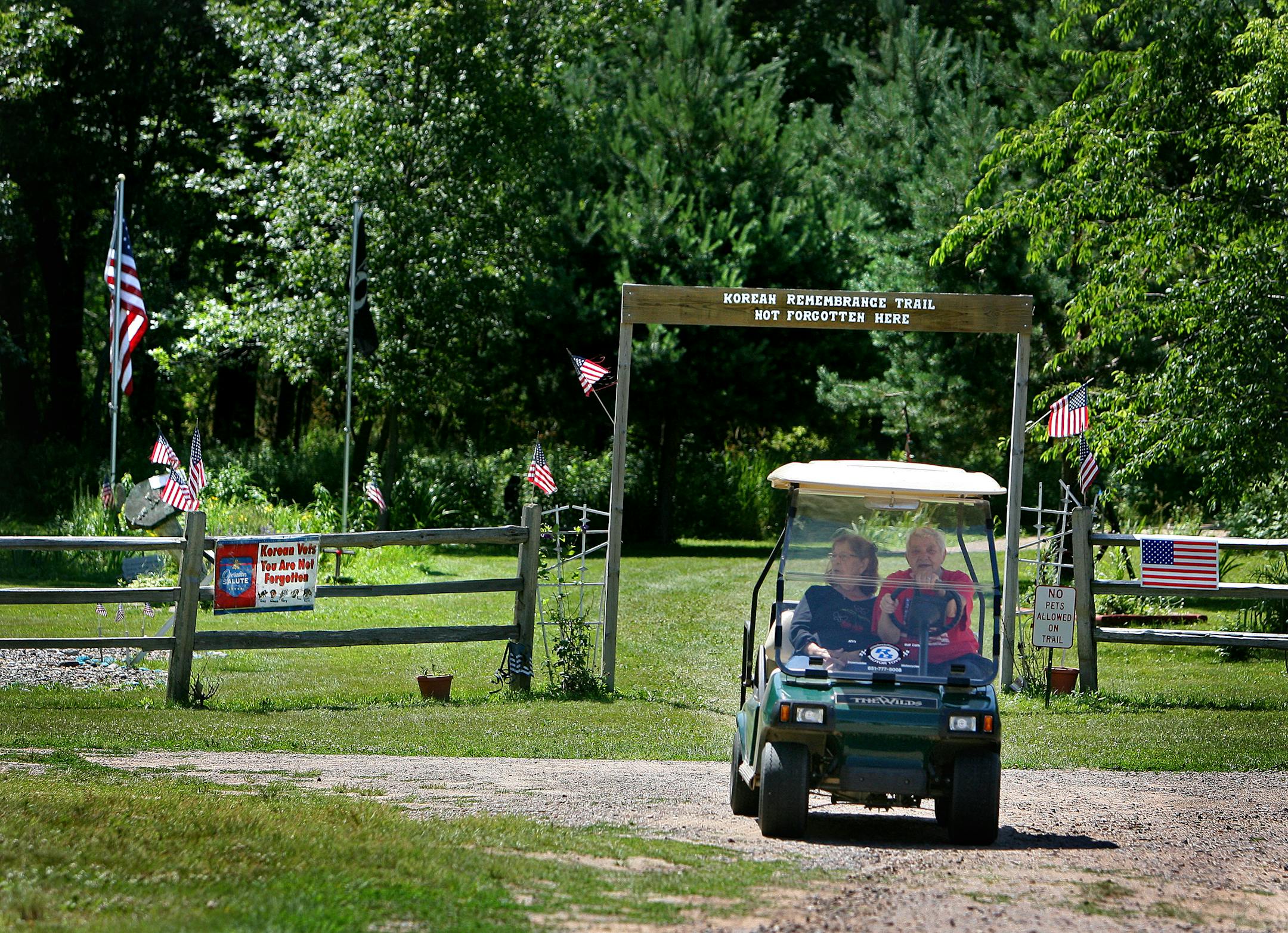
The widows of two World War II veterans made their way from the Korean Remembrance Trail in a golf cart at the Disabled Veterans Rest Camp. The camp, about 75 acres, dates back to 1926 and was a former veteran's hospital. The park has recently been expanded with new RV sites, trails and more.
The widows of two World War II veterans made their way from the Korean Remembrance Trail in a golf cart at the Disabled Veterans Rest Camp. The camp, about 75 acres, dates back to 1926 and was a former veteran’s hospital. The park has recently been expanded with new RV sites, trails and more. (Star Tribune/The Minnesota Star Tribune)
about the writer

about the writer

Allie Shah

Deputy editor

Allie Shah is deputy local editor. She previously supervised coverage of K-12 and higher education issues in Minnesota. In her more than 20 year journalism career at the Minnesota Star Tribune, Shah has reported on topics ranging from education to immigration and health.

See Moreicon