

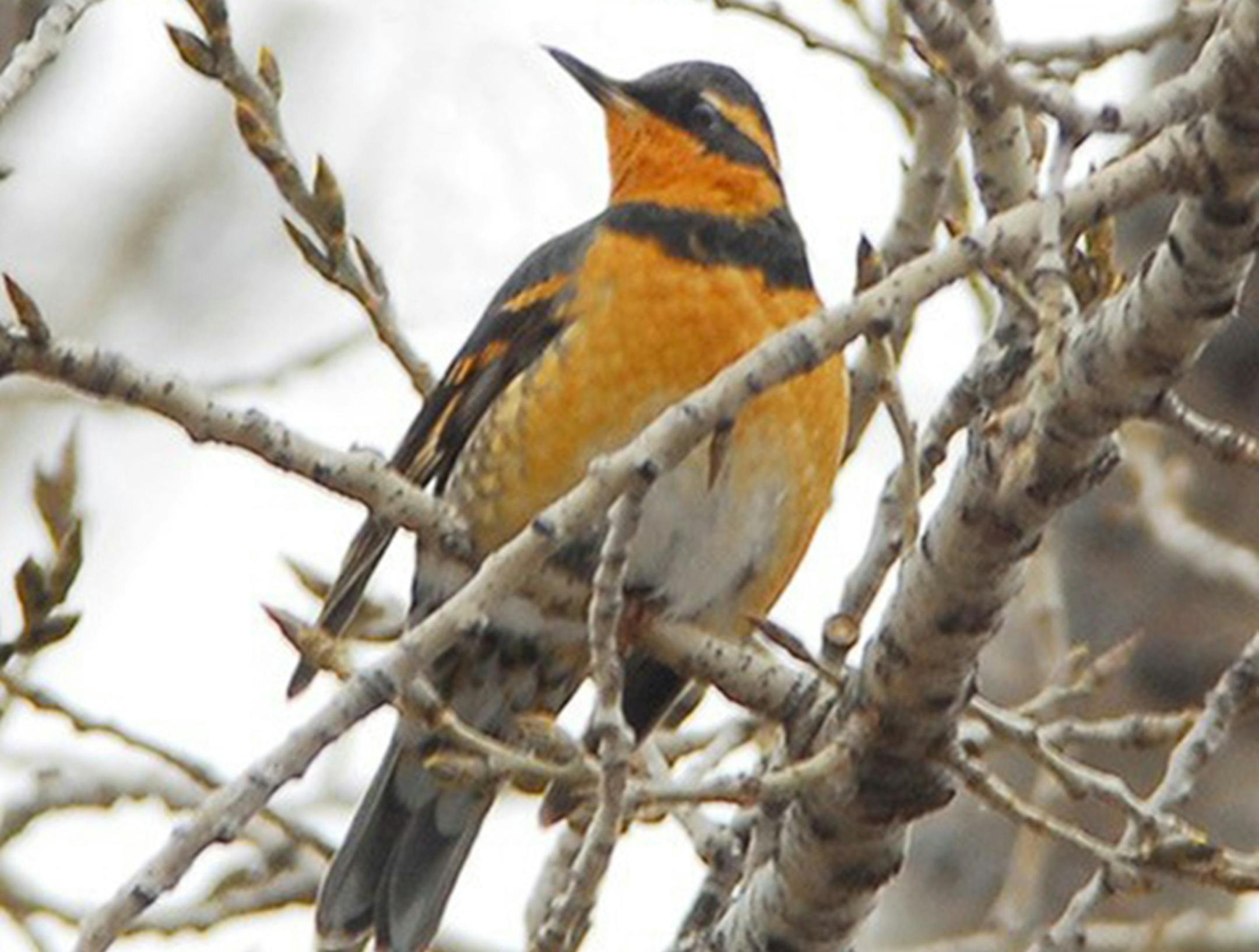
Q: My parents have noticed an unusual bird coming to their feeder in central Minnesota, and have identified it as a varied thrush. Is this a rare occurrence?
A: It's definitely an unusual occurrence, since this species is a resident of the West Coast and Pacific Northwest up into Alaska. However, every winter a few of these cousins of the American robin travel to Minnesota and survive by eating berries and crabapples. There are several reports of these handsome birds around the metro area this winter, too.
Cardinal eyes
Q: We notice cardinals visiting our feeding station early in the morning and late in the evening and wonder if this is an effort to avoid predators, with their bright plumage obscured in the dusk. Or maybe they have superior night vision or are avoiding competition?
A: I'd say you're right on target with your thinking about backyard cardinals and their feeding schedule. This species is known to show up the earliest in the morning and is usually the last to be seen in the evening at feeders, an indication that they see better at low light levels than most other songbirds do. They may very well have evolved this behavior in order to forage when predators are not active, and they're out there at a time when there's very little competition from other bird species, as well.
Eagle activity
Q: We live along the Mississippi River and noticed that a longtime bald eagle nest has disappeared, but we do see eagles flying up and down the river. Do you think they took their old nest apart to build a new one somewhere else? Does anyone keep tabs on eagle nests?
A: From the activity you describe, it sounds as if a pair of eagles is either building a new nest or maintaining an older one somewhere in your area. It's unlikely that they disassembled an old nest. Mother Nature usually takes care of this: Trees topple from the weight of the nest, or nests or trees blow down in windstorms. Three Rivers Park District conducts an annual aerial survey of eagle nests within the Mississippi National River and Recreation Area for the National Park Service.
Who hid the pits?
Q: We found an abandoned bird nest on the family farm filled with what looks like cherry or plum pits. I'm wondering: What type of bird might have eaten the fruit?
A: I'm pretty sure that a mammal stored the fruit pits in the old bird's nest, planning to come back later to gnaw open the shells to reach the seed inside. My best guess is that this was the work of a mouse or a red squirrel, both creatures known to create food larders.


