

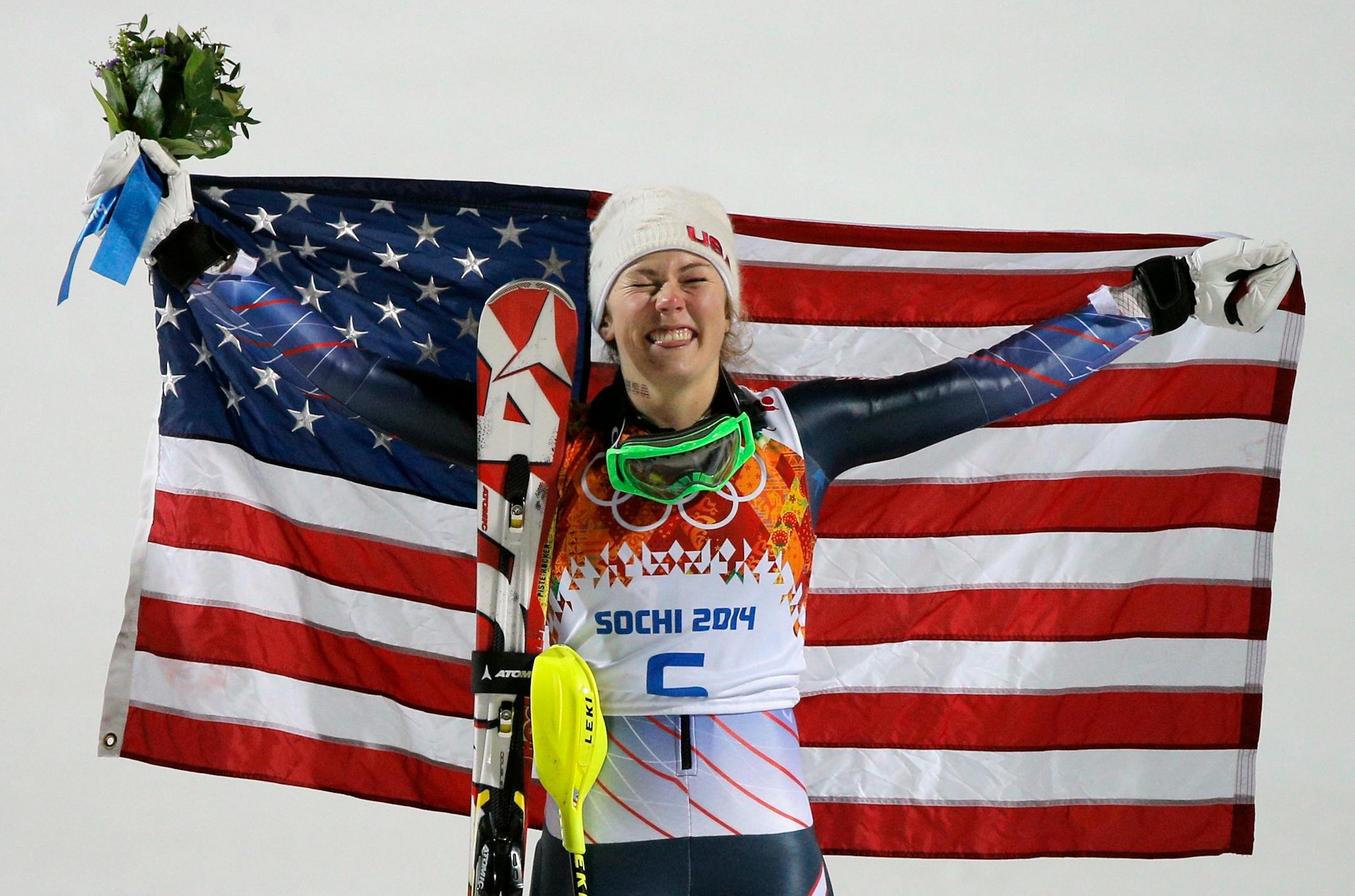
SOCHI, RUSSIA – Like so many other Americans, Alan Ashley wasn't expecting to see some of the United States' biggest stars stumble at the Sochi Winter Games. "There are always times at the Olympics when you're going, 'Oh, my gosh, I wish so-and-so would have done better,' '' said Ashley, chief of sport performance for the U.S. Olympic Committee. "But just as many times, there's a whole new generation of athletes that surprise you.''
That new generation has helped the U.S. win a total of 27 medals in Sochi, its highest tally ever in a Winter Games held outside North America. Heading into the final day of competition Sunday, its nine golds match its count in each of the past two Winter Olympics and are one off the U.S. record set in 2002 in Salt Lake City.
The Americans stand second to Russia, which has 29 medals, in the overall standings of a tight medals race in Sochi. They are third in gold medals behind Russia and Norway, which have 11 each. Despite disappointing performances from some athletes — and the complete implosion of the speedskating team — the USOC's leaders declared Sochi a success on Saturday.
Chief executive officer Scott Blackmun said the USOC will work with U.S. Speedskating to determine why its long-track athletes failed to win any medals. The short-track team won only one, a silver in the men's 5,000-meter relay. The organization also will continue to lobby for more X Games sports.
The U.S. racked up medals in those sports, winning seven in freestyle skiing disciplines and five in snowboarding events. That helped buoy the Americans' performance in an Olympic landscape that is growing more competitive.
"The speedskating team wasn't as strong as it's been in the last few Olympic Games,'' Blackmun said. "But I think if you look at things more broadly, the medals are getting spread around more. The fact that we're still [near] the top of the medal table is indicative that things are alive and well in the United States in the sports world.''
For the first time since 1984, the Americans came up empty in long-track speedskating. There was speculation that the team's new racing suits were slowing them down, but Blackmun said he is confident that was not the case. The team's preparation and training sites also have been questioned. Blackmun emphasized that the USOC does not plan to get involved in the day-to-day operations of U.S. Speedskating. But he and Ashley said the USOC will work in partnership with the organization to fix problems.
"Our job now is to say what went wrong, what went right and how do we improve so when we go into [the 2018 Olympics], we've corrected some things,'' Ashley said. "… The one thing we want to make sure we do is to improve the training environment for athletes as we move forward.''


