

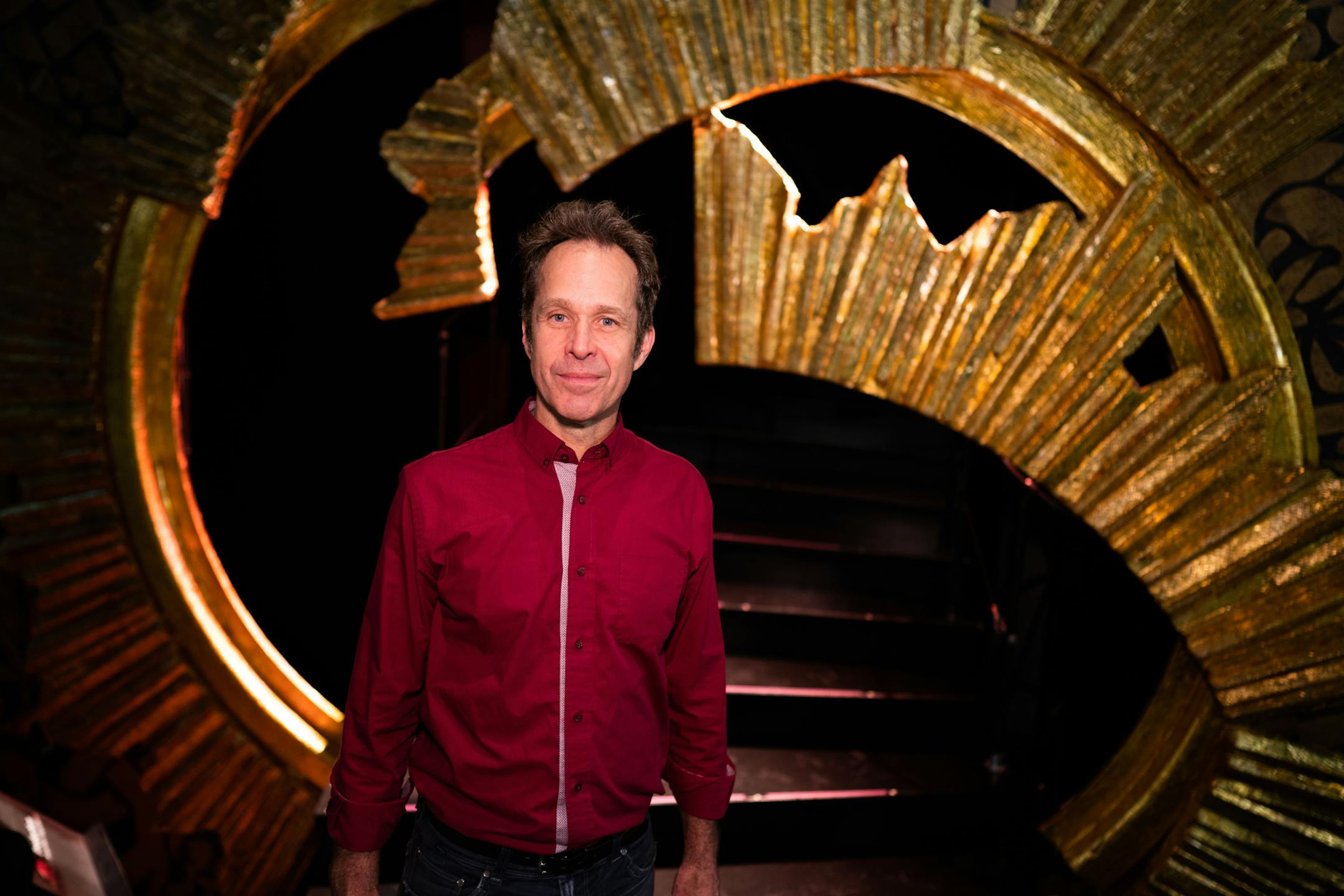
Brian Staufenbiel is sitting in a rehearsal room at Minnesota Opera's North Loop base, grinning with boyish enthusiasm at the production paraphernalia around him.
Clunking bits of scenery loom over his director's table, where colorful printouts of set designs are scattered. A laptop flickers with updated logistical details.
"Most directors in their career don't get to do 'Elektra,' " he says. "I feel very honored to be asked to do it."
The San Francisco-based director has been in town before. He staged Minnesota Opera's first-ever production of Wagner's mighty music drama "Das Rheingold" three years ago.
That was an innovative show, with the orchestra on stage and the pit used as part of the staging. But for his new production of Richard Strauss' seething historical drama "Elektra," which opens Saturday at the Ordway, Staufenbiel has taken things to a whole new level.
The major innovation this time is his use of what the movie industry calls "green screening," where actors film movements against a green backdrop which are then superimposed on separate video footage. The technique was used extensively in HBO's "Game of Thrones" and in films such as "Forrest Gump."
Staufenbiel is using it to locate "Elektra" on a 1920s film set rather than the world of Greek mythology, where Strauss set it. His singers are depicted making a silent movie of the opera while performing it, and we see clips of footage projected on a screen behind them.
Why this radical shift? Is the composer's depiction of a dysfunctional family disintegrating in bloody fashion not powerful enough already?
![] MARK VANCLEAVE ¥ Brian Staufenbiel is directing "Elektra." Photographed Monday, Sep. 30, 2019 at the Ordway in St. Paul.](https://arc.stimg.co/startribunemedia/BYWLL5MN5CROTBCWZIDHSG6F5A.jpg?&w=1080)


