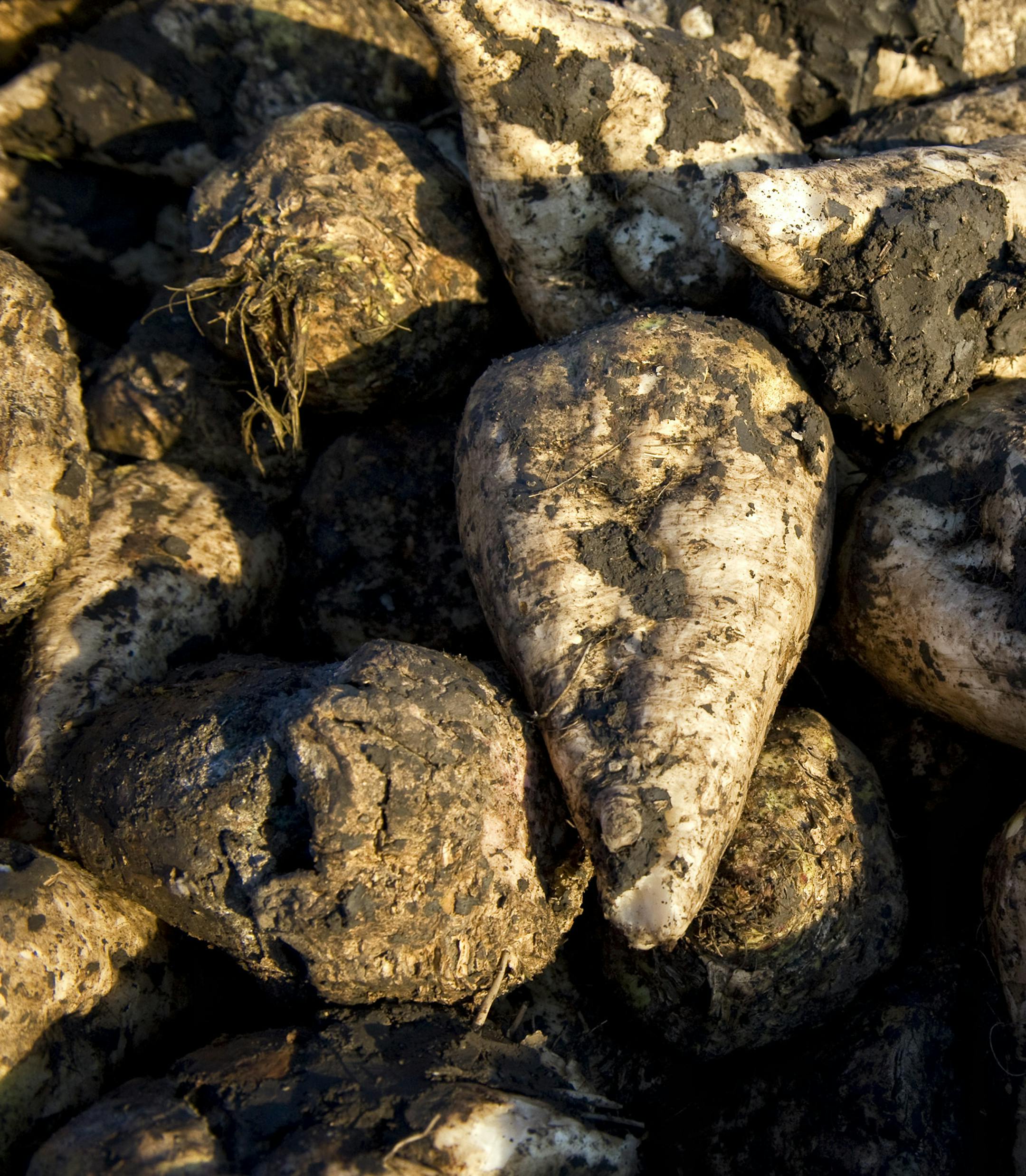
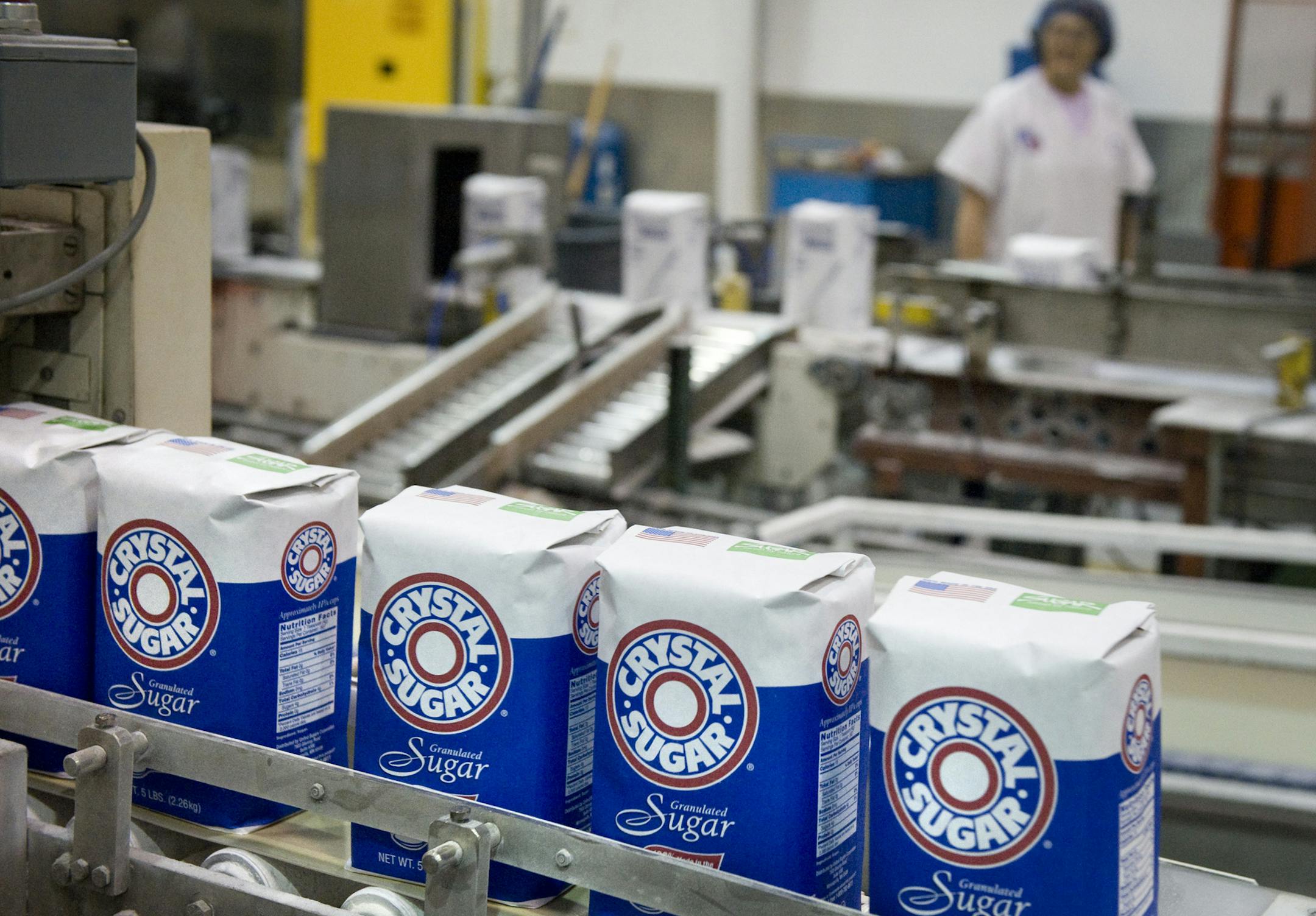
![GLEN STUBBE • gstubbe@startribune.com -- Monday, October 11, 2011 -- Moorhead, MN -- ] Five-pound bags of table sugar from beets are filled at American Crystal Sugar Company in Moorhead. ORG XMIT: MIN2013061817122036](https://arc.stimg.co/startribunemedia/KT6JTZNJ5N3ORC7RVBU5563UP4.jpg?&w=1080)
The federal government will intervene in the sugar market for the first time in more than a decade, spending up to $38 million in an effort to forestall a later bailout of sugar producers in Minnesota and elsewhere that could cost more than $300 million.
Minnesota is home to the nation's largest beet sugar industry, which is protected by import tariffs and supported by loan guarantees.
Due to historically low sugar prices this year, a clause in the loan program would allow beet and cane sugar producers to walk away from their loans, forfeiting the collateral — sugar — instead.
The government would then sell the sugar, most likely at depressed prices. To avoid a wave of potentially expensive forfeiture sales this summer and fall, the U.S. Department of Agriculture said Monday that it instead would buy sugar on the domestic market in what agency officials are calling a newly devised "least-cost method."
The USDA estimates the measure would cost $38 million. It is aimed at pushing up current sugar prices so that producers don't default on their loans and simply forfeit sugar. The USDA has estimated that if that happened, taxpayers' estimated cost would be $110 million to $320 million.
Overall, sugar producers hold $700 million to $800 million in federal loans. According to USDA data, $40.4 million in beet sugar loans are outstanding in Renville County, home to Southern Minnesota Beet Sugar Cooperative; $35.9 million in Clay County, headquarters of American Crystal Sugar, and $26.8 million in Richland County, N.D., home to Minn-Dak Farmers Cooperative.
The Southern Minnesota cooperative didn't return a call for comment Tuesday. Minn-Dak and Crystal Sugar referred questions to the American Sugar Alliance, a sugar producer trade group.
The group said in a statement that the USDA's action "is an attempt to avoid forfeitures on loans that sugar producers normally repay with interest, and it is by far the least costly option for taxpayers."