

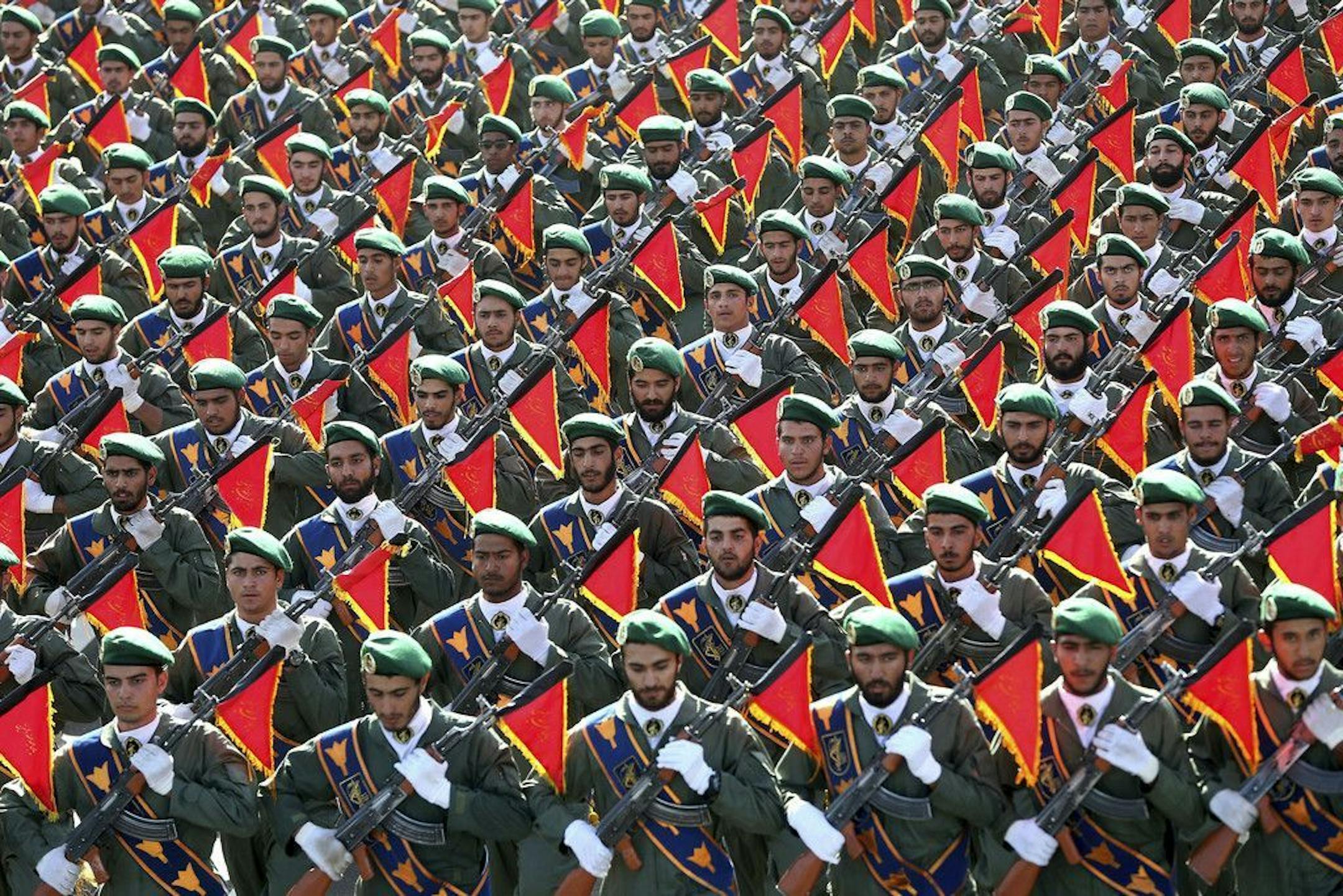
WASHINGTON — The United States on Monday designated Iran's Revolutionary Guard Corps a foreign terrorist organization, an unprecedented declaration against a foreign government that may prompt retaliation and make it harder for American diplomats and military officers to work with allies in the region.
It is the first time that the U.S. has designated an entity of another government as a terrorist organization, placing a group with vast economic resources that answers only to Iran's supreme leader in the same category as al-Qaida and the Islamic State.
"This unprecedented step, led by the Department of State, recognizes the reality that Iran is not only a state sponsor of terrorism, but that the IRGC actively participates in, finances and promotes terrorism as a tool of statecraft," President Donald Trump said in announcing the measure.
Secretary of State Mike Pompeo said the designation is intended to increase pressure on Iran, isolating it further and diverting some of the financial resources it uses to fund terrorism and militant activity in the Middle East and beyond. But, in addition to the potential for Iranian retaliation, it complicates a delicate balance for U.S. personnel in at least two key countries.
The administration went ahead with the designation despite expressions of "serious" concern by senior defense and intelligence officials about the possibility of retaliation, as well as the effectiveness against an organization already subject to sanctions, according to two U.S. officials who spoke on condition of anonymity because they were not authorized to discuss the decision.
Pompeo said the move is part of an effort to put "maximum pressure" on Iran to end its support for terrorist plots and militant activity that destabilizes the Middle East. Speaking to reporters, he rattled off a list of attacks dating to the 1980s for which the U.S. holds Iran and the IRGC responsible, beginning with the attacks on the Marine Corps barracks in Beirut, Lebanon in 1983.
No waivers or exceptions to the sanctions were announced, meaning U.S. troops and diplomats could be barred from speaking with Iraqi or Lebanese authorities who have dealings with Guard officials or surrogates. Such contact occurs now between U.S. officials in Iraq who deal with Iranian-affiliated Shiite militias and in Lebanon, where the Iran-backed Hezbollah movement is in parliament and the government.
The Pentagon and U.S. intelligence agencies had raised concerns about the impact of the designation if the move did not allow contact with other foreign officials who may have met with or communicated with Guard personnel. Those concerns have in part dissuaded previous administrations from taking the step, which has been considered for more than a decade.


