

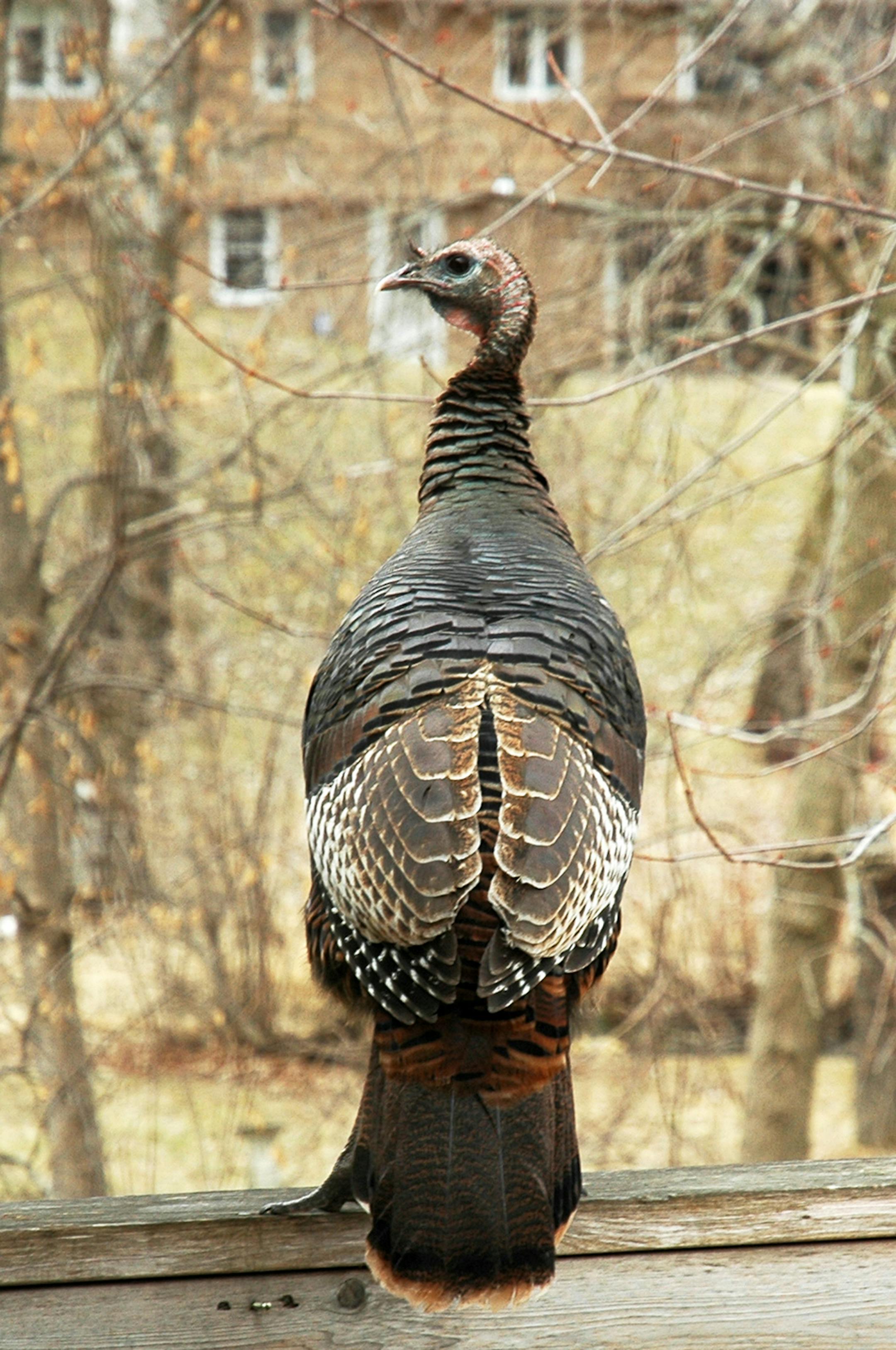
Q: I've been noticing more and more wild turkeys around the metro area and have been wondering what their nests look like.
A: You're right, turkeys are becoming more prevalent in our cities and suburbs. A female turkey scratches a shallow depression on the ground to hold her eggs, usually in a wooded area. She incubates the eggs for about 28 days, then leads her poults away from the nest site. The young turkeys shelter under their mother's wings at night and on cold days.
Screen-shredding finches
Q: Finches are pecking at my screens and causing a lot of damage. Is there any way to stop this behavior and have you ever heard of this before?
A: No, I'd never before heard of finches damaging screens. Your message arrived just as goldfinch nesting season was getting underway, making me wonder if that wasn't a factor. I found a wild bird store page www.startribune.com/a2422 that shows a goldfinch causing significant damage to a window screen. If your screen-shredding finch appears again next year, you'll need to deter it from causing damage. Try hanging Mylar tape or balloons alongside the window under attack, or attach CDs to wires and suspend them nearby. A plastic snake might even do the job. Good luck with this; there's always something new in the bird world.
Coughing duck
Q: On our evening walk around a pond we've noticed a female mallard who seems to have a cough, or possibly hiccups. Might she have an infection and could she pass it to other ducks?
A: I checked with a veterinarian at the Wildlife Rehabilitation Center in Roseville, and was advised that an upper respiratory infection is a possibility, but sneezing and eye discharge would be more likely symptoms. However, ducks preen a great deal, especially now, during molting season, and she might have got a feather stuck in her throat. If the duck seems to otherwise be doing all right, it sounds like you needn't worry about her infecting other ducks.
Fresh water
Q: How often should we be hosing out the birdbath? Sometimes when the starlings get finished with their communal baths the water is grisly!
A: You're right, a troop of bathing birds can really cloud the water, and even add poop to the mix. During the summer, birds make such heavy use of our two birdbaths that we hose them out several times each day. You may have noticed that birds seem to stay away from a really dirty birdbath, so leave the hose nearby and refresh the water often.


