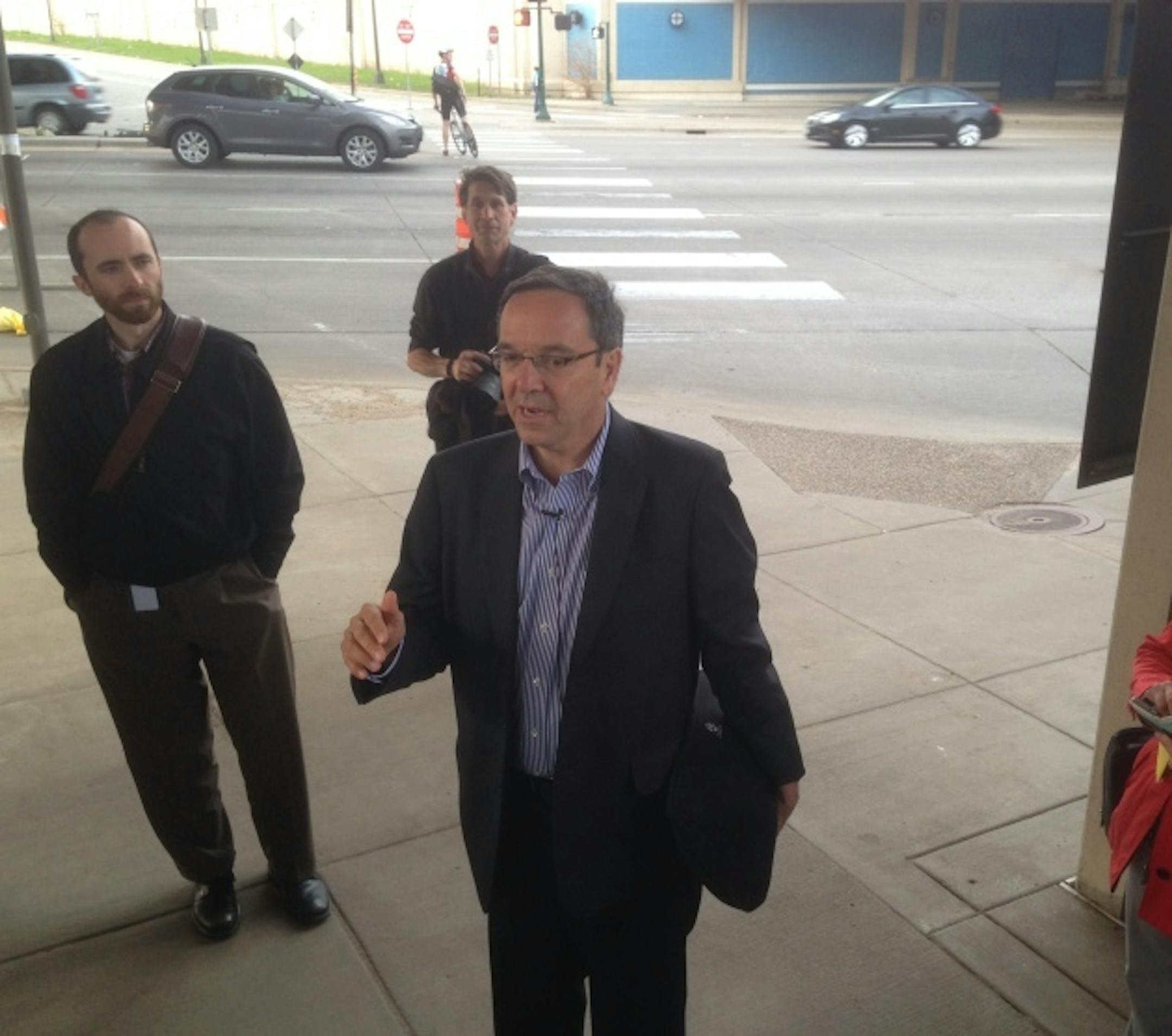
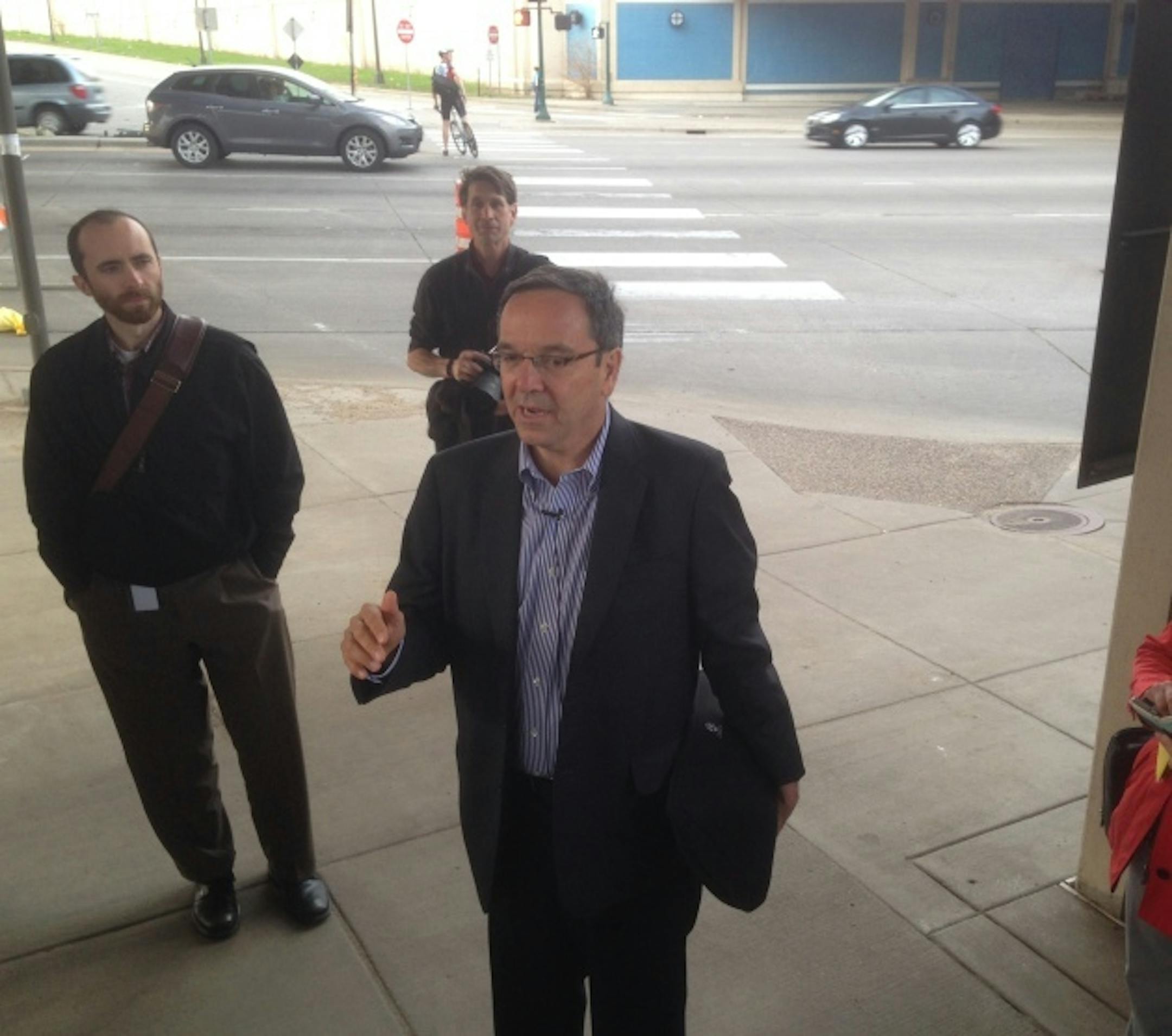
Famed international urban thinker Gil Penalosa thought the traffic light was broken on Lake Street and Hiawatha Avenue Tuesday night after pressing a button and waiting three-and-a-half minutes for a 'walk' signal.
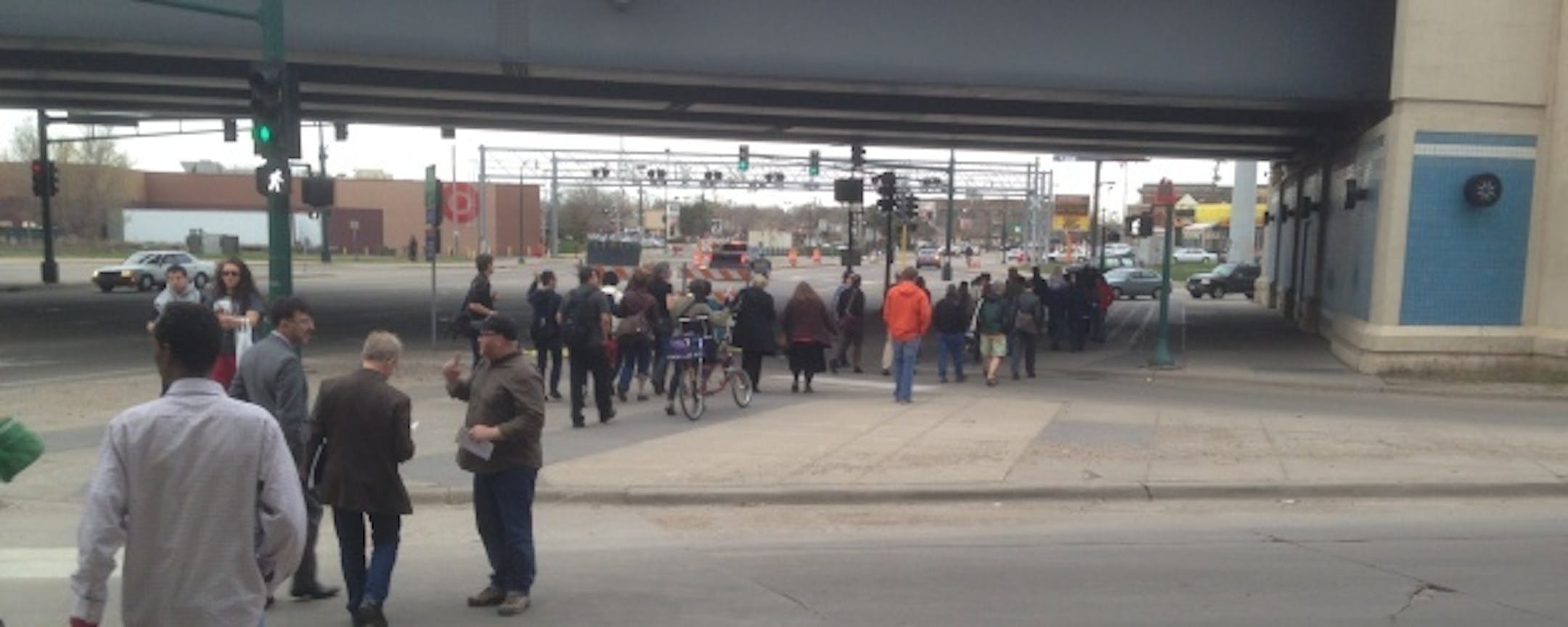
He was running behind for a meeting with about 50 local residents – on the other side of the street – about improving the intersection. It wasn't until he began jaywalking that the light turned green.
"I think this intersection is horrible. I think this intersection shows a lack of respect for people," Penalosa said later. "For people walking, for people cycling, for people taking public transit. I think that it is an intersection totally for persons in cars."
Lake Street at Hiawatha Avenue is the third-busiest transit hub in the metro area, featuring popular light rail and bus stops. But pedestrians and cyclists must maneuver a six-lane county road and a series of bending highway on- and off-ramps to get around, something local neighborhood activists hope to change in conjunction with new developments proposed for the area.
Penalosa runs a Toronto-based organization called 8-80 cities and was formerly the commissioner of parks, sport and recreation in Bogota, Colombia – a city of 6.7 million. He is visiting a number of spots around the Twin Cities as part of an annual "Placemaking Residency" produced by the St. Paul Riverfront Corporation with funding from the Knight Foundation and others.
"There are so many great things that are happening in the Twin Cities, but this is clearly not one of them," Penalosa said beneath the Hiawatha Avenue overpass. He said the area should have more painted crosswalks, walk lights that give pedestrians a head-start on cars, and possibly sensors that detect when pedestrians are waiting.
"I don't see the cars going to an intersection and getting their hand out and hitting anything," Penalosa said. "The light changes for them."
He added that cities should strive to be walkable and bikeable to make their public transit effective. "You can have the best transit system in the world, [but] it will never pick you up in front of your house and drop you off in front of the destination," Penalosa said.