

It is hard to imagine the industrial-scale carnage of World War I, or the moral choices that faced Great Britain and other nations during those four years of bloodshed.
In one of the worst battles ever fought, 21,000 British soldiers died in one day at the battle of the Somme in 1916. Another 36,000 troops were wounded.
Soldiers, ordered to make traditional frontal assaults, climbed from trenches and charged against the new instruments of warfare, barbed wire and machine gun, and were decimated in the bloody fields that came to be called "no man's land."
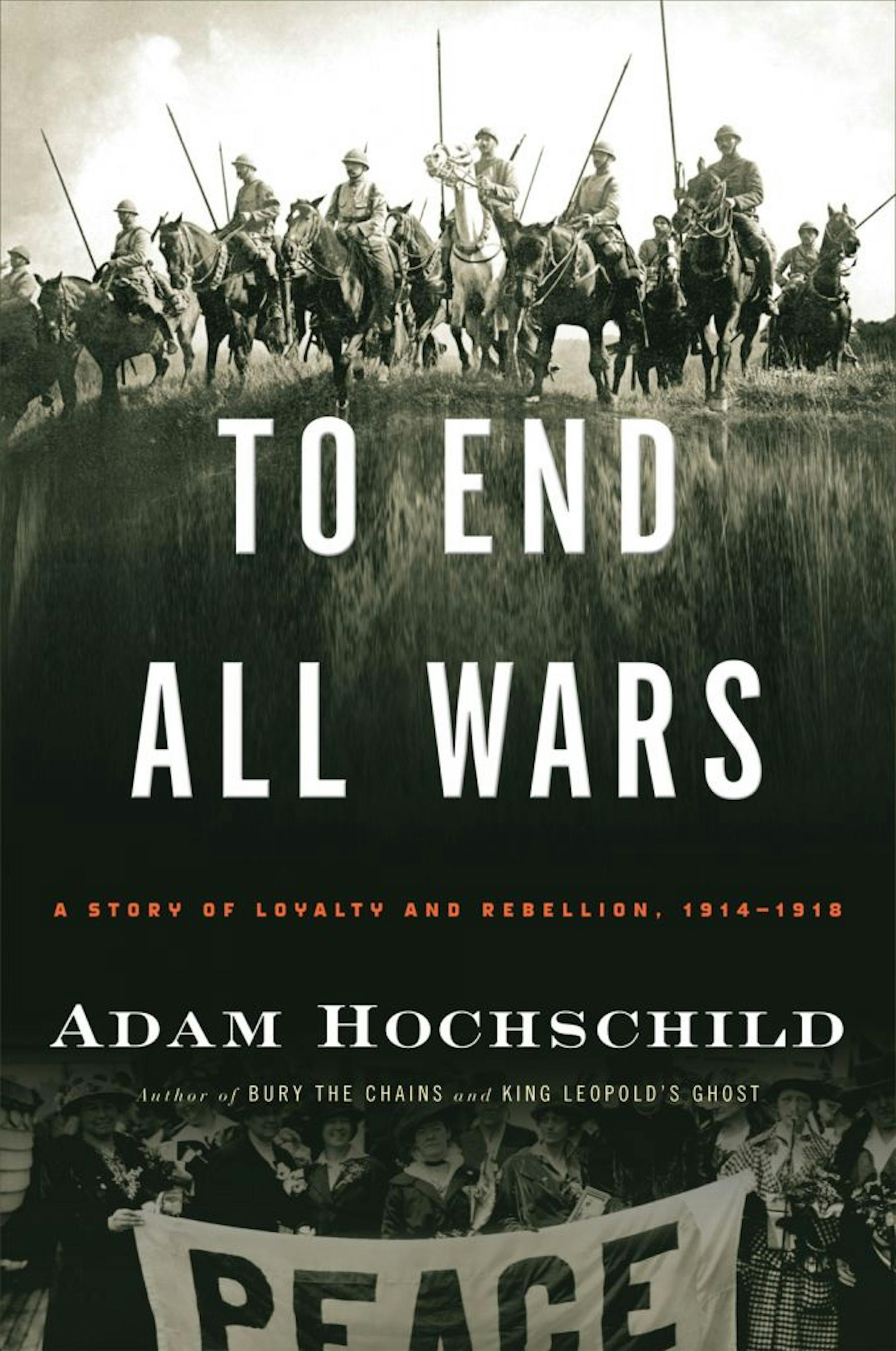
American journalist and historian Adam Hochschild, in his new book, "To End All Wars: A Story of Loyalty and Rebellion, 1914-1918," has produced a superb narrative of the Great War and the largely untold story of the modern peace movement it provoked.
Like his earlier books, it is brilliantly written and reads like a novel. It can be hard to put down and, because of the carnage, hard to pick up again.
Hochschild tells the stories not only of generals who issued the suicidal battle orders, but also of the war resisters in England and elsewhere who campaigned unsuccessfully against the madness. He brings life to the emerging intellectual and social forces of that era -- the women's suffrage movement, unionism, socialism, Marxism, free thinking -- and how they shaped the first anti-war movement of the 20th century.
The book also offers a revealing picture of Britain's ruling class, whose privileged sons went off to a modern war, many of them inexplicably riding cavalry horses. Their traditional notions of glory and battle got buried in the muck and misery of the trenches. Indeed, Hochschild writes, officers from the privileged classes were killed at far higher rates than the foot soldiers.
From one prominent family came two of the book's most intriguing characters. Charlotte Despard stepped out of her privileged life to campaign for the poor and against the war, even spending time in jail. Her brother, John French, was the first commander in chief of British forces in the war.


