

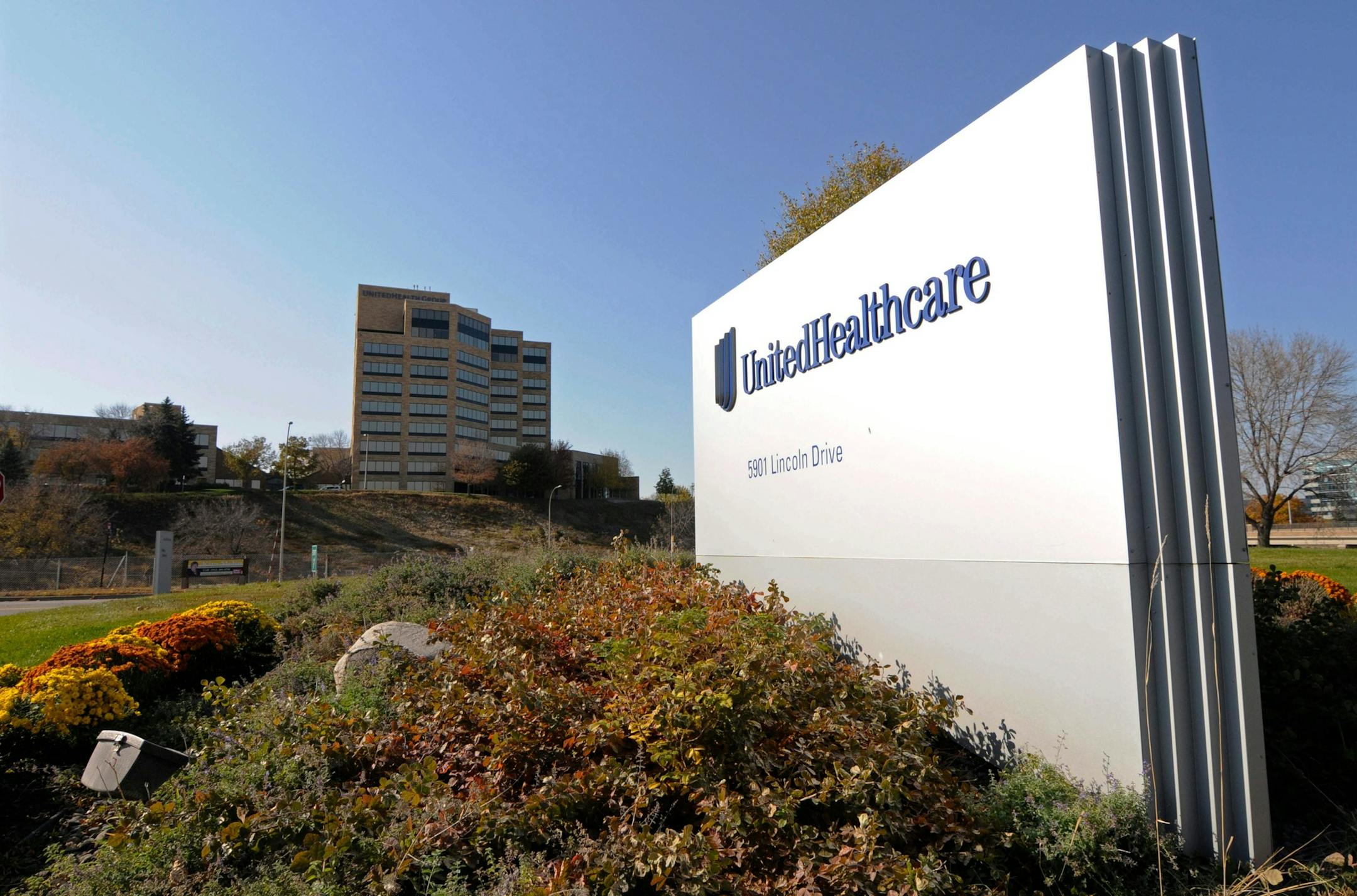
Shares of UnitedHealth Group soared on Tuesday after the company reported third-quarter results that beat expectations for profit and revenue while putting a focus on the Minnetonka-based company's expanding business running outpatient medical centers.
David Wichmann, the UnitedHealth Group chief executive, told investors during a conference call that the company is trying to develop a "next-generation" health care system, an ambition furthered in June by the purchase of DaVita Medical Group, which added more than 200 clinics across five states.
It was the third consecutive quarter that UnitedHealth beat expectations and raised financial guidance for the year, even as the company's stock price has suffered in 2019 with talk among some Democratic presidential candidates of a "Medicare for All" system that could upend the private market.
"We have a strong track record of thriving in fluid environments, similar to the one we find ourselves in today," Wichmann said. "We are uniquely diverse with significant experience and weight in every aspect of health care."
Earnings during the quarter were better than expected in the company's Optum health care services business, analysts said, as well as its legacy health insurance business UnitedHealthcare. And medical cost trends were "well controlled," said Peter Costa, an analyst with Wells Fargo, in a note to investors.
Yet analyst John Ransom of Raymond James noted during Tuesday's conference call something of a disconnect between the many anecdotes of efficient care being touted by UnitedHealth Group and the broader trend of health care costs continuing to grow much faster than inflation. A September survey from the Kaiser Family Foundation on employer-sponsored health insurance found the annual cost of family coverage now exceeds $20,000.
"The Kaiser survey and the political landscape is pointing to this being kind of a bigger and bigger problem," Ransom said. "So, is there a horizon where costs shift downward, or are we just stuck at 5 to 6 percent [increases] forever more, no matter what we do?"
Wichmann replied that he believed cost trends are starting to improve. Expensive new medications are one factor driving up costs, added Andrew Witty, the Optum chief executive. Another is that the company hasn't yet been able to bring its clinic business to "industrial scale across the U.S.," Witty said.


