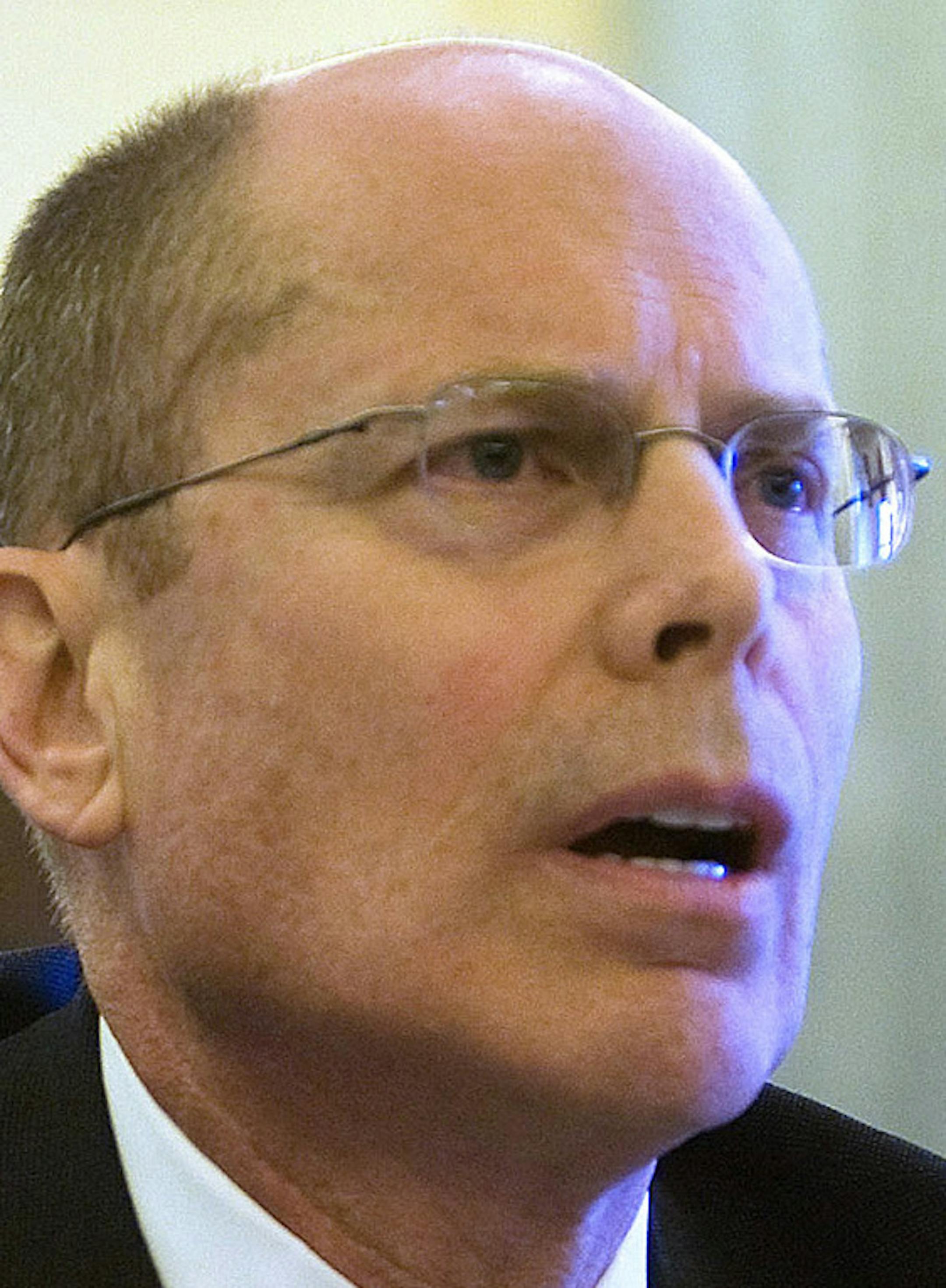
With speculation swirling about how Republicans might replace the federal health law, the chief executive of UnitedHealth Group said Tuesday he sees the potential for changes that promote state-based markets, flexible Medicaid programs and well-structured high-risk pools.
Even so, the nation's largest health insurer has "no better sense than anyone else concerning the timing or ultimate actions with respect to the Affordable Care Act," said Stephen Hemsley, the CEO at Minnetonka-based UnitedHealth, during a call with investors.
"We remain positive and constructive with respect to what ultimately evolves in the next phase of health care change," Hemsley said.
On Tuesday, UnitedHealth Group reported fourth-quarter results that beat analyst estimates for earnings and revenue, driven in part by growth at its Optum division for health care services. Profit for the quarter grew by 56 percent compared with the same period last year, and the company said it likely will post nearly $200 billion in revenue during 2017.
The promised repeal and replacement of the federal ACA by Republicans at the federal level has created uncertainty for insurers about the individual and Medicaid markets that have been reshaped by the law. UnitedHealth Group has a large Medicaid business, but has reduced its exposure to the individual market where health law changes have generated losses for carriers.
Due to financial losses, the company's UnitedHealthcare insurance division abandoned this year most of the new health exchange marketplaces launched under the health law. Nonetheless, the exchanges might persist "where states choose to sustain them," Hemsley said.
"We believe, all of these, taken together, can represent effective, local, state-based coverage systems, which can well accommodate those currently within the ACA individual exchanges, as well as serve as channels for further expanding coverage if that remains the focus," he said. "We see this approach as being simpler, offering more flexibility, more choice and more affordability to both consumers and state and federal sponsors."
Earlier this month, United announced a $2.3 billion acquisition that will make its Optum division one of the largest operators of surgery centers in the country. For 2016, Optum grew revenue at a faster rate than the company's UnitedHealthcare business, which is the nation's largest health insurer.