

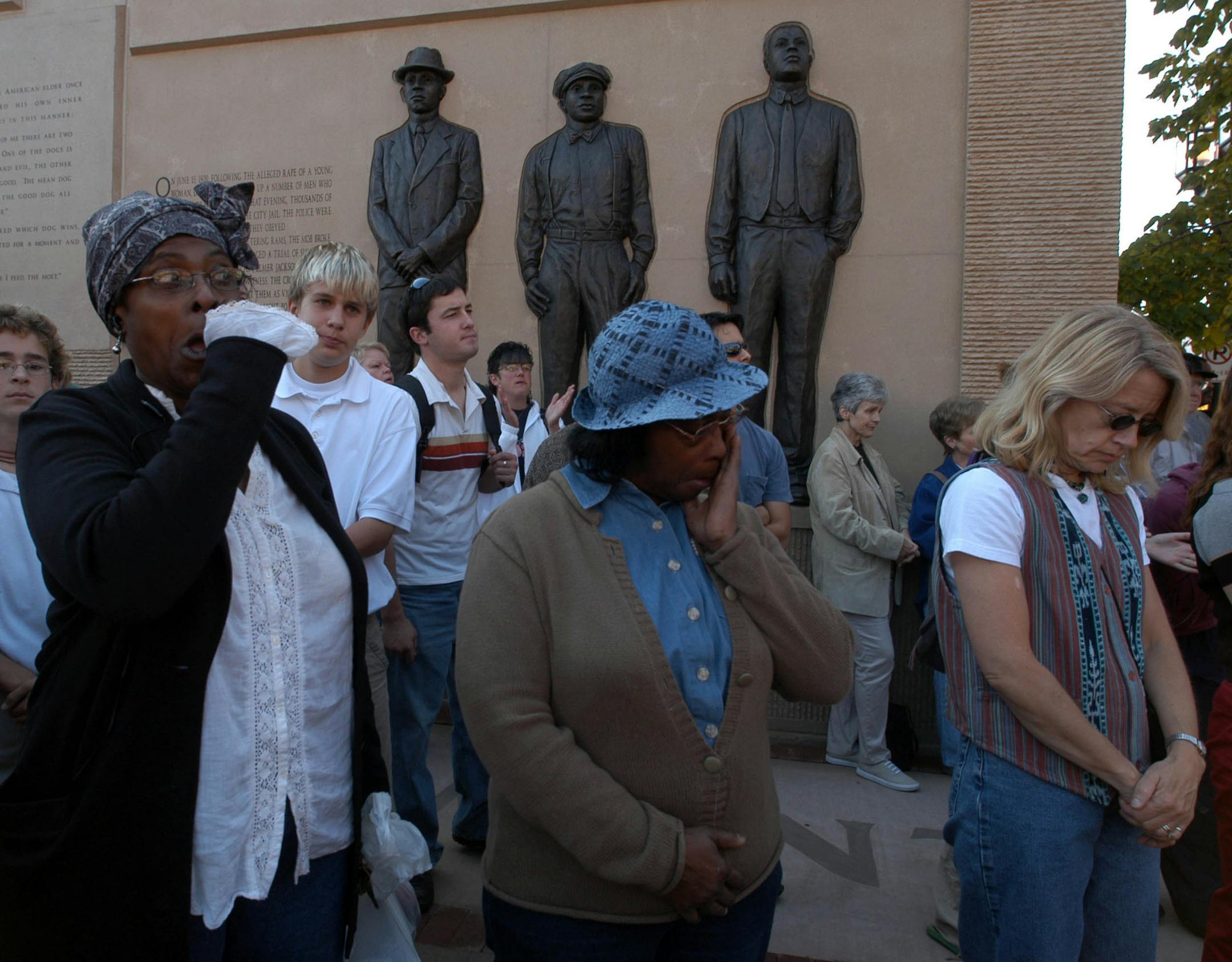
Max Mason was one of several black circus workers accused of sexually assaulting a 19-year-old Duluth woman in 1920. Three were lynched from a light pole by an angry mob of residents. Only two went to trial, and Mason, then 21, was the only one convicted in a case that has been mired in controversy ever since.
On Monday, Minnesota's Board of Pardons, including Gov. Tim Walz, approved a request that could clear the way for Mason's eventual posthumous pardon, a move supporters say would restore justice for a man they believe was falsely accused in a "horrific and shameful episode in Minnesota history."
"This is one of those occasions where justice delayed may not be justice denied," said Attorney General Keith Ellison, one of three members of the board. "I think we can try to rectify the problems of the past."
The board's move could open the way for another review of Mason's original pardon plea, which was turned down in 1924 after his conviction in the assault of Irene Tusken, a white woman who claimed six circus workers held her and a companion at gunpoint and raped her following a show in West Duluth.
The case sparked one of the darkest episodes in the state's history, with a horde of thousands dragging three of the accused workers out of the city jail and hanging them, the only documented lynching of black men in Minnesota.
Today the event is memorialized in a city plaza bearing relief bronze statues of the three victims: Elias Clayton, Elmer Jackson and Isaac McGhie.
Though others were accused, only Mason and one other man, William Miller, 22, got their day in court. Miller was acquitted in 1921.
Mason was convicted on what some thought was flimsy evidence and sentenced to a prison term of seven to 30 years. Supporters noted a lack of evidence corroborating Tusken's allegation and a physician's exam that appeared to contradict the teen's claim, according to the Minnesota Historical Society.


