

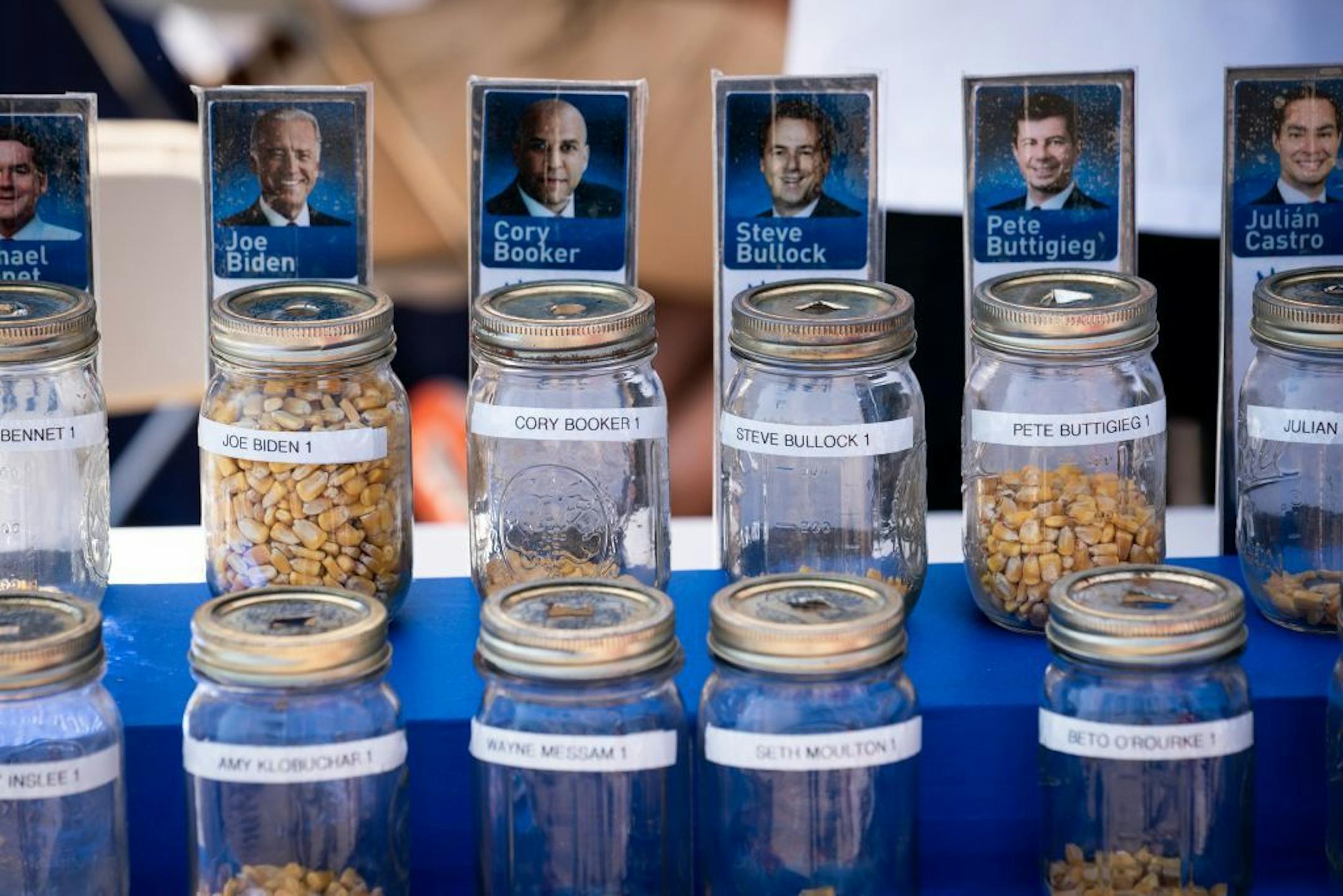
Macey Meyer never considered herself the type to donate to a presidential campaign. Then she watched the first Democratic presidential primary debates.
The 26-year-old restaurant server from Maple Grove felt energized as she listened to nearly two dozen candidates tangle over a range of policies and visions. She opened a browser window and contributed $3 to U.S. Sen. Elizabeth Warren's campaign. In the minutes that followed, she clicked "Donate" 10 more times — to 10 different candidates.
"I think it's important to vote with your dollar," Meyer said. "Even though 3 to 5 bucks isn't much, if a lot of people had that mind-set, it is a lot. It adds up."
Meyer is right about the math. As the money chase increasingly adapts to technology, millions of small-dollar donors like her poured more than $200 million into Democratic presidential primary campaigns using the online donation platform ActBlue in the first half of the year, according to the Center for Public Integrity. Often the money was doled out in increments equal to less than the cost of a cup of coffee.
In Minnesota, about 55,000 people gave a combined $4.7 million-plus to Democratic presidential hopefuls via ActBlue in the first half of the year, a Star Tribune analysis of Federal Election Commission filings found. That represents a big spike from this point in the 2016 election cycle, when just 18,000 state residents had made an ActBlue contribution to a Democratic presidential campaign.
It's not just Democrats courting small-dollar donors on their laptops and smartphones. Earlier this year, Republicans launched WinRed, an online fundraising hub meant to be the right's answer to ActBlue. Minnesota Republican Party Chair Jennifer Carnahan said she expects the platform to be a "game-changer." She hopes the technology will further accelerate what she described as a surge in small-dollar donors to the state GOP since President Donald Trump's election.
Trump is not expected to face meaningful primary competition. But committees helping Trump's 2020 re-election effort have raised tens of millions of dollars from donors giving $200 or less. Carnahan noted that such donors accounted for more than 60% of direct contributions to his campaign, a stark increase from previous GOP presidential campaigns.
"He's energized them, he's created enthusiasm and excitement, he's given people hope across the country," Carnahan said of the president. "And he's tapped into a lot of new voters and new donors."


