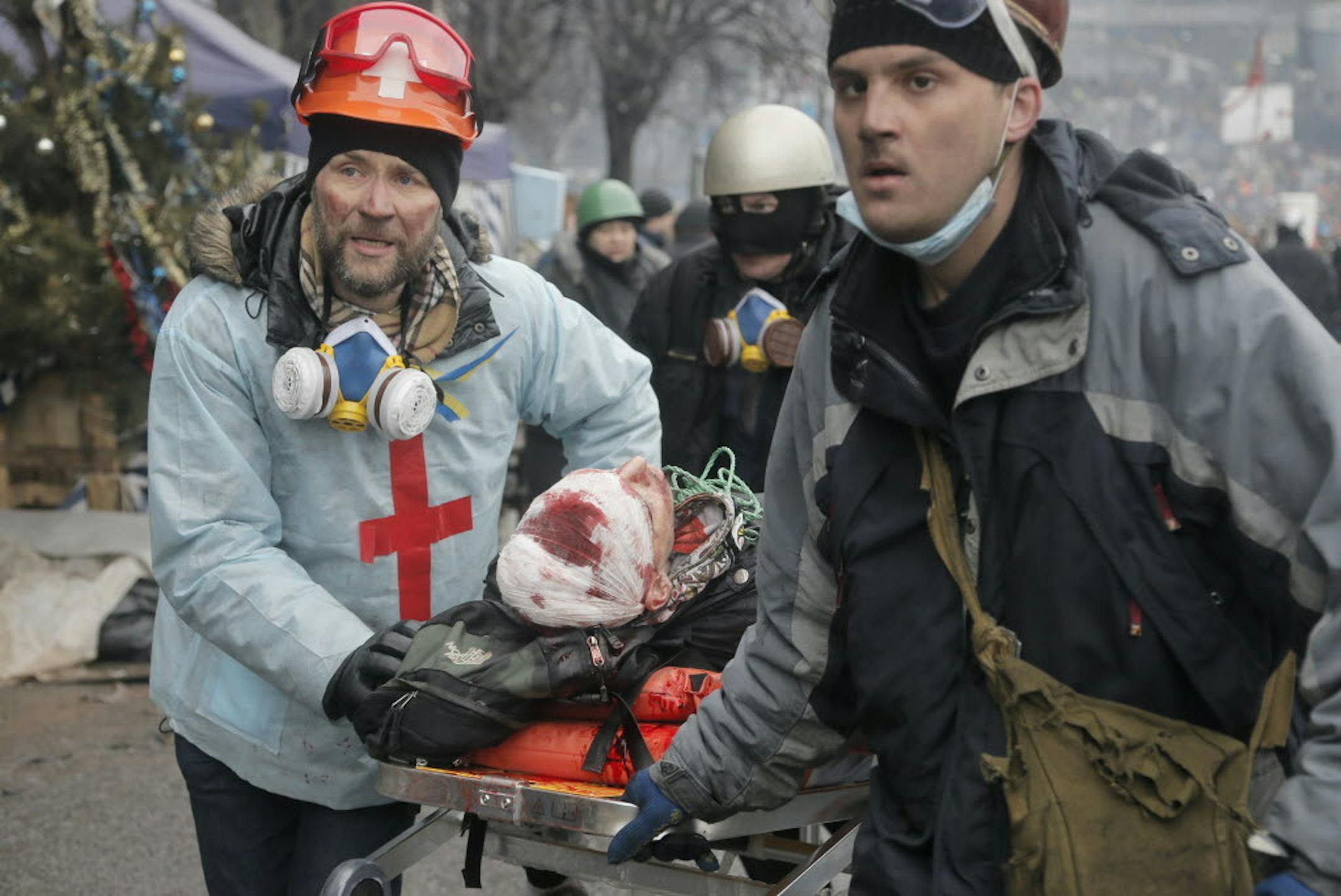
KIEV, Ukraine — Ukraine's protest leaders and the president they aim to oust called a truce Wednesday, just hours after the military raised fears of a widespread crackdown with a vow to defeat "terrorists" responsible for seizing weapons and burning down buildings.
The two sides agreed to negotiate in an effort to end the violence that left at least 26 people dead and more than 400 injured on Tuesday. Protesters say the casualty toll is substantially higher.
The intense clashes between police and protesters led President Viktor Yanukovych to declare that the military would take part in a "national anti-terrorist operation." The parameters weren't specified, but the military's involvement and Yanukovych's appointment of a new military chief of staff fueled new worries.
As protective fires blazed around the tent camp in Kiev for a second night and protesters defending it showed no signs of yielding, Yanukovych met with top opposition leaders. A statement on his website said they had agreed on a truce and negotiations.
Vitali Klitschko, a leader of the protests that have sought to keep Ukraine open to Europe and out of a close alliance with Russia, said Yanukovych assured them that police would not storm the protesters' encampment on Kiev's Independence Square, according to the Interfax news agency.
The brief statement on the president's website did not give details of what terms a truce would entail or how it would be implemented. Nor did it specify how the negotiations would be conducted or give an indication of how they would be different from previous meetings of the president and the opposition leaders.
Perhaps crucially, there was no immediate indication of whether radical elements among the protesters would observe the truce or be mollified by the prospect of negotiations.
Although the initial weeks of protests were determinedly peaceful, radicals helped drive an outburst of clashes with police in January in which at least three people died. And the day of violence on Tuesday — the worst in nearly three months of anti-government protests that have paralyzed Kiev — may have radicalized many more.