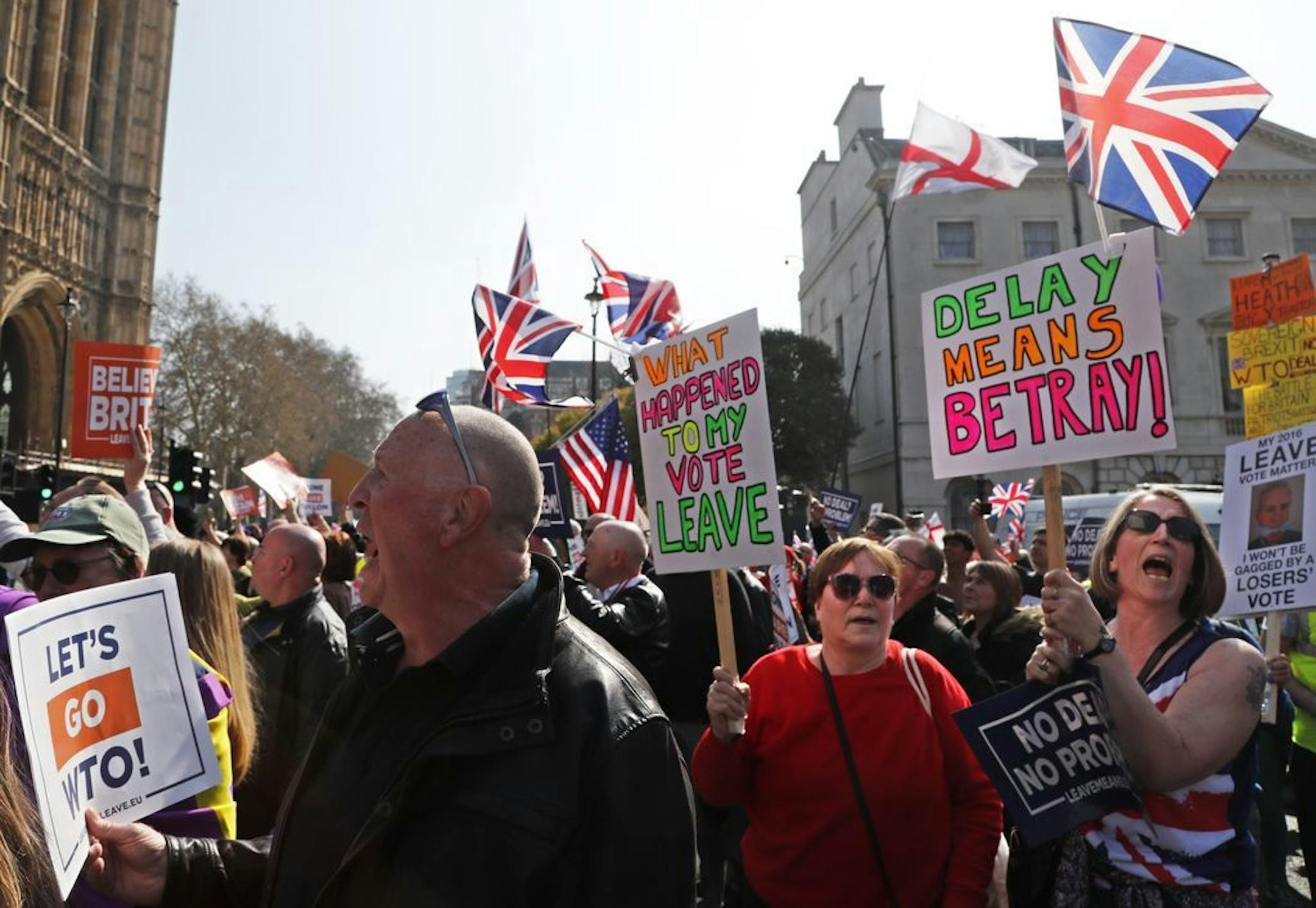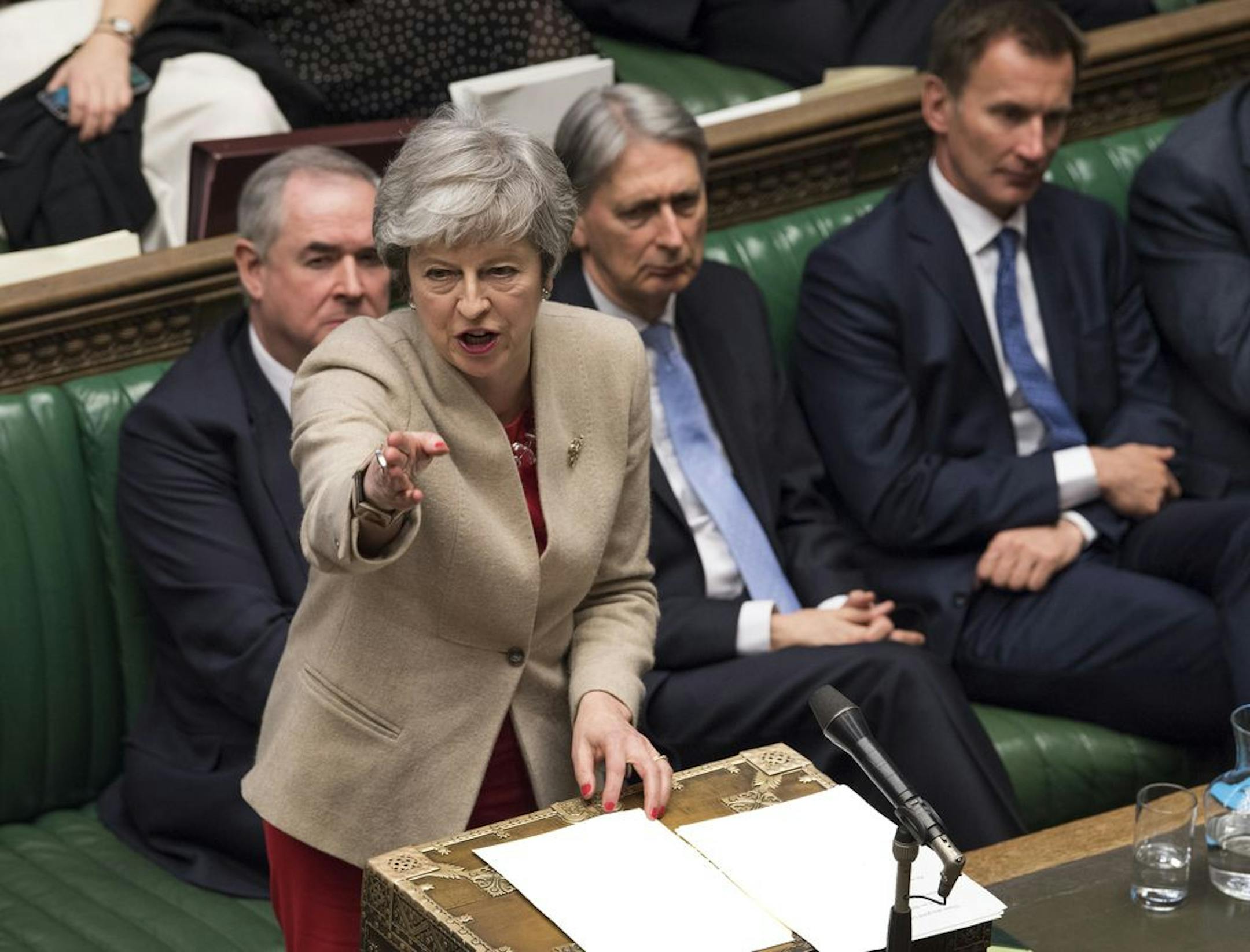
LONDON — British lawmakers on Friday rejected the government's Brexit deal for a third time, leaving the U.K. facing the stark prospect of a chaotic departure from the European Union in just two weeks, with political leaders in turmoil and the country ill-prepared for the shock.
It's either that, or a long delay to the country's exit from the EU. The alternatives are dwindling.
The House of Commons voted 344-286 against the withdrawal agreement struck between Prime Minister Theresa May and the EU, rebuffing her plea to "put aside self and party" and deliver the Brexit that Britons voted for.
Amid business warnings that a no-deal Brexit could mean crippling tariffs, border gridlock and shortages of goods, a visibly frustrated May said the vote had "grave" implications.
"The legal default now is that the United Kingdom is due to leave the European Union on 12 April — in just 14 days' time," she said. "This is not enough time to agree, legislate for and ratify a deal, and yet the House has been clear it will not permit leaving without a deal. And so we will have to agree an alternative way forward."
Had the deal been passed, Britain would have left the EU on May 22.
The bloc said the rejection of the divorce terms made a no-deal Brexit "a likely scenario" and called an emergency summit of EU leaders for April 10 to decide what to do next.
An EU Commission official said the 27 remaining EU nations were "fully prepared for a no-deal scenario at midnight 12th of April."