

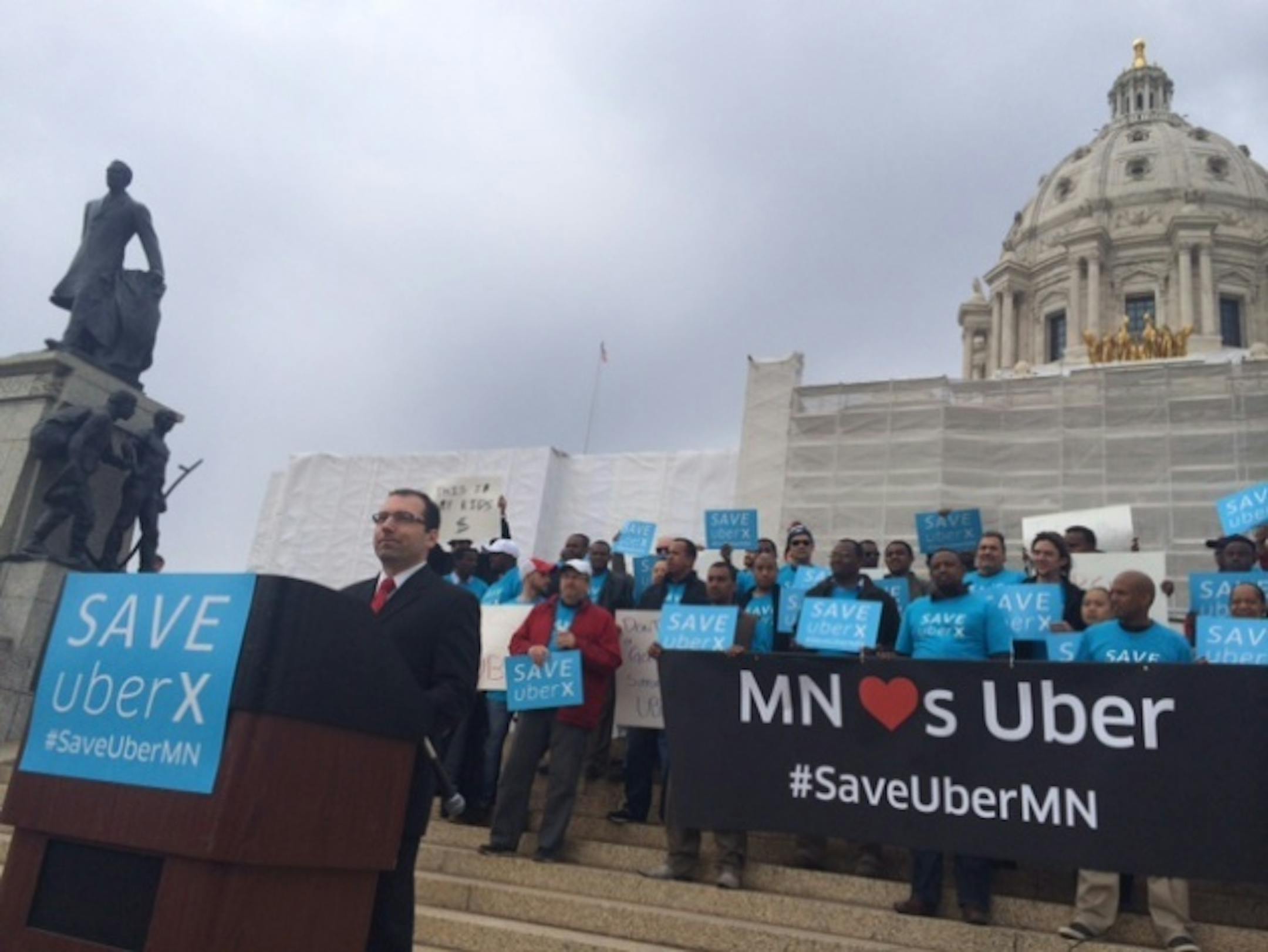
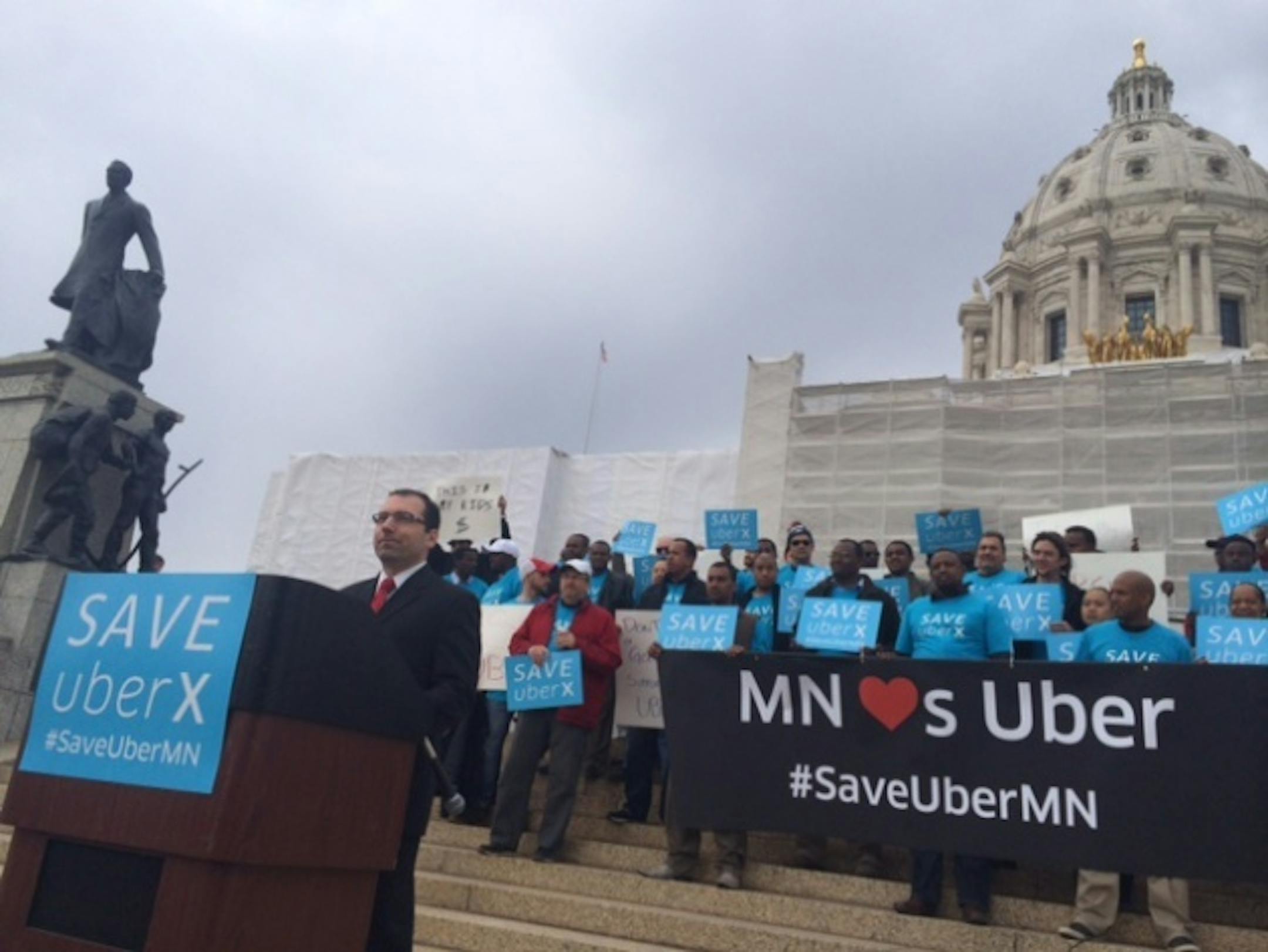
A "global agreement" cut between insurance companies and smartphone-based ride-sharing services like Uber extends to a compromise in Minnesota with legislation that would increase the company's mandated commercial insurance coverage without jeopardizing their presence in Minnesota.
A bill headed to the Senate floor mostly matches its House companion on how much rideshare services must insure drivers in "Phase One," or after they've turned on the app but before they've triggered a button signaling that they've accepted a fare.
Under the dual pieces of legislation, Uber supply must supply its drivers in Phase One with minimum liability limits of $50,000 in death and injury liability coverage, $100,000 in total coverage and $30,000 in property damage. In phases two and three--after they've agreed through the app to pick up a fare and once the customer is in the vehicle—that coverage jumps to $1.5 million. (It remains $1 million in the House version.)
After lengthy debate over the nuances of the bill the Senate Judiciary Committee passed the measure, sending it to the floor for discussion after the Legislature returns from its two-week break.
The compromise comes a long way from an earlier Senate incarnation, which required Uber to furnish its drivers with $1 million insurance policies before their drivers accepted a fare. The legislation would have been the most stringent in the nation. While lawmakers backing the measure said it would close dangerous insurance loopholes, Uber representatives balked, saying the increased costs of such a requirement could determine whether the service expands—or even remains—in Minnesota.
Earlier this week, however, an agreement between the nation's leading insurance providers and so-called Transportation Network Companies like Uber and Lyft helped shape the legislation.
Much of that tension was alleviated after Friday's hearing. Uber Minnesota General Manager Kenny Tsai said the company would like Minnesota's current legislation to more closely reflect the "global agreement," but said "We're about 99 percent there." Tsai said the company would like legislation to provide standard definitions of what a Transportation Network Company is, and what a driver's duties for that company are.
"I think the clarity that we'd like to have is that this insurance bill applies to a driver that we partner with, and the nature of the relationship between drivers and us is clear." He said.


