
U tuition freeze may face chilly reception at Legislature

The plan would require the Legislature to increase funding by $65 million.

October 11, 2014 at 12:54PM
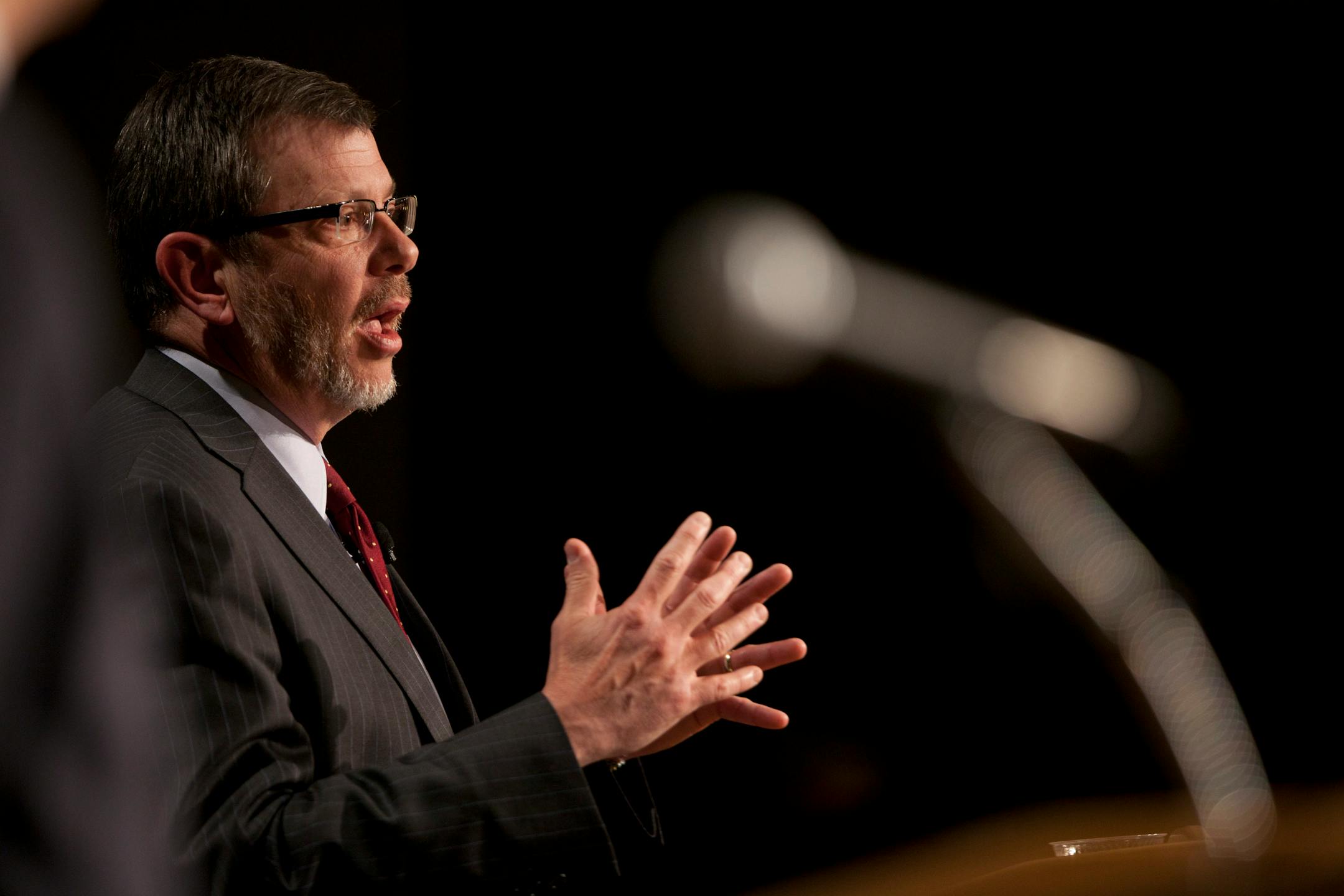
University of Minnesota President Eric Kaler answered a question from a faculty member after he delivered his first State of the University speech on March 1, 2012 in Coffman Memorial Theater on the Minneapolis, Minn., campus.
University of Minnesota President Eric Kaler, shown in 2012, said the extra state money is needed to keep up with inflation as well as fund critical new initiatives, such as training health care workers who are in short supply. (David Banks — DML - Star Tribune/The Minnesota Star Tribune)

It is a goal that seems to appeal to everyone: freezing tuition at the University of Minnesota.

But a plan to do just that — in return for a bump in state funding — may face a chillier reception this time than it did two years ago, when it sailed through the state Legislature.

On Friday, the U's Board of Regents approved a plan that would extend a tuition freeze for Minnesota residents two more years, through 2017 — but only if the state agrees to increase its funding by $65 million.

It is part of the university's $1.3 billion budget request for the next two years, which would amount to a 10.6 percent increase.

On the Twin Cities campus, the undergraduate tuition for Minnesota residents — $12,060 — has not changed since 2012. The proposal would extend those rates for two more years, and would freeze tuition for Minnesota graduate and professional students.

U officials say they would have to raise tuition by 3 percent to 6 percent a year if the Legislature does not supply the extra money.

But the proposal is reviving questions about how the state's flagship institution spends its money.

"I'm saying let's have a reality check here," said Rep. Gene Pelowski, DFL-Winona, who chairs the House Higher Education Finance and Policy Committee. He noted that DFL leaders support a tuition freeze, but "the question is about the price tag."

U explains rising costs

Eric Kaler, the university's president, said the money is needed to keep up with inflation as well as to fund critical new initiatives, such as training health care workers who are in short supply.

He noted, too, that the cost of running a university has grown for many reasons, including technology, health costs, growing demand for career and other student services, and competition to recruit and retain top talent. And he pointed to his six-year plan, to cut administrative costs by $90 million, as evidence that the U is becoming more streamlined and efficient.

At the same time, Kaler emphasized that the request would merely restore the university to its 2008 state funding level, which was reduced during the recession.

"I don't think returning to state support at a level of 10 years ago is too much to ask," he said.

Members of the Board of Regents, who approved the budget request unanimously, agreed.

"The U is a treasure for some very significant reasons," said Regent John Frobenius. He argued that shortchanging its funding could do long-term damage. "I've come to appreciate that this is something that you can bend only so far until it breaks."

Legislators, though, say there's growing frustration about the relentless rise in the cost of higher education.

"I support keeping tuition costs affordable, it's really important," said Sen. Eric Pratt, R-Prior Lake, a member of the Senate's Higher Education and Workforce Development committee. But "buying tuition freezes," he said, is a short-term solution.

"We're not really talking about the root causes of tuition hikes if we're just paying off the increased costs," he said. "I think both Republicans and Democrats are going to be asking tough questions about President Kaler's cost-containment strategy."

Some want tuition cuts

Some students, meanwhile, say a freeze is barely enough.

"Tuition is so high right now, it should never go any higher," said Sara Giusti, 23, a global studies and Spanish major from Chanhassen. "Even freezing it, I think, is too high."

Jacob Pape, 23, a math major from La Crescent, Minn., agreed. "It definitely would help students," he said. "Lowering it wouldn't hurt anybody, either."

Sen. Jeremy Miller, R-Winona, the ranking minority member on the Senate Higher Education Committee, said it is too soon to say how the Legislature will respond to the U's request. "I certainly like the idea of a tuition freeze, and I think it's important for us to try to make higher education more affordable," he said. "A 10 percent increase … is a little bit higher than I would have liked to have seen, but at the same time, I think it's a starting point."

Maura Lerner • 612-673-7384

about the writer

about the writer

Maura Lerner

See Moreicon

More from No Section

See More
FILE -- A rent deposit slot at an apartment complex in Tucker, Ga., on July 21, 2020. As an eviction crisis has seemed increasingly likely this summer, everyone in the housing market has made the same plea to Washington: Send money — lots of it — that would keep renters in their homes and landlords afloat. (Melissa Golden/The New York Times) ORG XMIT: XNYT58
Melissa Golden/The New York Times

It’s too soon to tell how much the immigration crackdown is to blame.