

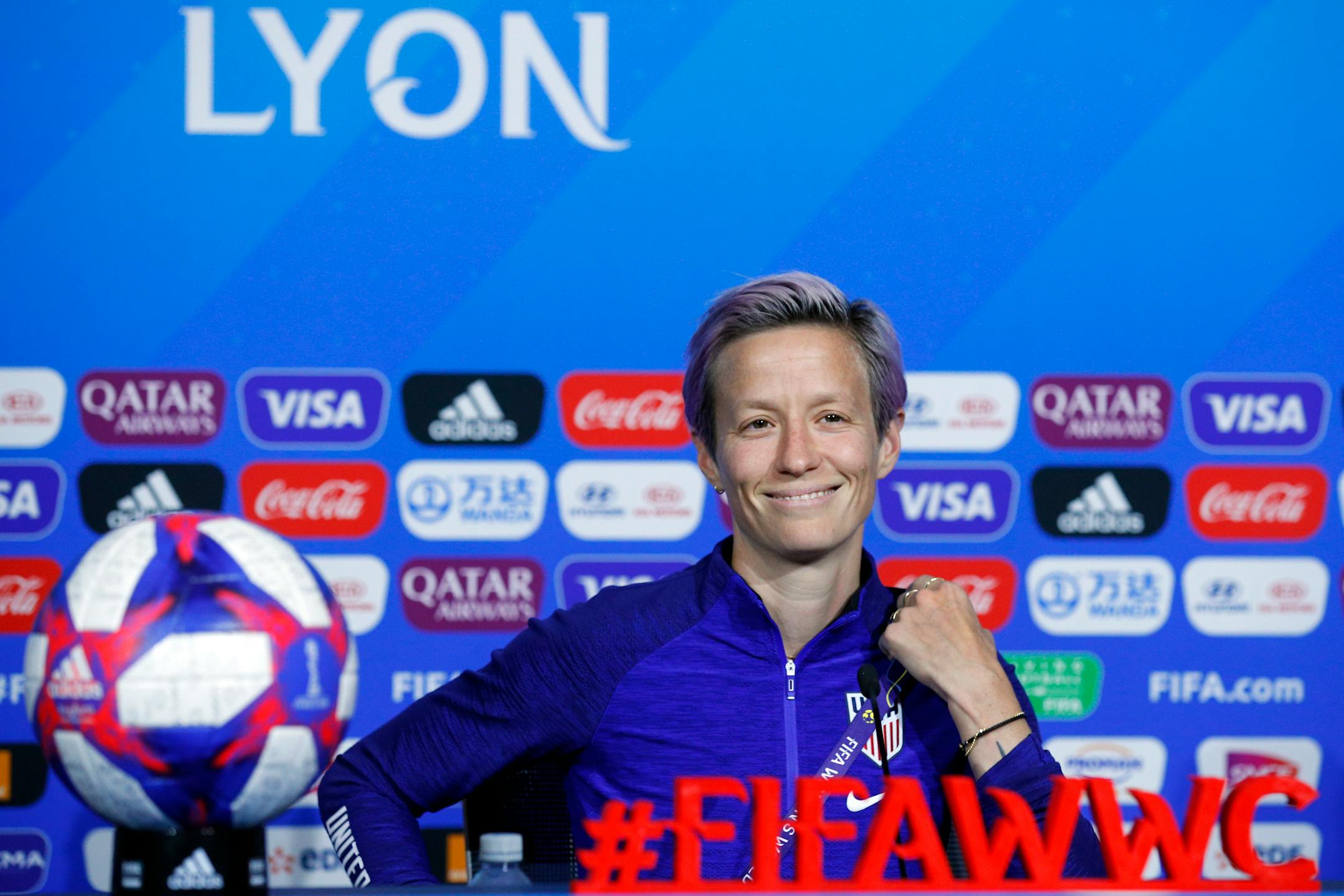
They have traded verbal jabs with the president and fired back at criticism over everything from their patriotism, margins of victory and goal-scoring celebrations.
The U.S. women's soccer players certainly have made headlines beyond their splendid play in advancing to Sunday's World Cup final. The Americans will attempt to defend their title against the Netherlands and reaffirm their long-standing position as the best women's soccer team in the world.
Their challenges won't stop there.
The next one comes soon in a courtroom against their employer, U.S. Soccer. The dispute is over equal pay, and a legal victory seems not only inevitable but also long overdue as a matter of fairness.
Members of the national team filed a gender discrimination lawsuit in early March over inequities in pay compared to the men's national team. The lawsuit contends that some women players earn only 38 percent of what their male counterparts made under similar situations.
The Wall Street Journal reported recently that the two sides have agreed to mediation post-World Cup, which could bring substantive change in a yearslong crusade by women's national players for better compensation and overall commitment to their sport.
The U.S. team has been a lightning rod for controversy since arriving in France for the World Cup. Some of that noise is just plain silly and the product of faux outrage. Are people honestly upset with Alex Morgan's tea celebration? Come on.
However, I disagree with Morgan's assertion that the backlash over her celebration is an example of a double standard for female athletes. Male athletes are often criticized for their celebrations, too. Some people will find reason to be offended by anything, regardless of gender.


