

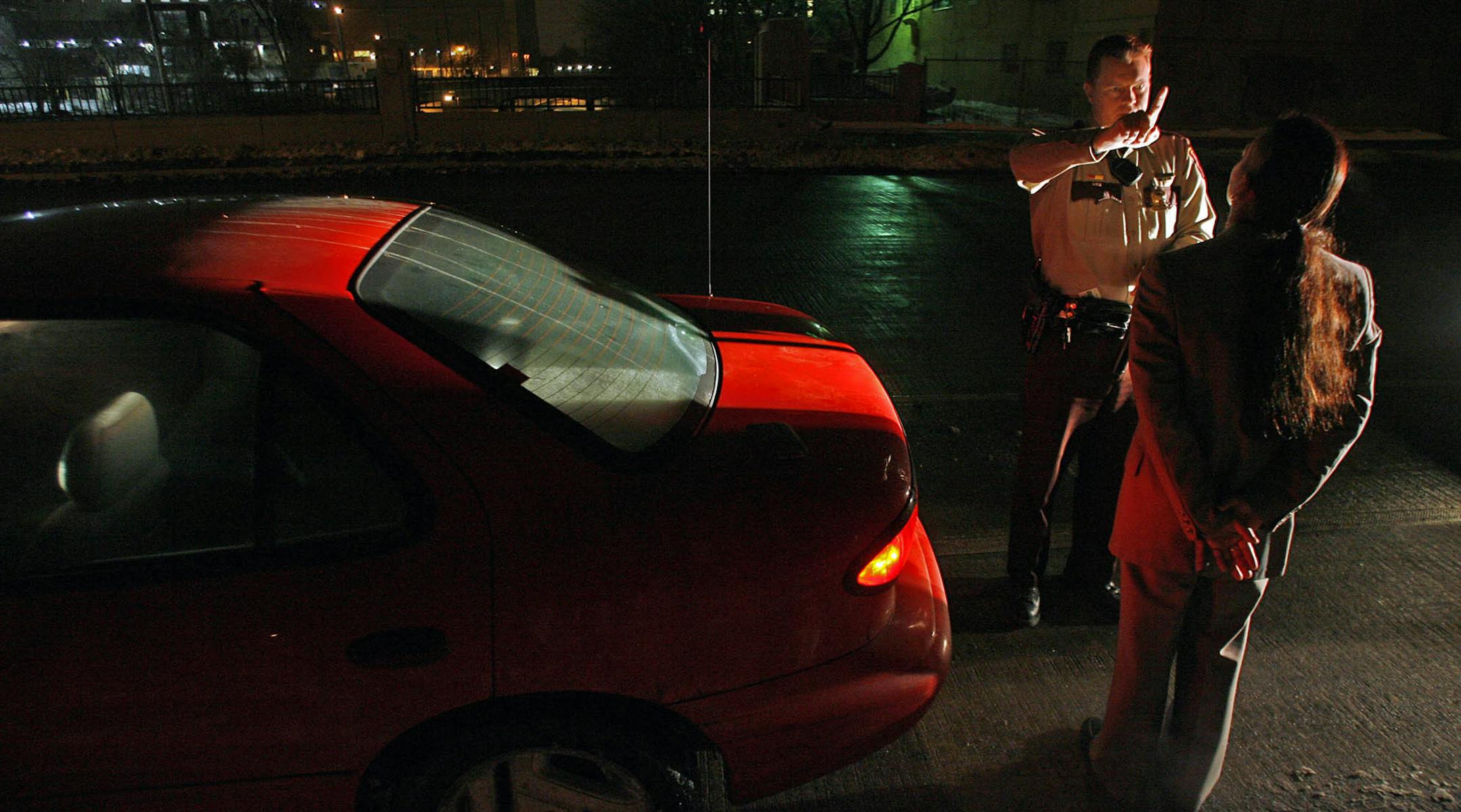
The U.S. Supreme Court agreed Friday to review Minnesota's unique implied-consent law, which makes it a crime for a suspected drunken driver to refuse a warrantless breath test.
The case under review, State vs. Bernard, will be heard through oral arguments by local attorney Jeff Sheridan and a Washington, D.C., law firm. The court didn't give the reason why it decided to hear the case.
Since 2002, Sheridan has argued that the state's implied-consent law is unconstitutional. Appellate courts have issued disjointed rulings on whether a warrant should be required to administer a breath, blood or urine test, he said, adding that he believes a DWI shouldn't be treated differently from any other crime.
"No matter how the [U.S.] Supreme Court rules, it's going to affect 20,000 DWI tests in Minnesota each year," said attorney Chuck Ramsay, who plans to offer a brief in support of Sheridan's case. "And if it doesn't change case law in Minnesota, it may cause 47 states to review their implied-consent laws."
The case began in 2012, when William Bernard of Eagan was approached by police at a public boat ramp and asked to undergo field sobriety tests.
He refused, was arrested and was asked to undergo a breath test. He again said no, which led to felony charges for refusal to submit to chemical testing.
The state Court of Appeals upheld the law that criminalizes refusing to take the test, concluding that because police could have obtained a warrant but didn't, Bernard could be charged for refusing to consent to the warrantless search.
In the ensuing debate over the issue, critics have contended that criminalizing refusal to take a breath test forces individuals to give up their constitutional protections without due process.


