

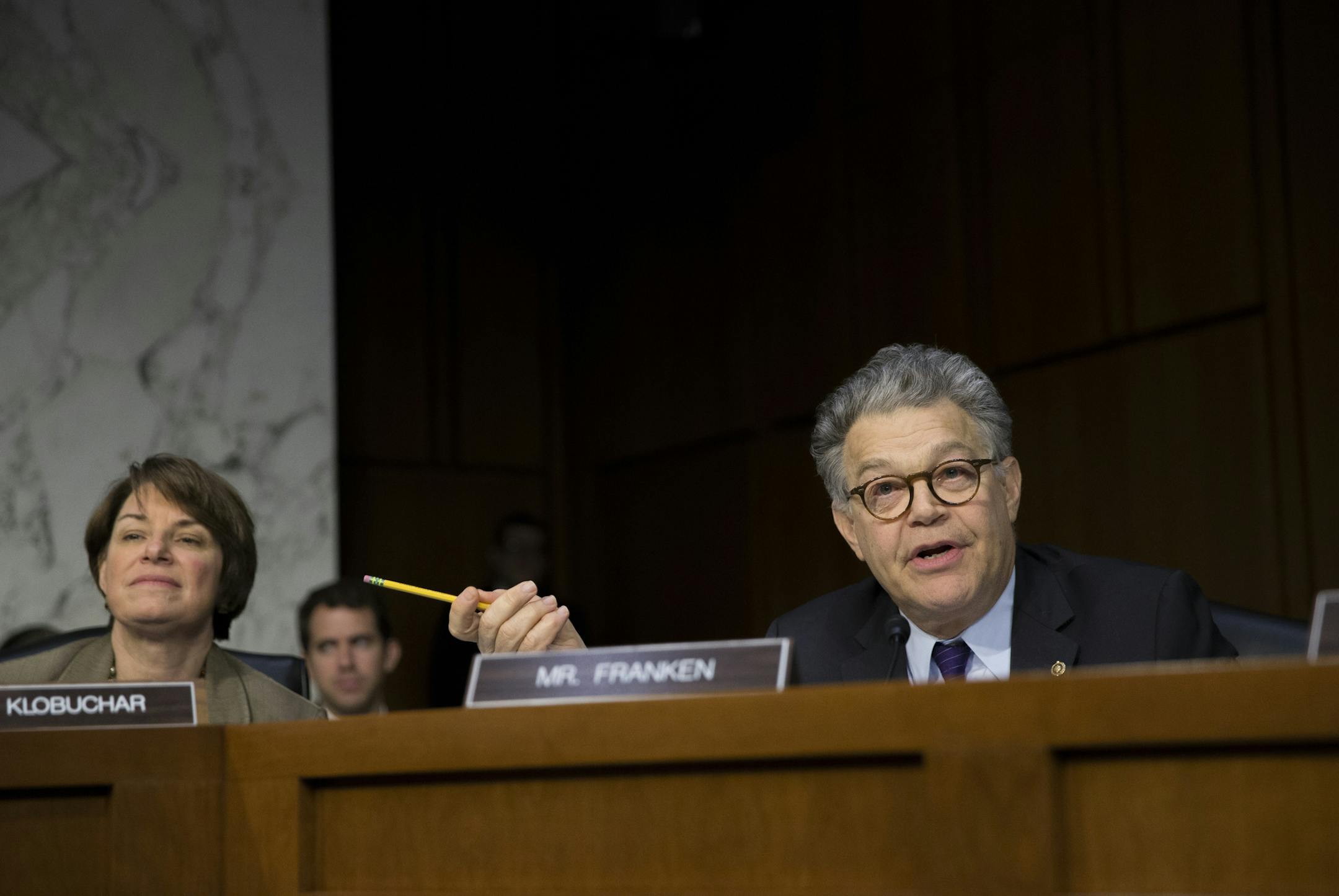
In August, Minnesota Sen. Al Franken said "the economy needs to work better for all Minnesotans, and not just for those at the very top. And one way to take steps towards that goal is to pass a bipartisan tax-reform law that works for our local businesses and keeps more money in the pockets of middle-class Minnesotans." Sen. Amy Klobuchar agreed: "We need to work together on comprehensive tax reform to lay the groundwork for expanded economic growth across the country."
But when legislation to do just that came before the Senate, both of our senators voted against it, along with all of their colleagues across the aisle. Instead, they would leave in place a system that has "rigged [the economy] to advantage the rich and powerful," as nearly three-quarters of Americans said last year.
For decades, well-connected special interests, in collusion with willing lawmakers, have turned the tax code into an incomprehensible maze, chock full of carve-outs and loopholes for a favored few, paid for by American taxpayers. Then, those same cunning industries and companies hire a bevy of accountants and lawyers to make sure their tax bills are as low as possible.
Meanwhile, hardworking Americans, who cannot afford the lobbyists and lawyers, sift through 241 pages of bewildering instructions to file their taxes and send a good portion of their hard-earned money — nearly $10,000 for the average taxpayer — to Washington to bankroll the special-interest gravy train.
"For most Americans," President Barack Obama admitted in 2011, "the basic bargain that made this country great has eroded." He was largely mistaken about what caused it and sorely misguided on how to fix it, but the president's diagnosis was spot-on.
These days, ordinary Americans are working harder and harder but falling further behind. In 2016, more than 30 percent of Minnesota's gross domestic product went to the IRS. Something's got to give. The current path is unsustainable and threatens to turn our nation into a two-tiered society in which the powerful prosper and the middle class declines.
We used to be a society that rewarded hard work. And every American, regardless of where they started out, had the opportunity to succeed. The American dream was real; it inspired generations before us.
The tax-reform legislation recently passed by the U.S. House and Senate can help restore that society.


