

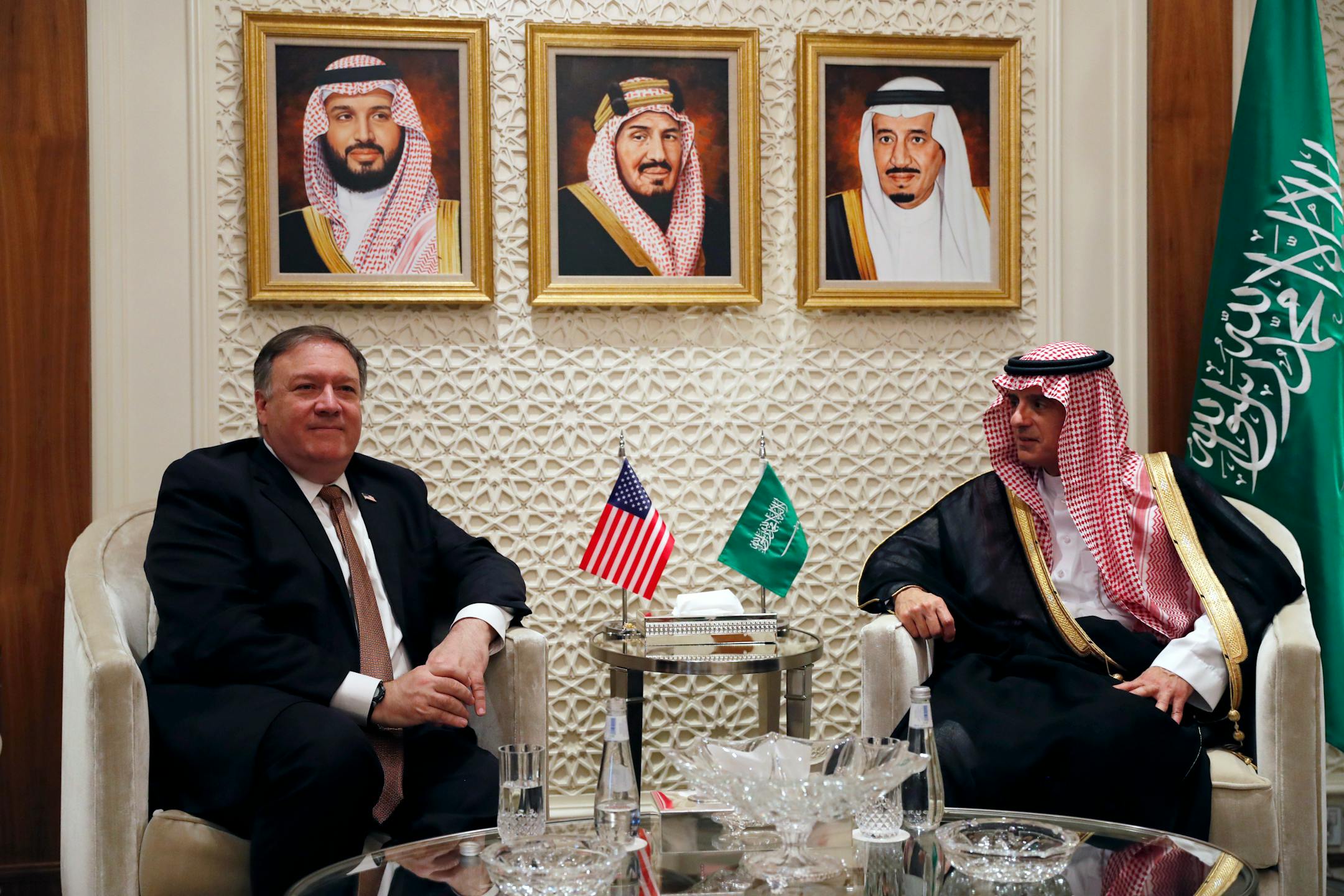
Dissident journalist Jamal Khashoggi, whose Oct. 2 disappearance from a Saudi consulate in Istanbul has sparked a global firestorm, may indeed have been killed by "rogue killers," as President Donald Trump floated on Monday.
But the rogue killers are likely leaders of the desert kingdom itself, given that virtually nothing of this magnitude would have happened without the knowledge and even approval of Crown Prince Mohammed bin Salman, the de facto day-to-day leader of Saudi Arabia.
Killing is not new to the crown prince's government, which has indiscriminately killed many in Yemen in bombing raids that have exacerbated a humanitarian catastrophe. And the kingdom has committed "unlawful killings, including execution for other than the most serious offenses and without requisite due process" in its own country, according to the State Department's 2017 report on human rights.
Now it appears, according to Turkish authorities, that Khashoggi was killed in the consulate despite previous denials by the Saudi government, which is reportedly considering admitting that the U.S.-based journalist was in fact killed at the consulate as a result of an interrogation gone wrong.
Previously, some Turkish officials reportedly said they have recordings of Khashoggi's interrogation, torture and murder. And a Turkish newspaper closely aligned with Ankara published pictures of a 15-strong Saudi security detail, including one operative who traveled with his own bone saw.
None of this sounds rogue, but rather precisely planned — though planners may not have anticipated that the civilized world would recoil at such an illegal and immoral act. In fact, the "rogue killers" line may be part of an effort by Saudi Arabia, the U.S. and even Turkey — all ostensible, albeit strained allies — to defuse the diplomatic crisis with a cover of unauthorized agents that operated beyond Prince Mohammed's purview.
Trump has a troubling habit of taking denials at face value, be they from foreign leaders such as Vladimir Putin, who has disavowed any Russian attack on the 2016 U.S. election despite the intelligence community's consensus on the matter, and domestically, such as when Trump parroted Roy Moore's sexual-misconduct denials during the Alabama U.S. Senate race.
The president, the nation and in fact the world would be better served if Trump were less obsessed with the arms deal he pushed for in his visit to Saudi Arabia — his first foreign trip as president, rejecting the precedent of visiting close allies in Ottawa or elsewhere — and committed to his promise of "severe punishment" if the government is found complicit.


