
U.S. farmers are facing a new risk: Global spread of African swine fever

The virus has spread from Africa to China and Western Europe. An outbreak in the U.S. could halt all pig and hog exports.

October 9, 2018 at 3:46AM
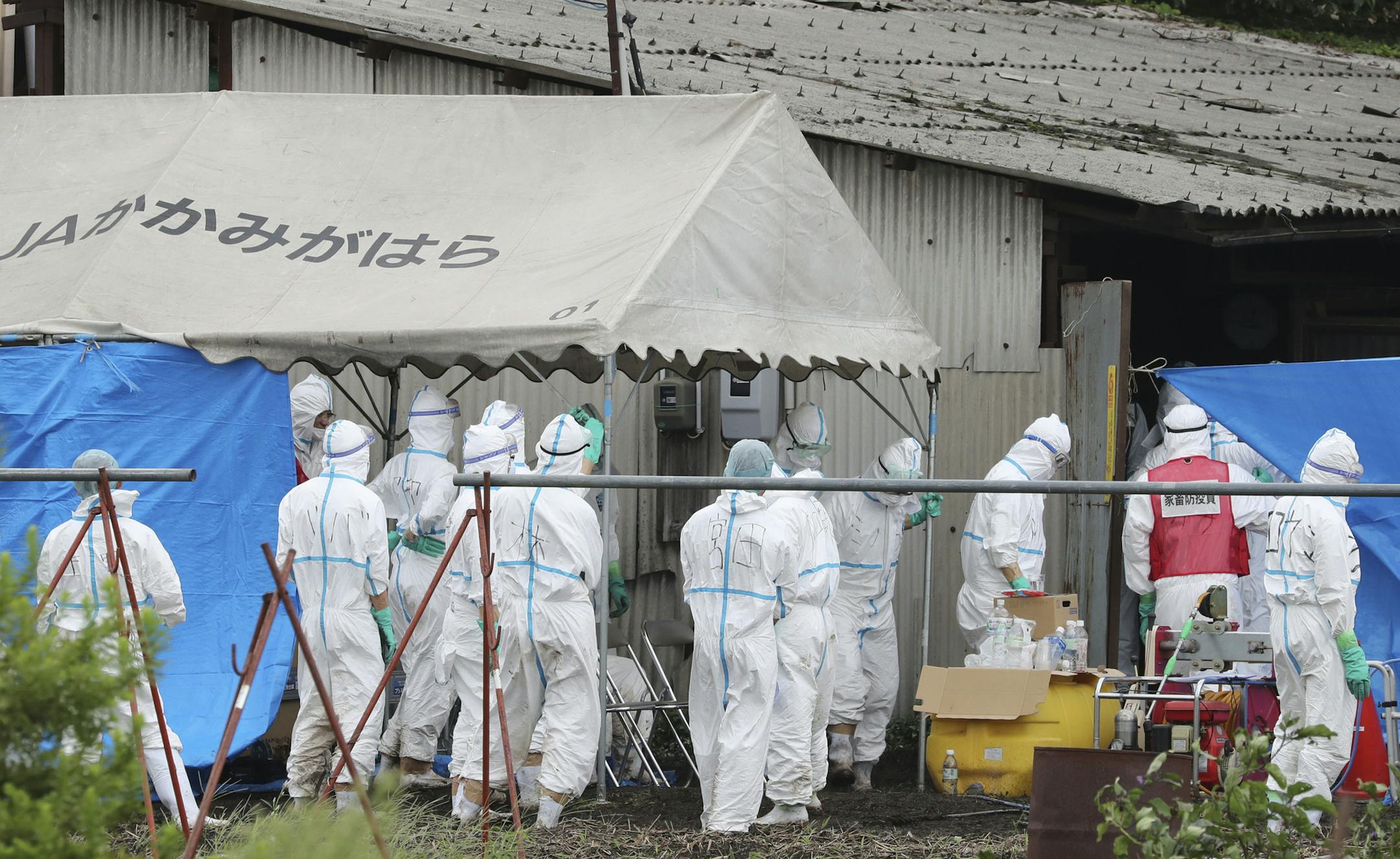
Prefectural animal health inspectors and others gather at a pig farm in Gifu City, Gifu Prefecture on Sep.9, 2018. Prefecture announced on the same day that the Swine fever had broken out in Gifu City. It is the first confirm of Swine fever since 1992 in Japan. Prefecture is going to kill all 610 pigs of the pig farm till next day morning and bury them inside the farm.( The Yomiuri Shimbun via AP Images ) ORG XMIT: YOMIU
Prefectural animal health inspectors and others gather at a pig farm in Gifu, Japan, in early September when authorities confirmed an outbreak of swine fever. More than 600 pigs were subsequently killed at the farm to try to prevent further spread of the disease. (The Minnesota Star Tribune)

Hog farmers in the Midwest are watching closely as African swine fever spreads in China and into Western Europe.

There's no evidence the virus is present in the U.S., but the global outbreak has already affected farmers in Minnesota and Iowa by lifting U.S. hog prices.

Lean hog prices bottomed out in August at about $40 below break-even per pig. Then, news emerged that African swine fever was spreading in China, and prices have risen to just above break-even in a little over a month. As the breadth of China's outbreak emerges and China looks to import more pork in coming months, prices could keep rising.

That, and renewed trade talks with Japan, have brought relief to farmers buffeted by a glut of hog production and the effects of a trade war with China and renegotiation of NAFTA with Mexico and Canada.

But now farmers are worried the virus will spread to America. Infected hogs were discovered in Belgium and Japan in September, demonstrating the fever has now spread well beyond Russia, Eastern Europe and Africa, where it originated.

"It's a real concern for everybody in the U.S.," said Montserrat Torremorell, a professor in the College of Veterinary Medicine at the University of Minnesota. "For many years, it's been restricted. It seemed like the virus was going nowhere. But then in the past five years there have been these new introductions."

The virus is not a threat to humans, according to the World Organization for Animal Health, but it causes internal hemorrhaging and organ failure in pigs. The disease resides in warthogs without any sign of sickness and can be spread to domesticated pigs by ticks.

The few animals in an infected herd that survive become carriers of the disease. Only a minuscule amount of the virus can cause infection, and the virus can travel in animal feed, in meat that isn't cooked thoroughly, or even on shoes, clothing or farm equipment. There is no effective vaccine.
"People have tried to produce a vaccine for a long time, but the vaccines don't work very well," Torremorell said.

While hog confinements in the U.S. generally practice rigorous biosecurity — workers must shower and change clothes at the entry to sow barns, for instance — there are still multiple weak points in the nation's defenses to the disease, said Chris Hodges, a consultant and former chief executive of the National Pork Board in Des Moines.

Smithfield Pork, the largest hog farmer in the country and one with a meatpacking facility in Sioux Falls, S.D., is owned by a Chinese company called the WH Group. Many hog farms in China are owned by American firms. So the risk of someone carrying the disease from a Chinese farm to a U.S. farm on a pair of boots or a sweater is not insignificant.

"We've never had such a globalized industry as we have now in pork," Hodges said.

Hog farmers buying feed on the global market could unknowingly introduce the virus to their pigs, and infected pork could be brought to the U.S. from other countries, missed by customs officials, and somehow transferred from human to pig.

"In most instances it will not make it to the pigs," Torremorell said. "But it's still a risk."

The last major disease outbreak among pigs was a major boon for hog prices. When porcine epidemic diarrhea virus hit the U.S. in 2013 and 2014, prices skyrocketed to their highest level ever.

The same would not be true of African swine fever, said Dave Preisler, executive director of the Minnesota Pork Producers Association, because it would halt pork exports. U.S. hog farmers sell one in four pigs internationally. "It would be awful," he said. "Our exports would basically go to zero. It would have a huge negative impact."

Farmers are being encouraged to step up their already tight biosecurity measures, Preisler said.

Adam Belz • 612-673-4405 Twitter: @adambelz

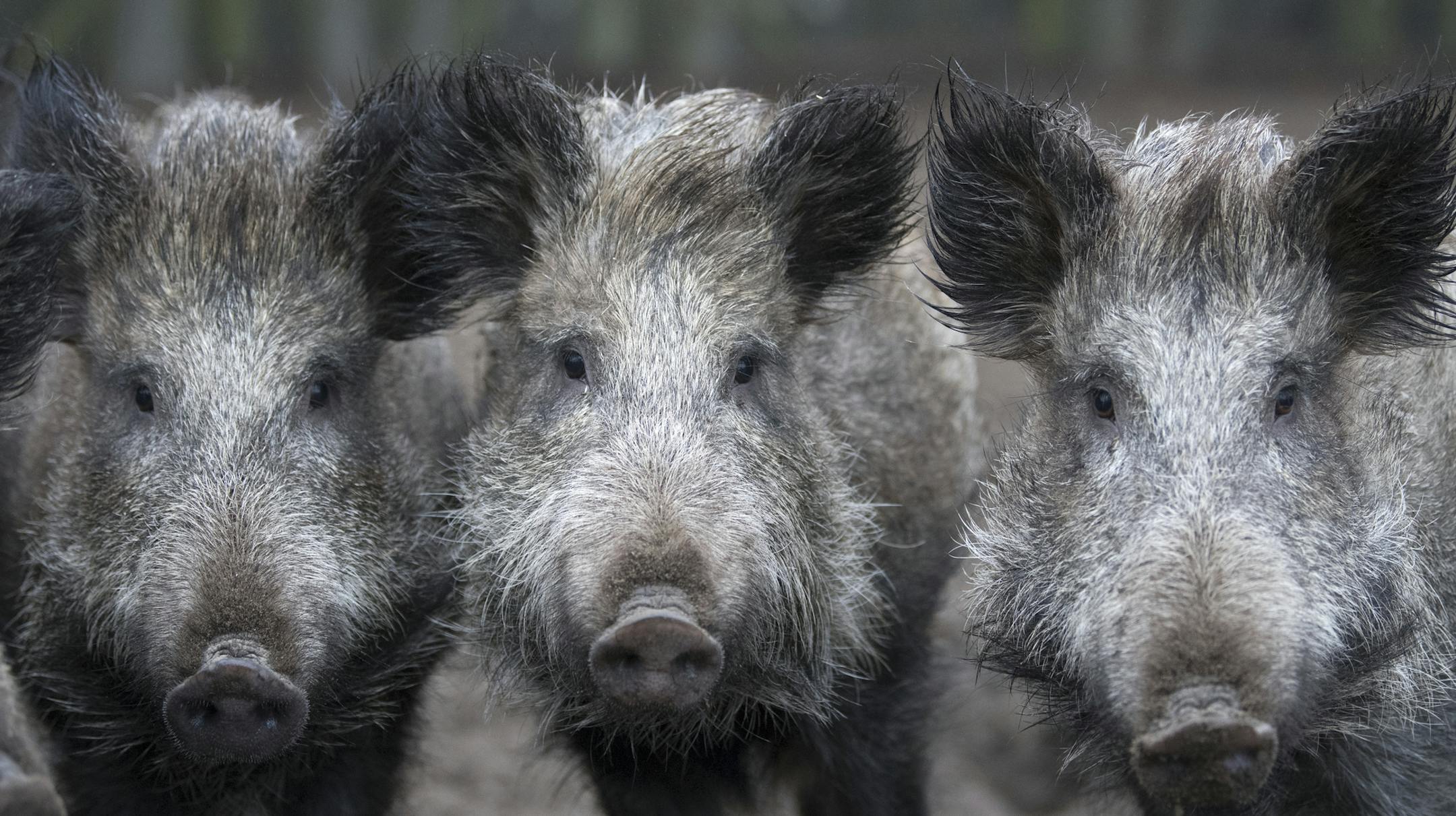
Wild boars pose for a picture in their enclosure in Klaistow, Germany, 12 January 2018. A media report about African swine fever virus has elicited a record killing of around 600 000 wild boars in the hunting season of 2016/17. Photo by: Ralf Hirschberger/picture-alliance/dpa/AP Images ORG XMIT: 180112-99-607125
The outbreak, for now, is boosting hog prices in the U.S. as producers try to fill the void. In Germany, reports of African swine fever led to a record killing of 600,000 wild boars in the hunting season of 2016-2017. (The Minnesota Star Tribune)
about the writer

about the writer

Adam Belz

Reporter

Adam Belz was the agriculture reporter for the Star Tribune.

See Moreicon

More from Business

See More
card image
Renée Jones Schneider/The Minnesota Star Tribune, Leila Navidi/The Minnesota Star Tribune

The holidays aren’t the time to question Minnesotans’ generosity. Neither is an election year.

card image
card image