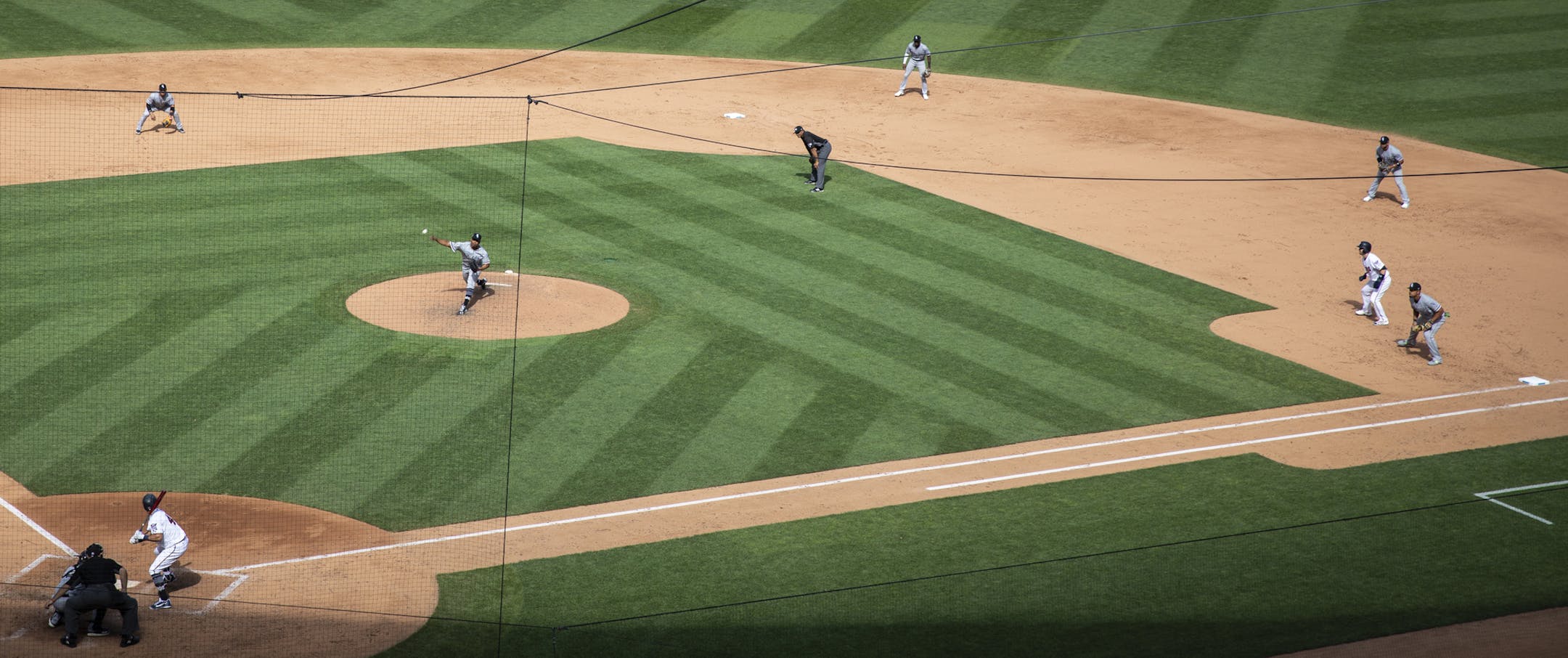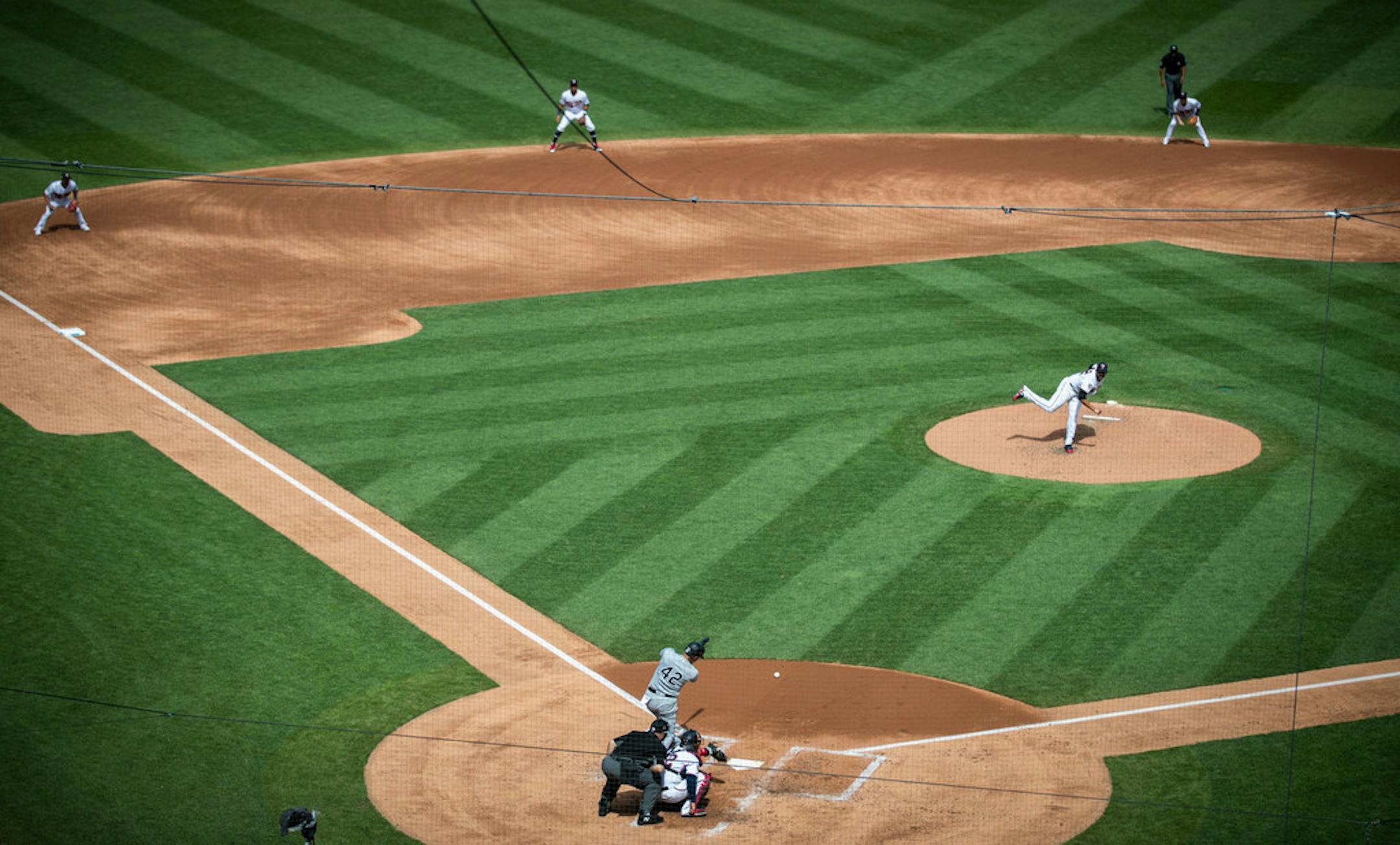
In the top of the seventh inning on June 1, Twins reliever Trevor Hildenberger was up 0-2 on Indians second baseman Jason Kipnis. But before Hildenberger delivered the next pitch, third baseman Miguel Sano jogged from the left side of the infield to the right to join his teammates who were shifting against Kipnis.
Hildenberger threw a changeup low and away that Kipnis, a lefthanded hitter, hit at 95 mph, according to Statcast. It went right to Sano, who made the easy play in what became a 7-4 Twins victory.
Sano scooped the grounder from the same spot where second baseman Brian Dozier would normally play — or at least, where Dozier might play if this were 20, 10 or even two years ago. But in 2018, having a third baseman field a ball on the right side of second base qualifies as the new normal. That's especially true for teams like the analytically driven Twins, who incorporate the shift as a regular part of their defense instead of a one-off gizmo reserved only for the most extreme pull hitters.
"If we're going to talk about pitching in front of shifts, it's just called pitching now," starter Jake Odorizzi said.
"It's almost abnormal if you have a straight up defense."
It has changed the way the Twins approach their overall strategy in a game while players have tried not to let it distract them from doing what they do best, whether they are on the mound with a shift at the backs, or at the plate trying to figure out how to beat another team's shift.
Shifts abound
According to data the Major League Baseball recently made available, the Twins employ a shift, which is defined as having three infielders on one side of second base, in 29 percent of all plate appearances. That's the third-highest rate, with the Astros in first at a whopping 43.2 percent, according to Baseballsavant.com.
It's also up significantly from the 14.1 percent the Twins shifted hitters in 2017. The Twins' 14.9 percentage point increase is the second-biggest jump.