Downtown Minneapolis and St. Paul retain a handful of historic theaters built in the early 20th century, but dozens of others are gone — lost to fire or old age or the ceaseless cycles of redevelopment.
Two of the more intriguing of these lost theaters, one in each downtown, bore the same name — the Metropolitan.
The Minneapolis Metropolitan was notable for an embarrassing design flaw, and later became the scene of an alibi concocted by a notorious murderer. St. Paul’s Metropolitan was in many ways the grander of the two, and its architect went on to play a crucial role in designing an epic American building — Grand Central Terminal in New York City.
Both theaters, known as opera houses because they were designed for live theatrical and musical performances, opened in the 1890s and came down within a year of each other in the 1930s.
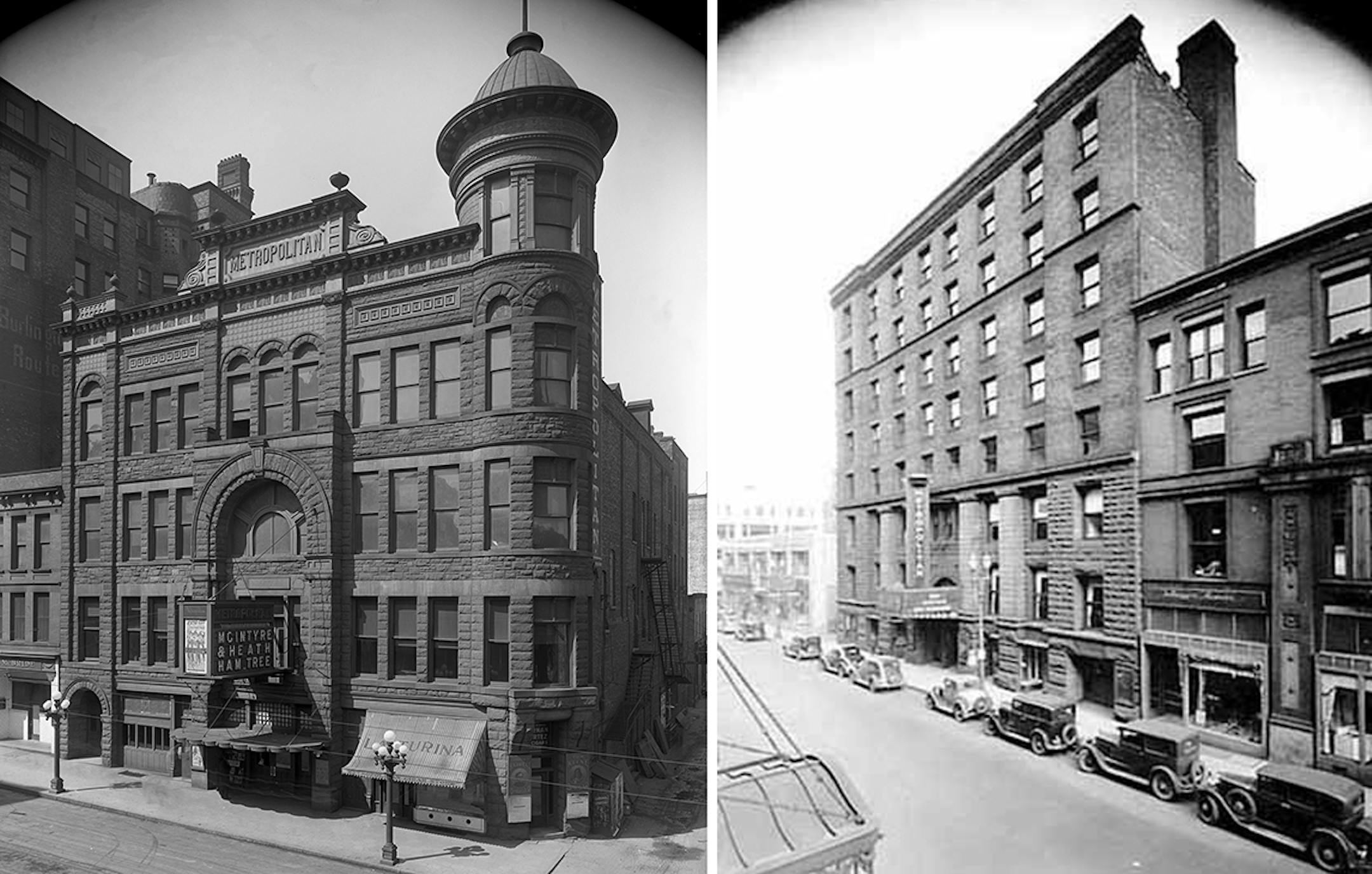
The Metropolitan Opera House in Minneapolis (320 Marquette Av.) made its debut in 1894. It was known initially as the New People’s Theater but was renamed the Metropolitan just six months later under new ownership.
Vaguely Romanesque Revival in style, the theater was designed by Harry G. Carter, a Minneapolis architect who specialized in entertainment venues (including brothels, at least one of which he designed for a prominent local madam).
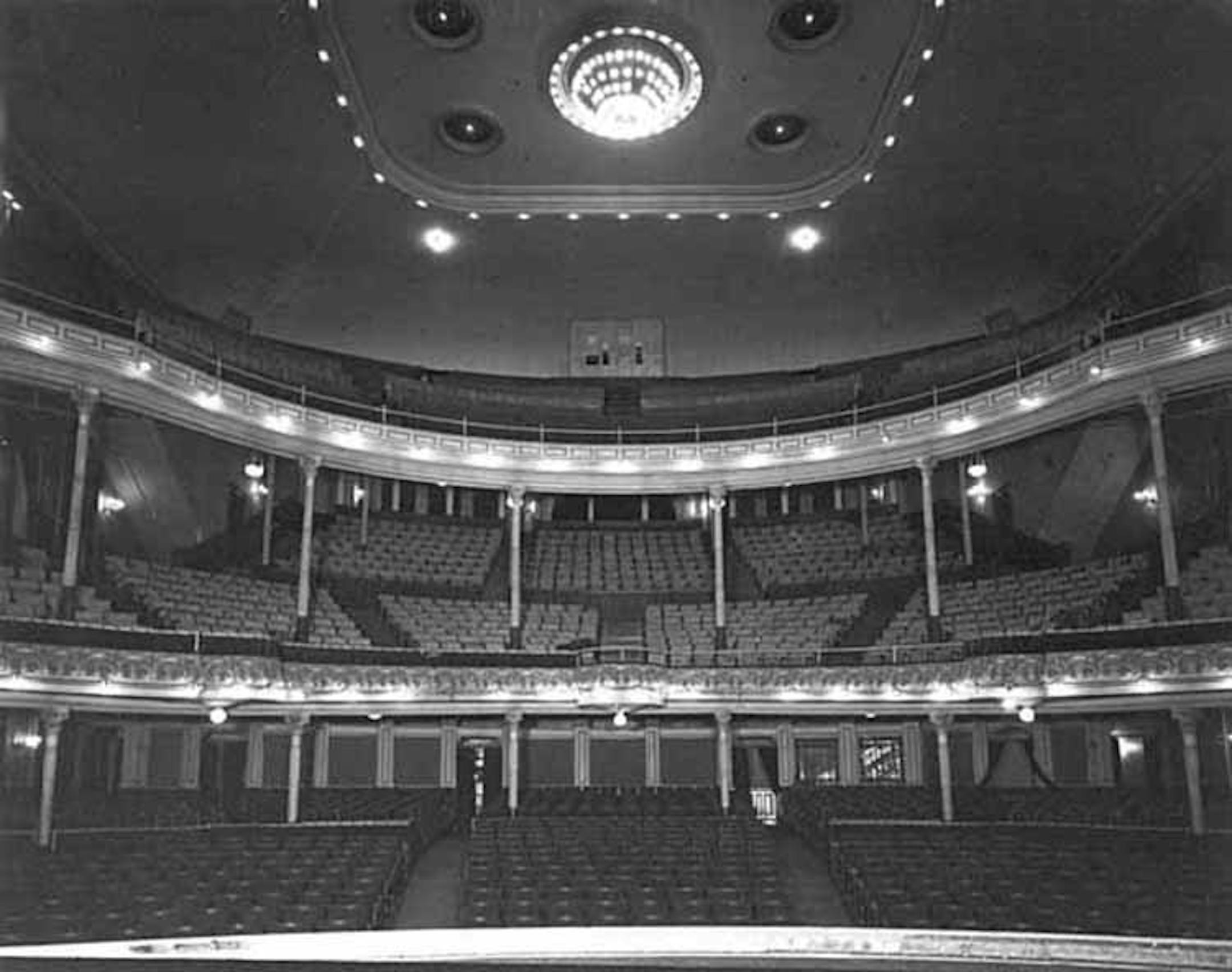
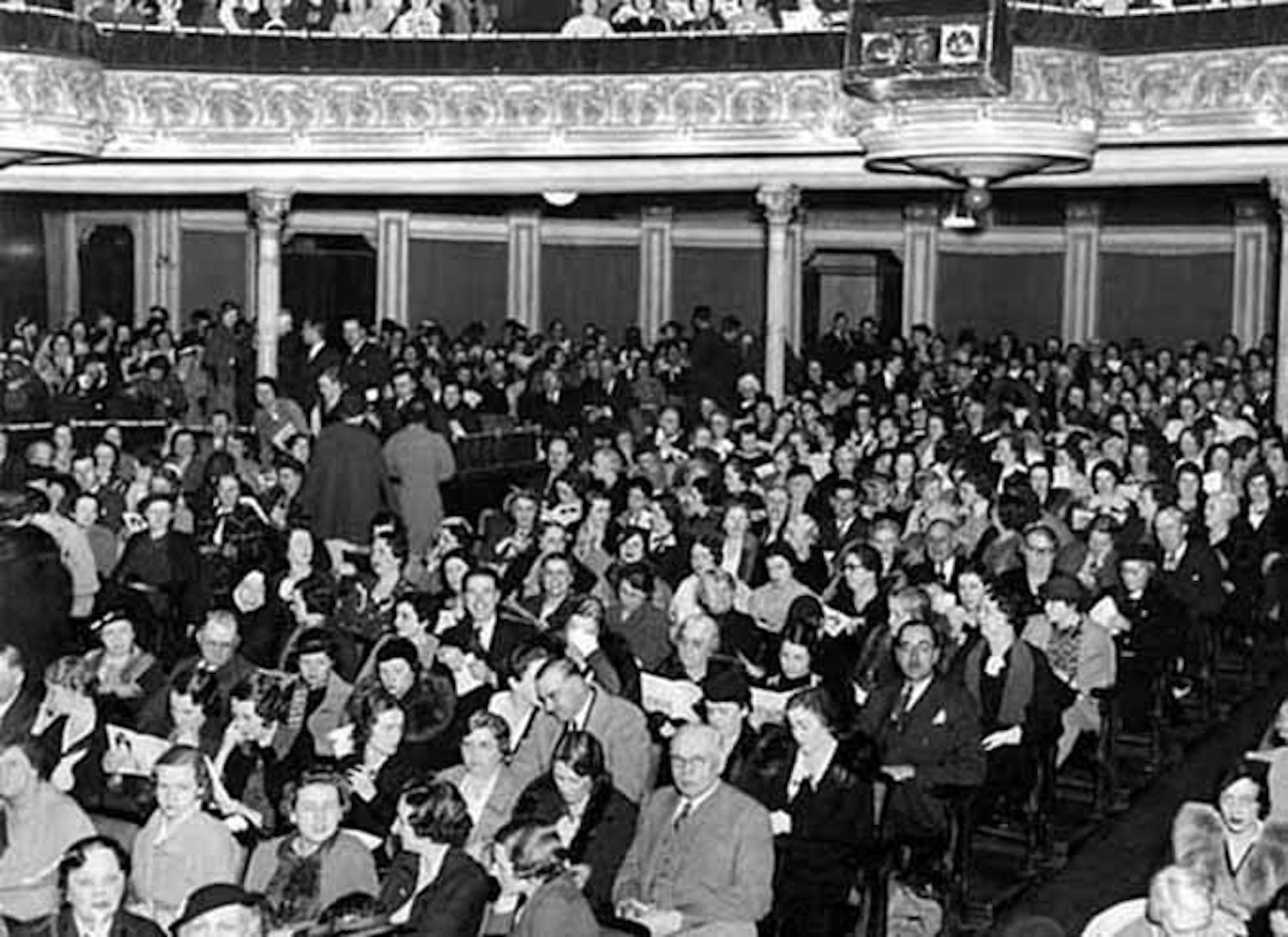
Another Minneapolis designer, Lawrence McIvor, decorated the theater auditorium, which had two balconies and 1,500 or more seats. On the outside, the theater offered up a brownstone facade, an arched entrance, and a corner tower. Inside, the playhouse was the usual plasterer’s holiday, with plenty of decorative effects to enliven the show.
It’s fair to say the theater didn’t get off to a good start.