
Twin Cities classical fans go barhopping with Beethoven

Classical musicians venture out of the concert hall and into bars to connect with new listeners.

April 10, 2016 at 12:20AM

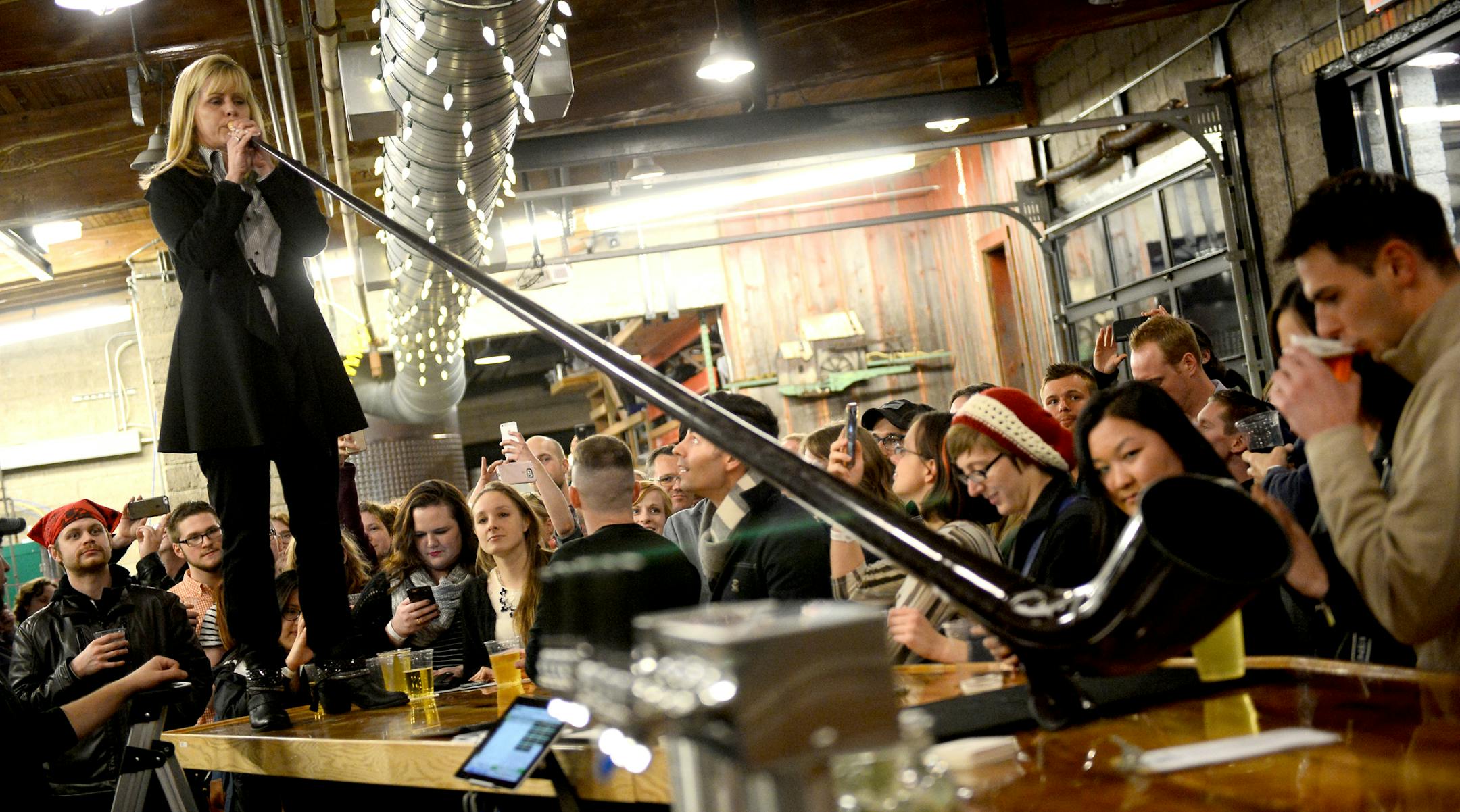
As a 22-year horn player for the Minnesota Orchestra, Ellen Dinwiddie Smith has performed in many of the world's most venerated concert halls — but never before on the bar at a brewpub, with a packed-in audience shouting woo-hoos of approval.

When she blew a soulful "Amazing Grace" into her 14-foot-long Swiss alphorn, a tall fellow wearing a tweed paddy cap said, "It's like the one in the Ricola commercials. I've got to get me one of those."

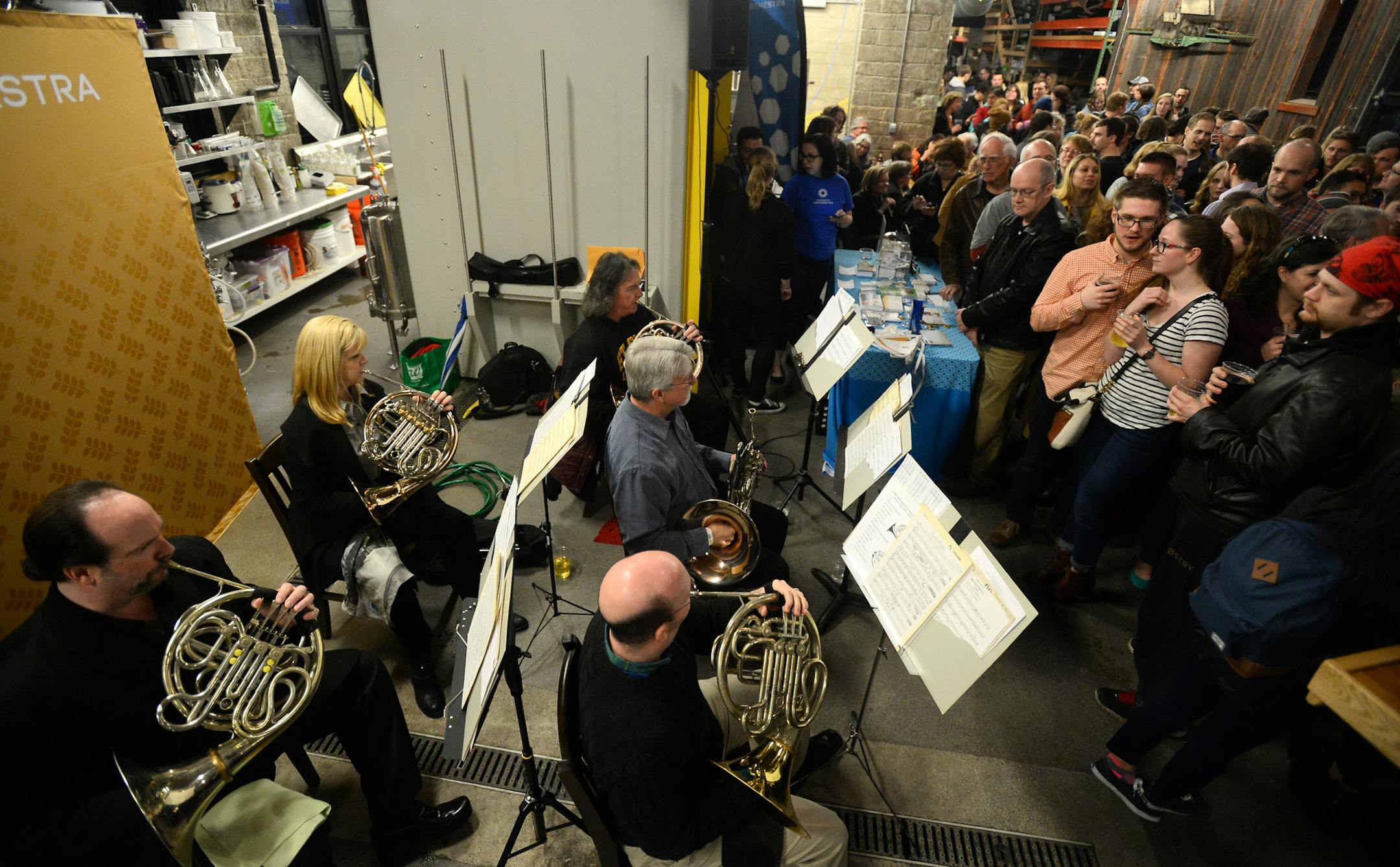
Smith was part of a horn quintet playing a recent free gig at Sociable Cider Werks in northeast Minneapolis for Symphony and Suds, an outreach effort the orchestra debuted last year. The program brings small classical ensembles to brewpubs that then offer promotional samples at Orchestra Hall. It's drawing crowds, as did a recent St. Paul Chamber Orchestra string quartet performance at Icehouse, a bar in south Minneapolis. Another Icehouse concert by the Schubert Club's Accordo chamber group coming up in May sold out in a couple of days.

While Twin Cities orchestras and other classical groups have been staging off-site concerts at parks, plazas and churches for decades, the bar scene is a relatively new experiment that's being tested in many other cities, including New York, San Francisco and Chicago. Orchestra patrons are drawn by lower ticket prices and the chance to see familiar tuxedoed musicians in a different context. Bargoers who might not dream of spending a night at a formal concert hall — or can't afford it — get a taste of some world-class music.

"It's a casual, low-commitment way to get exposed to classical music," said Schubert Club marketing director Tessa Retterath Jones.

Jami Orcutt of Minneapolis, who was lined up at the Sociable bar with two girlfriends and pints of cider, said she hadn't been to an orchestra concert since she was a little kid.

"We were going to go to Nye's tonight since it's closing, but I saw this on Sociable's Facebook page and it looked interesting," she said. And the music? "I like it. Bringing it to Northeast, it's a good way to draw people in."

Orchestra fan Britt Dougall said that for serious listening, "I prefer Orchestra Hall. But it's fun to come out and support the musicians, the way they're thinking outside the box."
Although a few subscriptions have been sold from the promotional table set up at every event, ticket sales "aren't the key metric for success here," said the orchestra's marketing director, Cindy Grzanowski. "It's just another way to get the word out about our introductory-level concerts like Symphony in 60, Inside the Classics and our $10 ticket offer."

Classical 'house party'

Symphony and Suds got its start over a cup of coffee between Sociable co-owner Jim Watkins and his Carleton College piano teacher, Ken Huber, who is on the steering committee of the booster group Orchestrate Excellence.

"People in the Twin Cities have very eclectic musical tastes, and I'm willing to try anything," said Watkins, who estimated the crowd was about half-and-half bar regulars and orchestra patrons.

Michael Gast, the orchestra's principal horn, who is on his third Symphony and Suds experience, is a natural ambassador/emcee. He engaged the audience with brief background riffs on some of the 14 short pieces, such as Verdi's "Chorus of Kidnappers" from "Rigoletto," and oversaw the demo of a crowd-surfing hose-a-phone (made with a garden hose and a trumpet mouthpiece).

"It's fresh and unpredictable, like a house party," Gast said. "You've got to approach it like you're doing a variety show, and be entertaining."

While the ideal outcome is attracting more ticket buyers to the traditional, optimal-acoustic halls by spreading the classical gospel in humbler environs, "it's really more about building a connection between musicians and the community in a fun, accessible setting that's not intimidating," said Emma Smith, who coordinates the program.

But the concept also comes with challenges, particularly for the musicians.

Cellphones and chatter

Ambient noise and multi-tasking listeners must be taken in stride by artists used to rapt, silent attention. Ringing cellphones, cause for justifiable homicide in a concert hall, are part of the package.

"This is the one place we never ask people to turn them down because you can't hear them anyway," Gast said.

A key factor for success has been carefully matching instruments to venues; the orchestra's Smith does walk-throughs of each potential space to determine whether it's a fit. Strings and woodwinds do fine in quieter environments, but at Sociable, even with the crowd up front listening in silence, only horns could blast through the background din.

Last year at one of the first events, the Northeast Brewers' Block Party, "the musicians were a little nervous about coming on after a hip-hop group, but the crowd wanted an encore," she said.

"I wouldn't bring a $200,000 violin in here," Gast said. "But doing this is breaking down a wall. We're resolved to build a new audience, one person at a time, if that's what it takes."

It's not a bad deal for the bars, either. With a fire-code capacity crowd of 350 inside plus folks on the patio, Sociable reported four times the usual take for a Thursday night.

Kristin Tillotson • 612-673-7046 • @StribKristin

Ellen Dinwiddie Smith, a horn player with the Minnesota Orchestra, played “Amazing Grace” on a Swiss alphorn at Sociable Cider Werks in Minneapolis.
Ellen Dinwiddie Smith, a horn player with the Minnesota Orchestra, played “Amazing Grace” on a Swiss alphorn at Sociable Cider Werks in Minneapolis. (Star Tribune/The Minnesota Star Tribune)
A quintet of horn players from the Minnesota Orchestra played at Sociable Cider Werks.
A quintet of horn players from the Minnesota Orchestra played at Sociable Cider Werks. (Star Tribune/The Minnesota Star Tribune)
about the writer

about the writer

Kristin Tillotson, Star Tribune