

Your smartphone can help you peek through a home security camera while you're at work, and it can show you a real-time map filled with cars ready to give you a lift on a moment's notice.
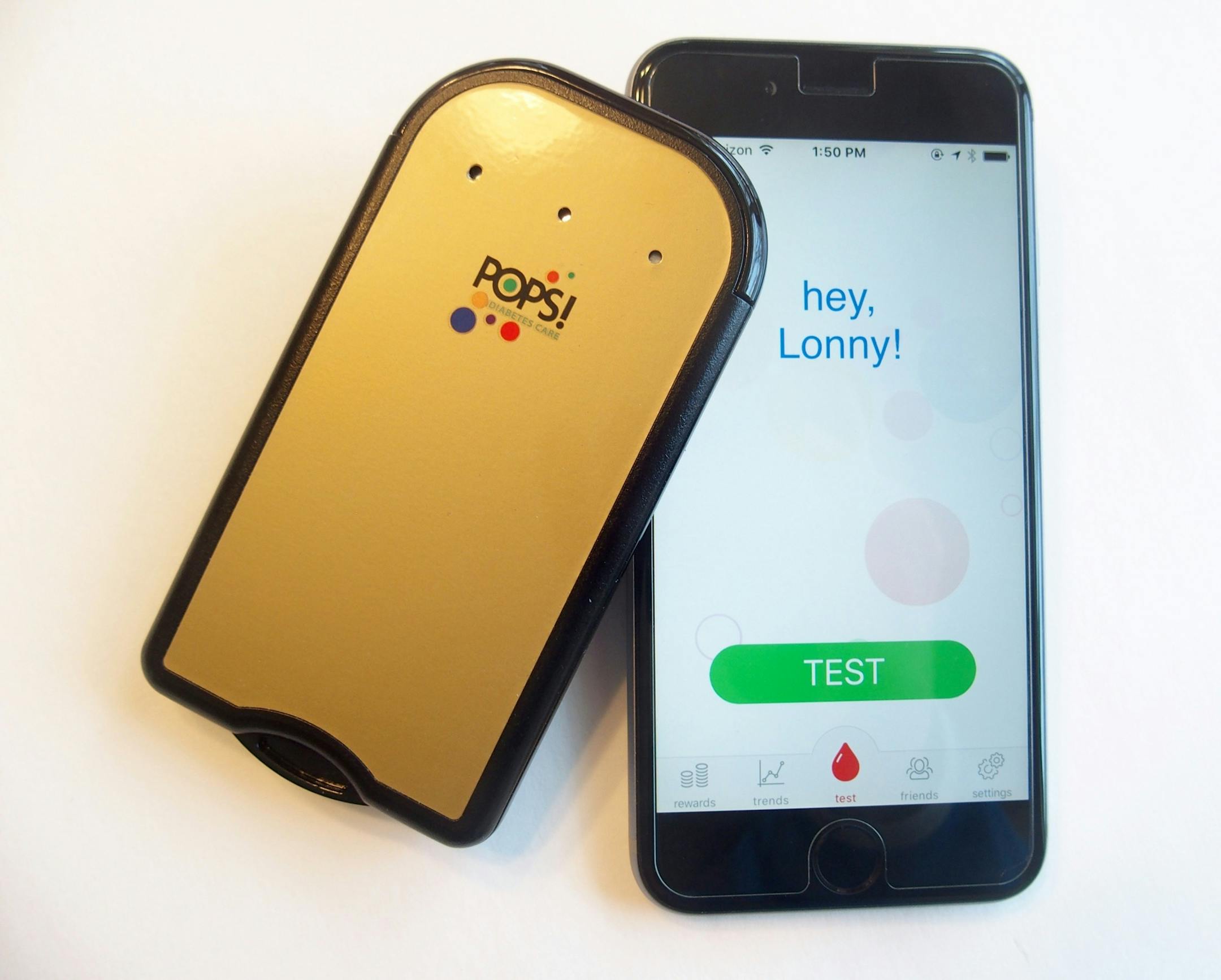
But when it comes to displaying blood-sugar levels for diabetics, the promise of an accurate and simple smartphone app still seems like a far-off goal. This week Twin Cities device maker Pops! Diabetes Care enrolled its first patient in a clinical study it is sponsoring to see whether a device it calls the "Pops! one" can finally fill that long-sought niche.
The company submitted the device for clearance to the Food and Drug Administration last spring. Although Pops doesn't need a study to get a green light from the FDA, CEO Lonny Stormo said the company wants to develop the clinical data anyway.
That's why it's partnering with the Children's Minnesota health care system on a six-month study of 50 young patients with type 1 diabetes, previously called juvenile diabetes, who will use the Pops device to measure their blood-glucose levels and tell them when they need to inject insulin.
"We want to be an evidence-based company," Stormo said. "We believe in our system, we believe the system is going to change the lives of people with diabetes, that better [user] experience will lead to better outcomes. We want to publish that evidence and get it out there. And we believe that helps our sales model."
Diabetes is a rapidly growing disease, and billions of dollars in sales are up for grabs in the market for patient-operated diabetes devices. Past studies have shown that more-frequent testing of blood glucose levels results in improved control of a person's blood-sugar levels.
Minnesota-run Medtronic PLC is one of the major corporate players, though much of its technology today is focused on semi-automated insulin pumps that operate using a continuous glucose meter that users wear day and night. Illinois-based Abbott Laboratories, a major supplier of traditional blood-testing strips and continuous glucose meters, made a recent splash in the market by teaming up with diabetes-tech start-up Bigfoot Biomedical to develop a system that will enable accurate and secure glucose monitoring with a smartphone app as a central feature.
Meanwhile, open-source solutions that move real-time glucose data from body-worn monitors onto smartphones and wearable devices have proliferated via hashtags like #WeAreNotWaiting.


