

![Metropolitan Council biosolids from its Empire wastewater plant were spread on a 100 acre harvested corn field.] DAVID JOLES • david.joles@startribune.com Human waste becomes manure for cropland twice a year, when the Metropolitan Council sends biosolids from its Empire wastewater plant to nearby farms and was seen Wednesday, Nov, 20, 2019, in Farmington, MN. The plant will soon undergo $23 million in upgrades, such as expanding the pad where human waste is stored outside to dry.](https://arc.stimg.co/startribunemedia/XYVFZQ2CIDUQGLKNASJSZPJIEI.jpg?&w=1080)
One morning this fall, large trucks tossed a wet, muddy substance onto a cornfield just beyond the south Twin Cities suburbs — loading the soil with nutrients for another growing season.
The Metropolitan Council carries out this little-known ritual twice a year in rural Dakota County. The black substance landing on the ground is no ordinary fertilizer. It's human manure, the stuff that's left behind after the agency purifies sewage from several growing cities.
The council incinerates most of the solid material it extracts from the region's wastewater. But flush a toilet in Lakeville, Rosemount, Farmington, Apple Valley or Elko New Market and the waste travels to the council's Empire plant, where the "biosolids" are heated to remove pathogens and later spread on nearby farm fields. The agency is now embarking on a $23 million project to process more of that material as the area grows.
Using human waste as fertilizer is more common outside the metro area. About a quarter of the solid waste that flows down toilets and drains in Minnesota is later applied to land after treatment, largely to corn and soybean fields. Biosolids are an inexpensive, soil-enhancing fertilizer but have also recently attracted scrutiny across the country because some contain industrial "forever chemicals" known as PFAS.
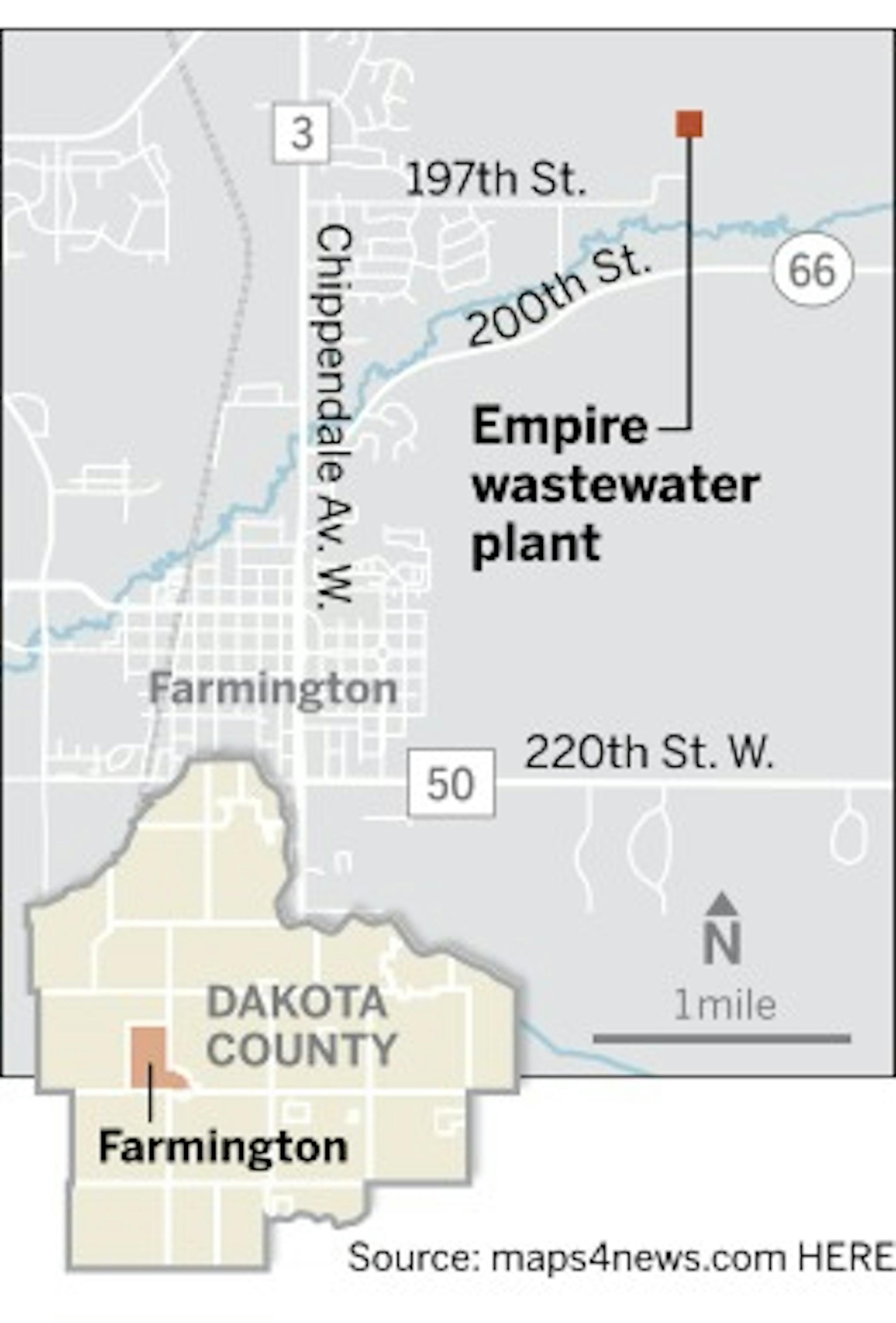
At the Empire plant, the council first removes pathogens from the biosolids in an anaerobic digester. They are then stored on asphalt pads — spanning 8 acres — until farmers in the area are ready to spread it. It still smells when it arrives in the field, but the odor is more akin to fertilizer than human excrement.
"This has a lot of nutrients. So it's really, really good [fertilizer]," said Camila Ciampolini, who manages the land application process at the Met Council, while walking around the field in Castle Rock Township.
The council will expand its biosolids storage capacity by installing a roof over part of the pad, spanning about three football fields. That will improve the drying process, allowing more material to be stacked.
The plant is a relatively small part of the council's massive wastewater system, which spans 600 miles of pipes and nine treatment plants. Most wastewater ends up at the council's Metro plant in St. Paul, which treats 15 times as much as Empire and torches the solids in giant incinerators. The agency also turns waste from cities around Lake Minnetonka into a pelletized fertilizer.


