

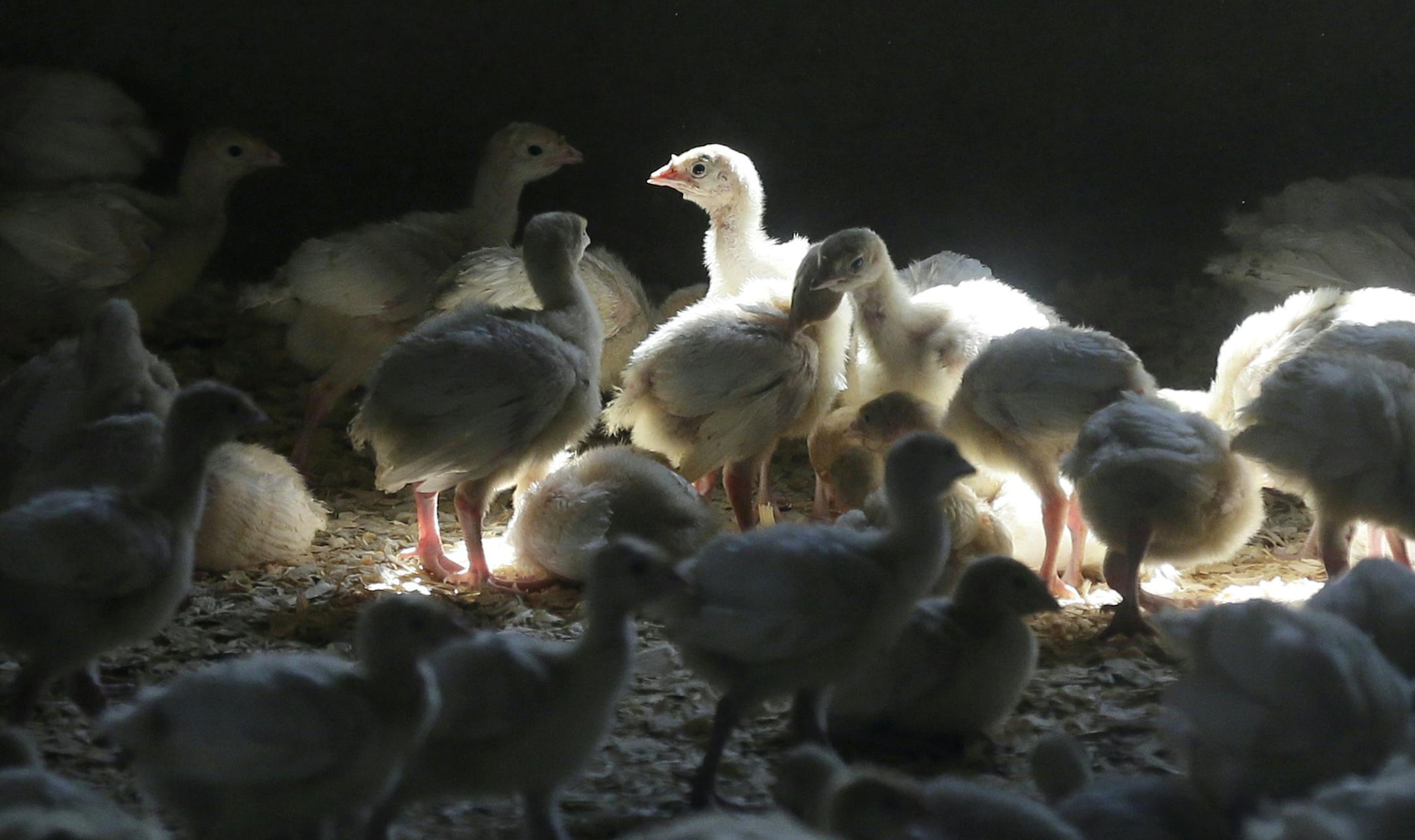
Waterfowl — believed to be the ultimate source of bird flu — are heading south for the winter, and Minnesota turkey farmers are crossing their fingers. Consumers should be, too.
With the bird flu ravaging the Upper Midwest's poultry industry in the spring, prices for turkey meat are soaring, and egg prices are high, too.
There's no quick end in sight.
Turkey production won't be back to normal until next spring, and the egg industry will take even longer to catch up, meaning a return of the bird flu — which would likely coincide with waterfowl migration — would be a big blow.
"I'm keeping my fingers crossed, my eyes crossed and my hair crossed that we miss this thing," said Steve Olson, executive director of the Minnesota Turkey Growers Association.
5 million turkeys wiped out
In the spring, the bird flu wiped out 5 million turkeys in Minnesota, about 10 percent of production in the nation's largest turkey-growing state. Turkey farms in Iowa, South Dakota and Wisconsin were hit hard, too. And Iowa's egg industry, the nation's largest, lost at least 40 percent of its production capacity — almost 25 million hens.
In response, wholesale egg prices in the Midwest shot up, peaking in August when they were twice what they were a year earlier, according to data from Urner Barry, a commodity news service known as an authority on poultry pricing. While wholesale egg prices have since fallen, they are still 42 percent higher than a year ago.
Turkey wholesale prices are at all-time highs, said Russ Whitman, a vice president at the New Jersey-based Urner Barry. At the same time, "stocks of just about everything in the turkey industry — except dark meat — are at record lows."




