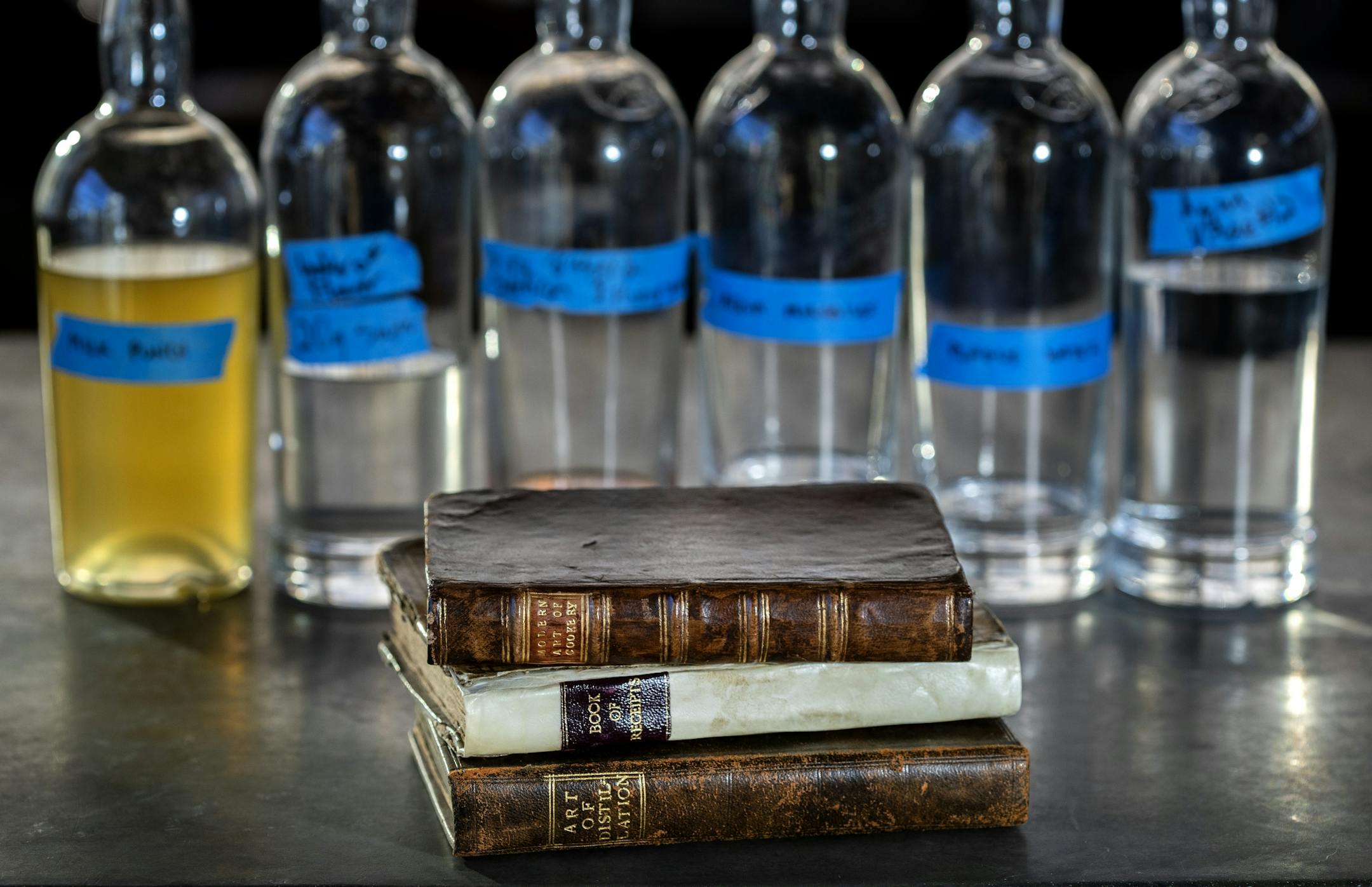
At the end of a handwritten recipe for the herbal spirit cherrie water there's a note about an optional ingredient.
"And a graine of Ambergreece with itt if you Like itt," writes Ann Ward in her circa 1724 "Book of Receipts." She was referring to ambergris, a waxy secretion from a whale's intestines.
Sourcing that ingredient posed a challenge for the team at Tattersall Distilling in Minneapolis, which spent the past year experimenting with antique alcohol recipes.
This deep-dive into historic spirit-making — a collaboration between Tattersall, the Minneapolis Institute of Art and the Wangensteen Historical Library of Biology and Medicine at the University of Minnesota — resulted in "Alcohol's Empire," an online exhibition and recipe book.
The offbeat collaboration came about when Nicole LaBouff, associate curator of textiles at Mia, created an installation of a party in a 1700s French grand salon in one of the museum's period rooms.
"As I was touring the space, people would ask me what type of alcohol they would have consumed at these parties," LaBouff said. She didn't know the answers, so she decided to delve into the history of "the alcoholic landscape" to find out.
She contacted Emily E. Beck, assistant curator at the U's historical medical library, who uncovered troves of rare cookbooks, household manuals and pharmaceutical books filled with distillation recipes from that era.
LaBouff had hoped to make some period drinks and serve them at the museum, "but as we started to get to work, we realized we needed professional help," she said. That's when she and Beck approached Tattersall.