

I was on the Red Lake Indian Reservation last week for the fourth of Education Minnesota's community conversations on teacher quality. The drive back to the Twin Cities gave me a chance to think about the two approaches to education reform playing out in our state.
The 70,000 educators in our union believe the first step toward meeting the changing needs of our students is to listen to parents, students, community members and front-line educators. So Education Minnesota has hosted meetings in Rochester, Brooklyn Center, St. Paul and Red Lake, with more planned in Willmar and Duluth.
We schedule these meetings in local buildings, in the evening, when it's more convenient for busy parents and students. Admission is free, and so are the snacks. We don't lecture — we listen and take notes. We will collect everyone's thoughts and present them this spring. With luck, we will persuade lawmakers and school board members to turn those ideas into policies.
The other reform approach will be on display Thursday morning at a riverfront hotel in St. Paul. This approach treats education policy like fast food — sold by national franchises and consumed by those who can pay. Several national advocacy groups, including StudentsFirst and the National Council on Teacher Quality, are scheduled to present at an event sponsored by the Minnesota Chamber of Commerce.
The event is open to the public — if they can afford the $75 tickets and get the morning off from work. The timing guarantees that few teachers will be in the audience; there apparently will be no working teachers on the panels, either.
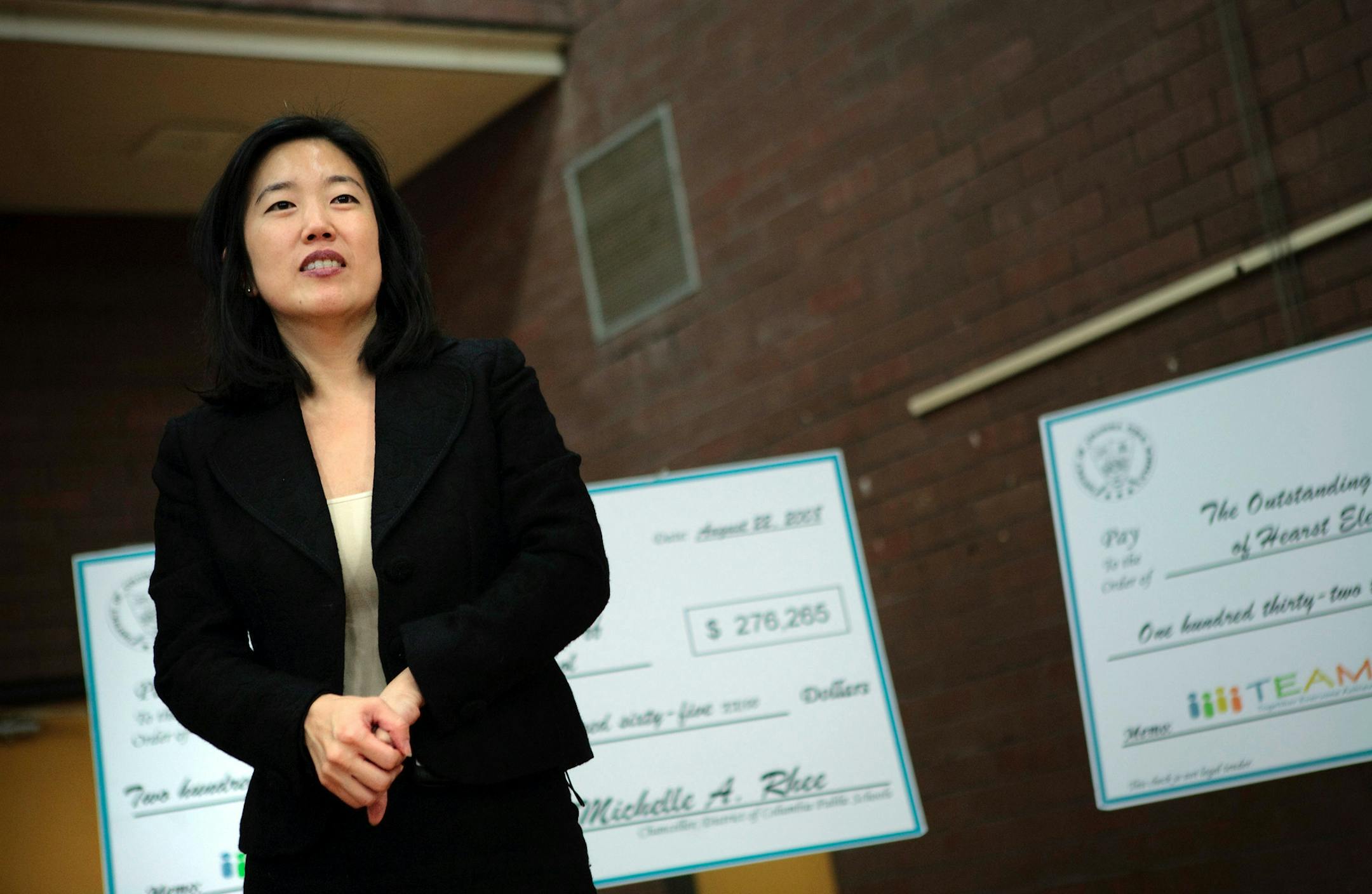
Michelle Rhee will give the opening address. She's the former chancellor of the Washington, D.C., schools and founder of StudentsFirst. She's also arguably the most controversial figure in American education, both for the policies she supports and the things she says, such as her admission that as an inexperienced second-grade teacher, she taped shut the mouths of students who spoke out. As a second-grade teacher myself, I find the story appalling, yet revealing.
Rhee probably will talk about the "get tough" personnel policies she brought to the D.C. schools. Her directive to her staff was to raise test scores — or else. What happened? The data show that about 40 percent of the teachers in the highest-poverty schools leave every year — many voluntarily. Teachers know that any plan to raise achievement in a vacuum, without simultaneously increasing support for impoverished children and their families, is doomed.
Rhee resigned in 2010 and created StudentsFirst with the goal of raising $1 billion to push its agenda of expanding charter schools, increasing high-stakes testing and offering school vouchers.


