Trump's nonsense-and-grudges formula sells in U.S.

From McCarthy to Wallace to Perot, a blustery line of role models.

Bloomberg News
December 2, 2015 at 12:03AM
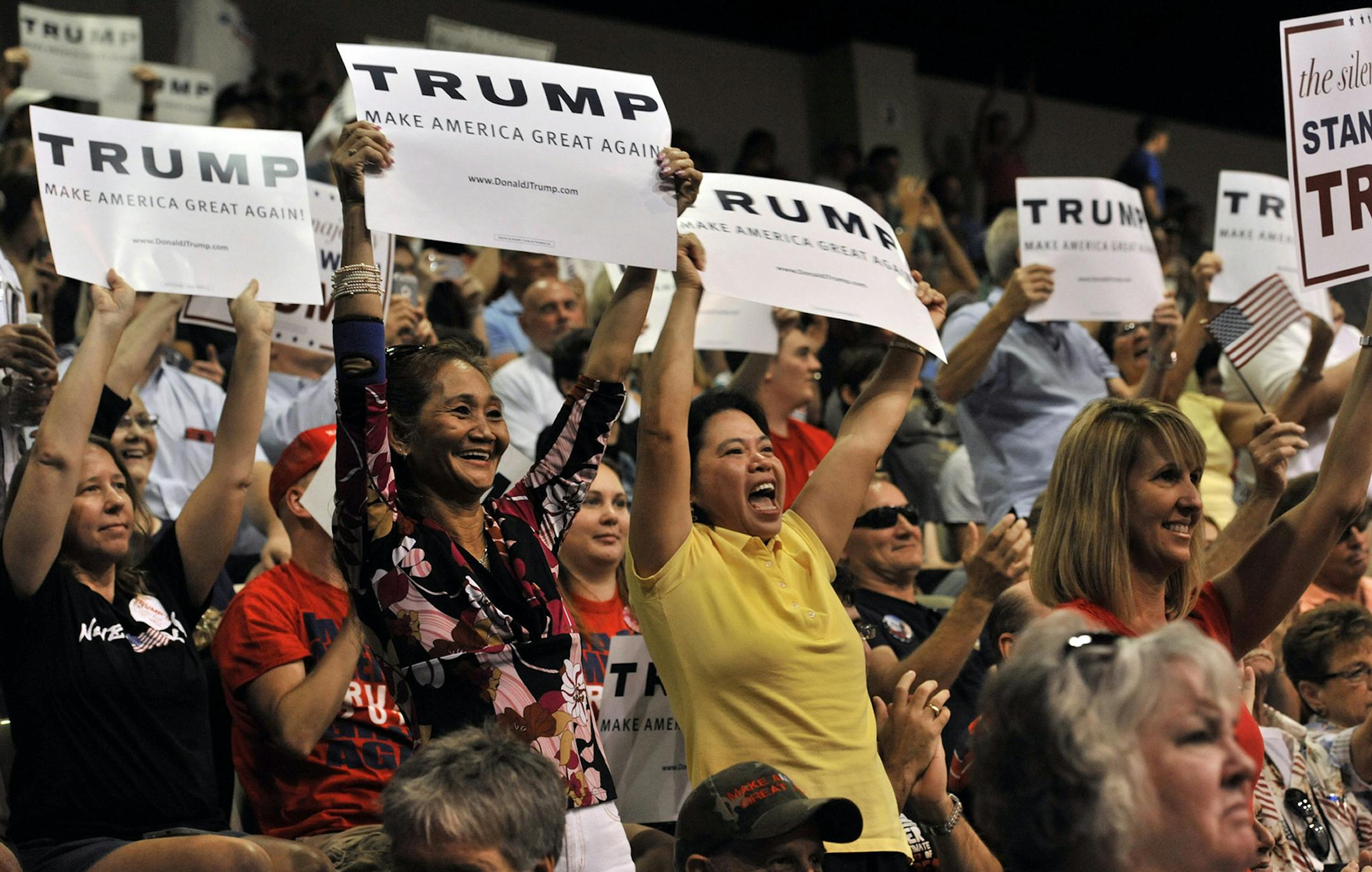
Supporters of Republican presidential candidate Donald Trump cheer during a campaign rally Saturday, Nov. 28, 2015 at Robarts Arena in Sarasota, Fla. Speaking before thousands who jammed into the arena, Trump said he's "killing everybody" in polls nationally and in early voting states. (AP Photo/Steve Nesius) ORG XMIT: MIN2015120112474421
Supporters of Republican presidential candidate Donald Trump cheered at a rally in Sarasota, Fla., last weekend at which he said he’s “killing everybody” in the polls. (The Minnesota Star Tribune)

Donald Trump is unique. But he's not without antecedents, and it's not hard to locate his performance in some well-worn grooves of American politics.

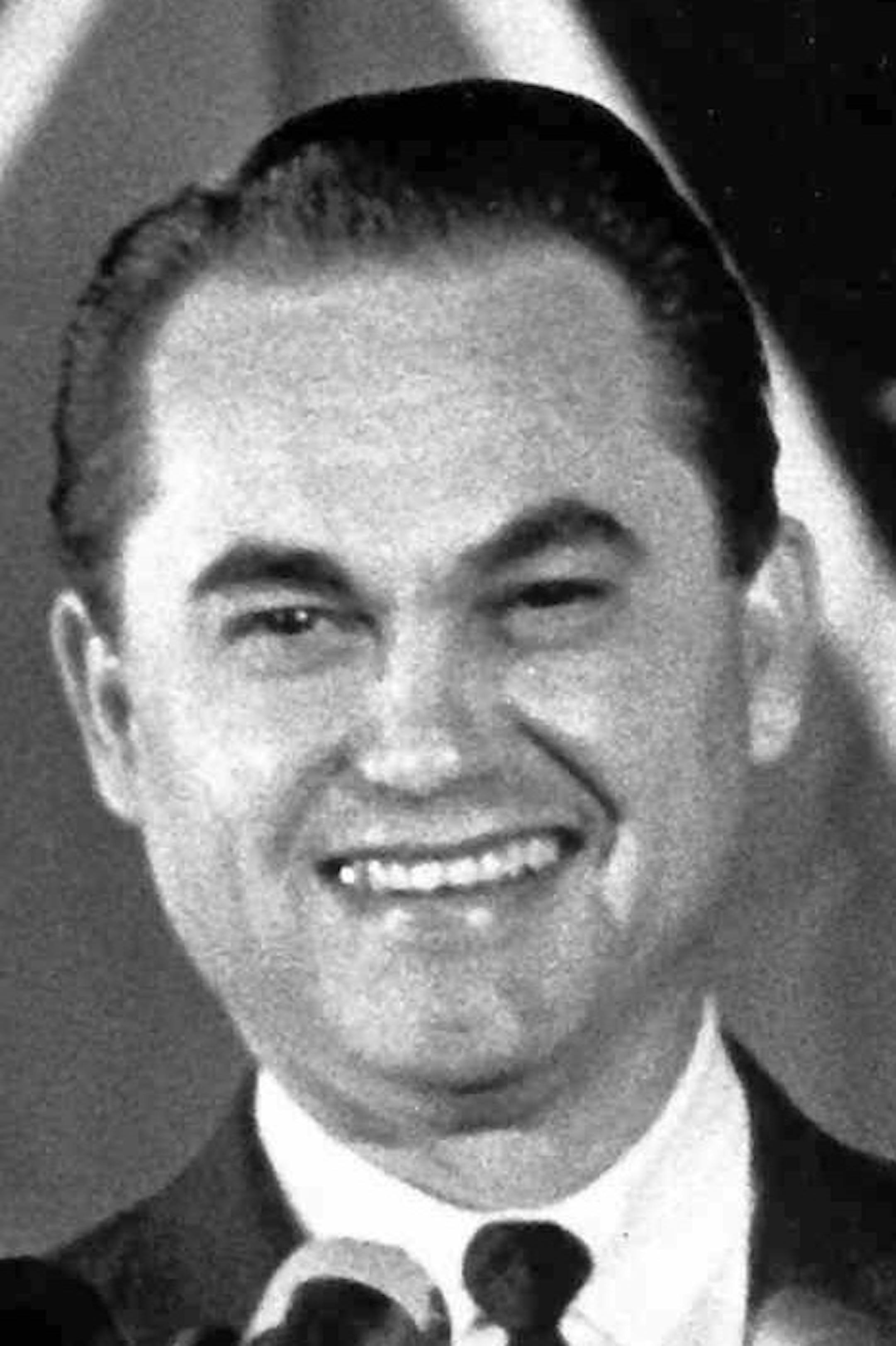
Substitute the word "integration" for "immigration" in Trump's rhetoric, for instance, and it recalls the bitter bite of Alabama's George Wallace, whose presidential campaigns in the 1960s and 70s leveraged white backlash more viciously than even Trump dares.

Yet Trump is no Wallace. His extravagant business success and public indulgence of luxury and "class" is a long way from Wallace's hardscrabble solidarity with the white working man. Often as not, Trump explains in so many words that he'll succeed at a given task because his riches prove he's already a spectacular success. "I'm rich" is an all-purpose validation of incorruptibility or competence, and a sly suggestion that he knows how to hit the big boys where it hurts because he's one of them.

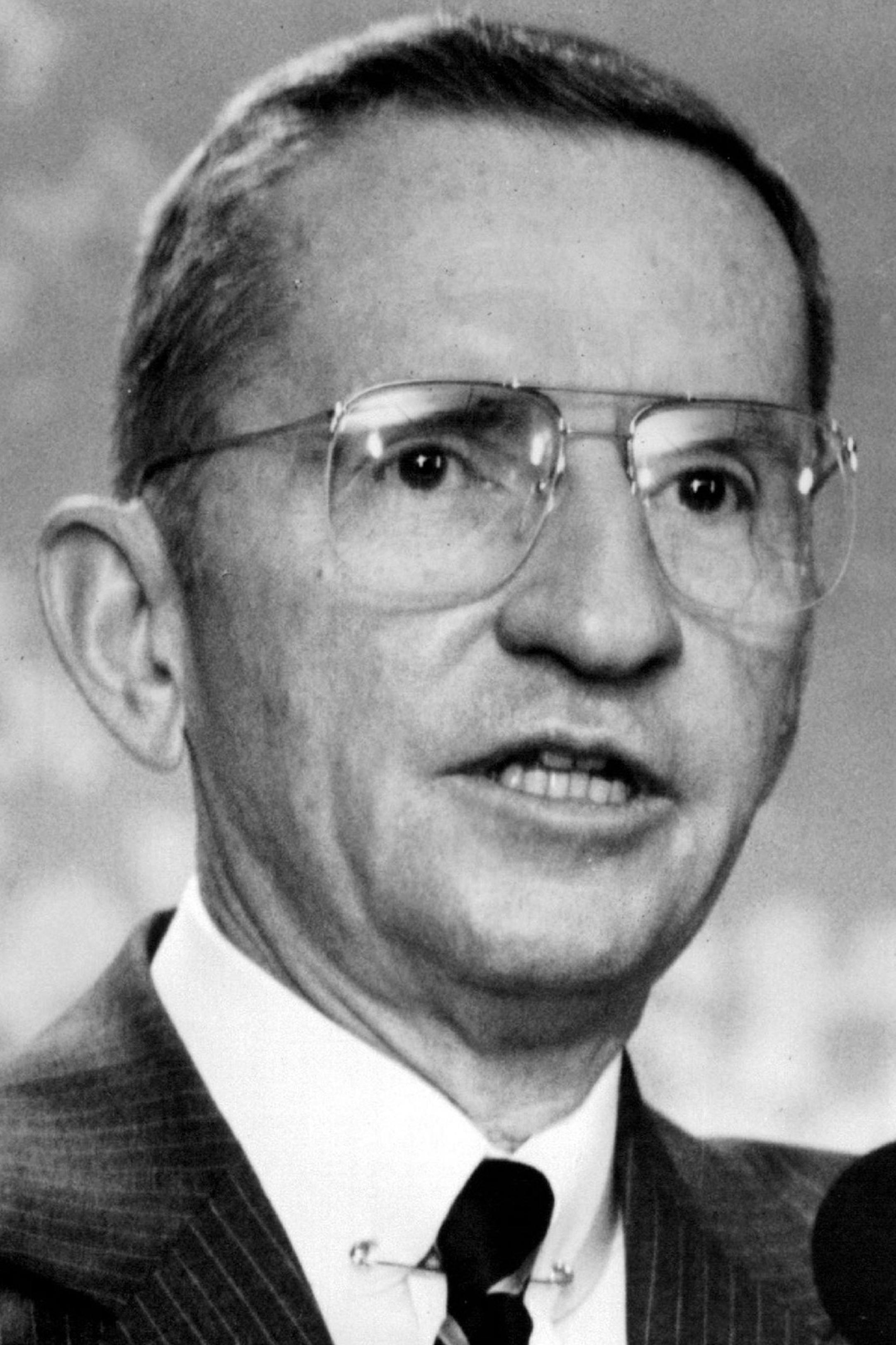
Ross Perot, the billionaire who ran for president in 1992 and 1996, used wealth and business bona fides in a similar manner. And Perot's conspiratorial mind-set and impulsiveness surely have complements in Trumpland. Perot took 19 percent of the popular vote (though no electoral votes) in 1992, the best popular-vote showing for an independent since Teddy Roosevelt in 1912. Trump would be lucky to do as well running as an independent in 2016.

Still, Trump is the larger, more protean figure. Perot was physically small, intellectually compact, politically narrow. Trump sprawls. With his flapping suit jackets, flyaway hair, and long and winding rhetorical roads, Trump spills over everything.

The truth is sometimes inundated. Whether it began as a muddled memory or a deliberate effort to mislead, Trump's repeated claim that he witnessed "thousands" of Muslims in New Jersey celebrating the fall of the twin towers — an event that simply did not occur — has become a lie through repetition. But it's a lie of specific proportion and design — McCarthyite in both respects.

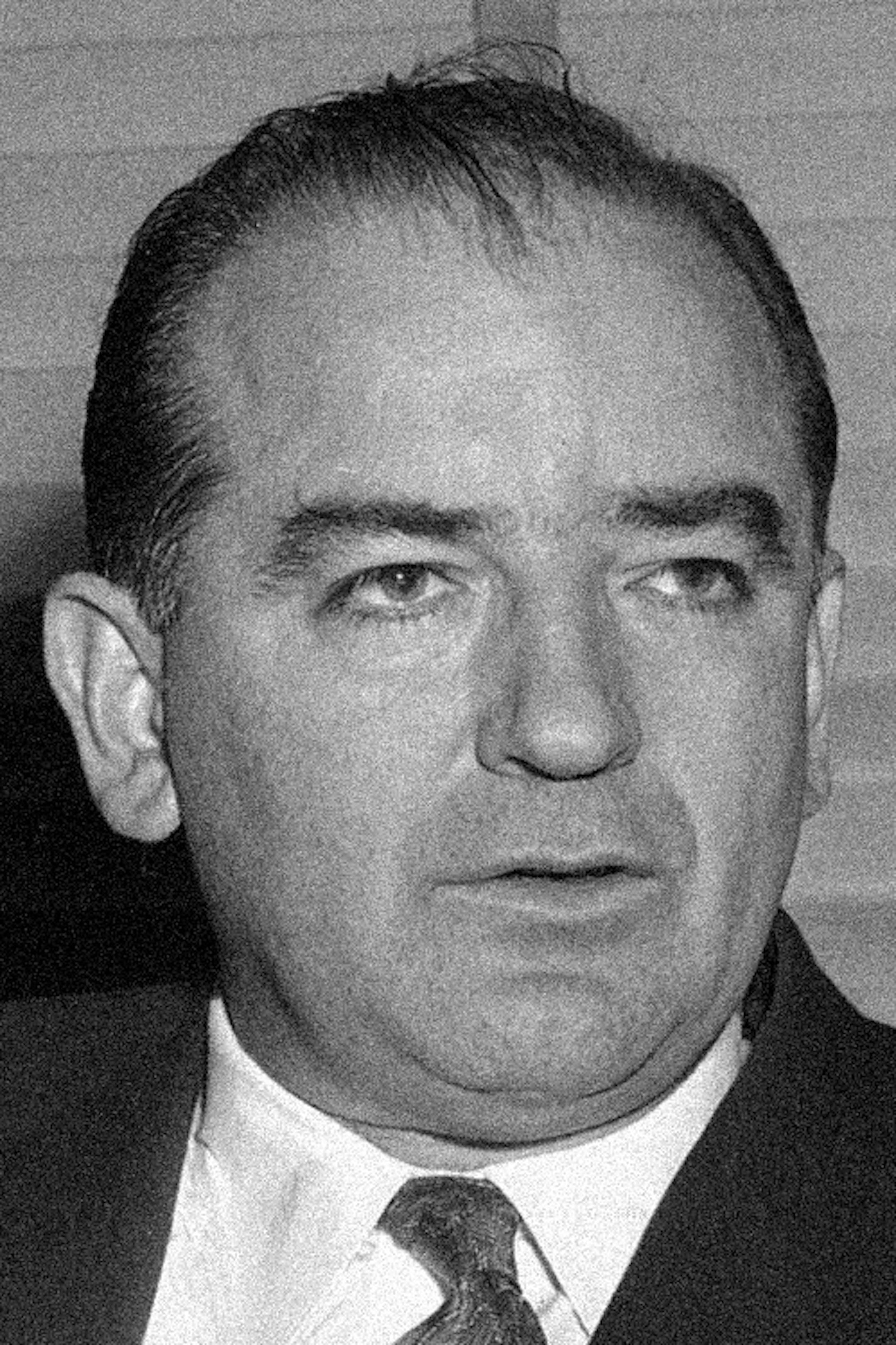
Sen. Joseph McCarthy of Wisconsin provides the most form-fitting mold for Trump. Like McCarthy, Trump possesses the bravado to issue a lie so unconventional in size and scope that it flummoxes the mainstream news media, which are accustomed to more digestible portions. And he has the will to stick by it, believing he can reach a draw with the truth if he can't beat it outright.

In an interview on Sunday, NBC's Chuck Todd made the point that Trump's New Jersey allegation is baseless. Trump swept the journalist aside like a helpless fact.
TRUMP: You know, just go a step further. All over the world at the time it was reported that Muslims were celebrating the downing. All over the world; forget about New Jersey for a second. All over the world, it was reported that Muslims were celebrating the fall of the World Trade Center.

Two days ago, three days ago, there was a soccer game and there was a minute of silence in honor of the people that were slain — horribly, viciously slain — in Paris, France. And a huge amount of people, a tremendous number of people started screaming out Muslim phrases …

TODD: But you're repeating, Mr. Trump.

TRUMP: So, there is a problem here, Chuck, of hatred that is unbelievable.

TODD: But Mr. Trump, this didn't happen in New Jersey. There were plenty of reports. And you're feeding that stereotype.

TRUMP: Chuck, it did happen in New Jersey. I have hundreds of people that agree with me.

"Forget about New Jersey for a second," Trump said, before taking us on a tour of distractions and irrelevancies. And when he finally returned to the Garden State, his proof of the event, in a nation of 320 million people and wall-to-wall media, was "hundreds of people that agree with me."

In a 1959 biography that Walter Lippmann called "the definitive job," Richard Rovere plumbed McCarthy's style. Regarding McCarthy's marathon speech in the Senate on Feb. 20, 1950, in which accusations about communist this and that poured forth without supporting evidence or coherence, Rovere wrote:

"McCarthy's presentation had been so disorderly, so jumbled and cluttered and loose-ended, that it was beyond the power of most reporters to organize the mess into a story that would convey to the reader anything beyond the suspicion that the reporter was drunk."

The improvisational beginnings of Trump's attacks on immigrants — had he really intended to call Mexicans "rapists" at his announcement speech or was he just riffing? — recall the ad-hoc origins of McCarthy's witch hunt. McCarthy kept modifying the number of communists in the State Department — 205 at his speech in Wheeling, W.V., became 57 by the time he hit Reno, Nev. — without ever explaining why the number wouldn't sit still.

McCarthy offered to purify the republic ideologically. Trump proposes to do so ethnically, removing millions of undocumented immigrants and, magically, "making America great again" by dipping into Trump's vast store of personal greatness and reconstituting a pristine, golden past.

His campaign is a jumble of nonsense and grudges. But it's a distinctly American brand of nonsense and grudges, and its roots run deep enough to make Trump a formidable presence for a time. As historian Marvin Meyers wrote of another brash, bullying champion of white middle America: "Political opponents mocked the contents, but ruefully acknowledged the impressive popular effect."

That guy, Andrew Jackson, is on the $20 bill.

Francis Wilkinson writes on politics and domestic policy for Bloomberg View.


Alabama Gov. George C. Wallace is shown in this Oct. 19, 1964 photo speaking in Glen Burnie, Md. at a rally supporting Republican presidential candidate Sen. Barry Goldwater. (AP Photo) ORG XMIT: NY20,NY20
George Wallace (The Minnesota Star Tribune)
Talking with David Frost airs on PBS on Friday, April 24 at 9 p.m. (check local listings). David Frost's guest is Frost’s guest is Ross Perot, Texas billionaire and potential presidential candidate. ...talking with David Frost is made possible on PBS by Primerica Corporation, a family of financial services companies including Smith Barney, Commercial Credit, Primerica Financial Services and American Capital Management. The series is a production of David Paradine Television Inc. and WETA,
Ross Perot (The Minnesota Star Tribune)
Sen. Joseph McCarthy (R-Wis.) tells newsmen on March 26, 1954 that he will not ask for the right to testify at his Senate Investigation Subcommittee public hearings to probe into his row with Army officials. Saying he would leave it up to the committee McCarthy added, "If I were one of the other six (members), I would ask McCarthy to testify." (AP Photo/Bill Allen) ORG XMIT: APHS363834
Joseph McCarthy (The Minnesota Star Tribune)
about the writer

about the writer

Francis Wilkinson

More from Commentaries

See More
card image
Alex Kormann/The Minnesota Star Tribune

Is there still a place for us here in Minnesota? Place-based repercussions of the occupation.

card image
card image