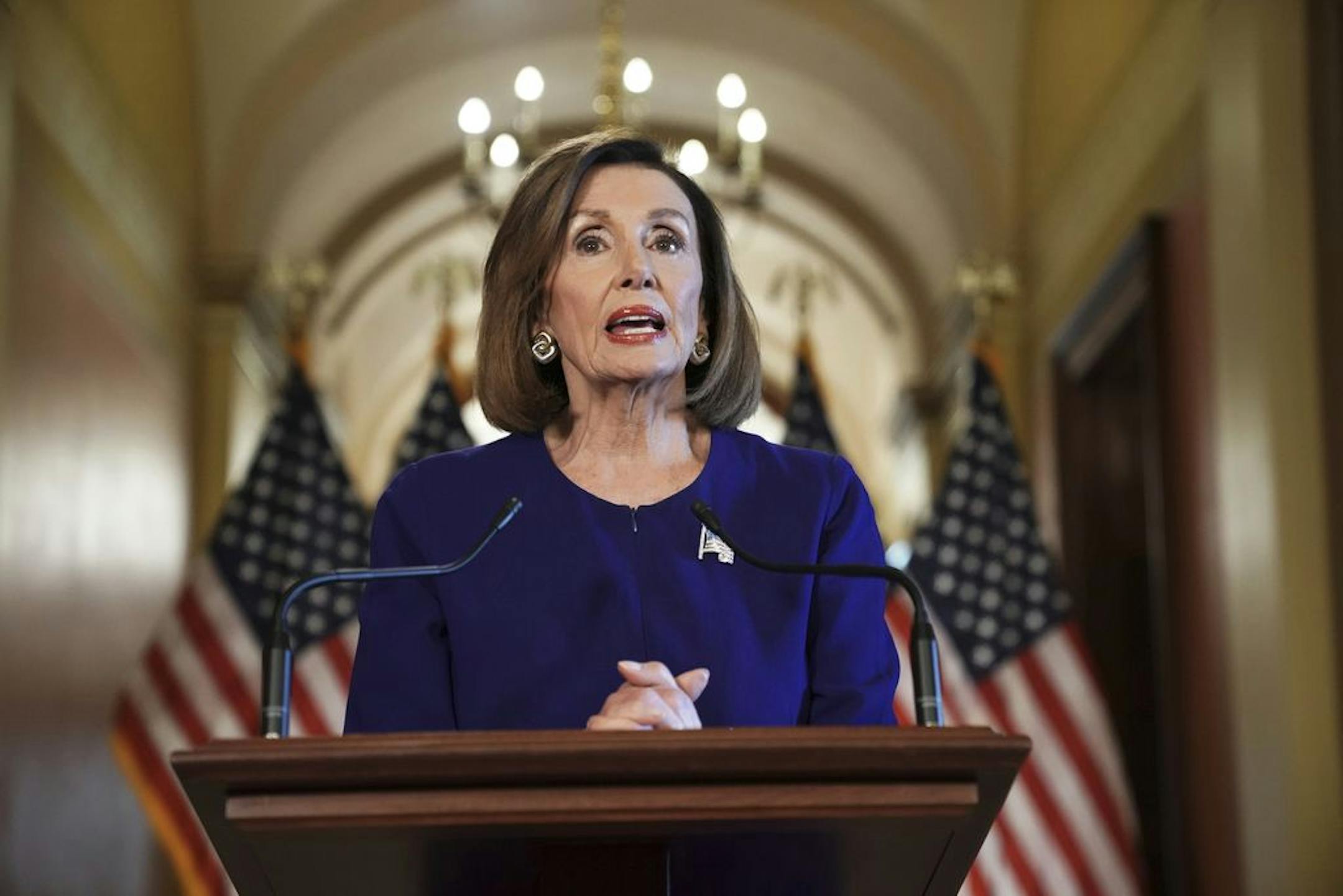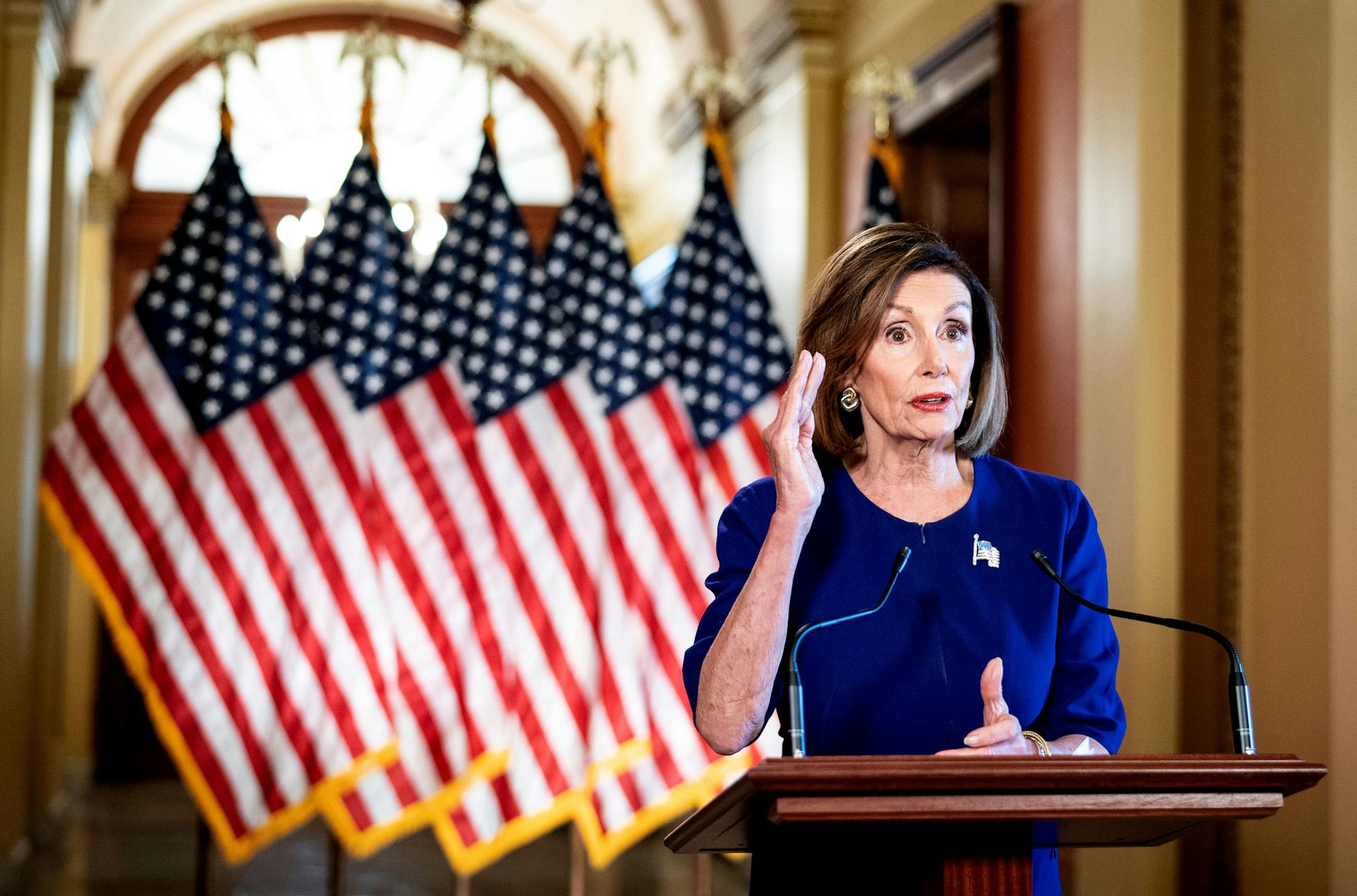
WASHINGTON — House Speaker Nancy Pelosi launched a formal impeachment inquiry against President Donald Trump on Tuesday, yielding to mounting pressure from fellow Democrats and plunging a deeply divided nation into an election-year clash between Congress and the commander in chief.
The probe focuses partly on whether Trump abused his presidential powers and sought help from a foreign government to undermine Democratic foe Joe Biden and help his own reelection. Pelosi said such actions would mark a "betrayal of his oath of office" and declared, "No one is above the law."
The impeachment inquiry, after months of investigations by House Democrats of the Trump administration, sets up the party's most direct and consequential confrontation with the president, injects deep uncertainty into the 2020 election campaign and tests anew the nation's constitutional system of checks and balances.
Trump, who thrives on combat, has all but dared Democrats to take this step, confident that the specter of impeachment led by the opposition party will bolster rather than diminish his political support.
Meeting with world leaders at the United Nations, he previewed his defense in an all-caps tweet: "PRESIDENTIAL HARASSMENT!"
Pelosi's brief statement, delivered without dramatic flourish but in the framework of a constitutional crisis, capped a frenetic weeklong stretch on Capitol Hill as details of a classified whistleblower complaint about Trump burst into the open and momentum shifted toward an impeachment probe.
For months, the Democratic leader has tried calming the push for impeachment, saying the House must investigate the facts and let the public decide. The new drive was led by a group of moderate Democratic lawmakers from political swing districts, many of them with national security backgrounds and serving in Congress for the first time. The freshmen, who largely represent districts previously held by Republicans where Trump is popular, risk their own reelections but say they could no longer stand idle. Amplifying their call were longtime leaders, including Rep. John Lewis of Georgia, the civil rights icon often considered the conscience of House Democrats.
"Now is the time to act," said Lewis, in an address to the House. "To delay or to do otherwise would betray the foundation of our democracy."