

NEW YORK TIMES
Imagine if in 2018 the Trump administration had proposed legislation that would allow the government, on nearly any pretext, to detain, try and imprison Americans accused of wrongdoing at secretive black sites scattered across the country.
Imagine, further, that 43 million Americans had risen in protest, only to be met by tear gas and rubber bullets while Mitch McConnell and Paul Ryan rushed the bill through a pliant Congress. Finally, imagine that there was no effective judiciary ready to stop the bill and uphold the Constitution.
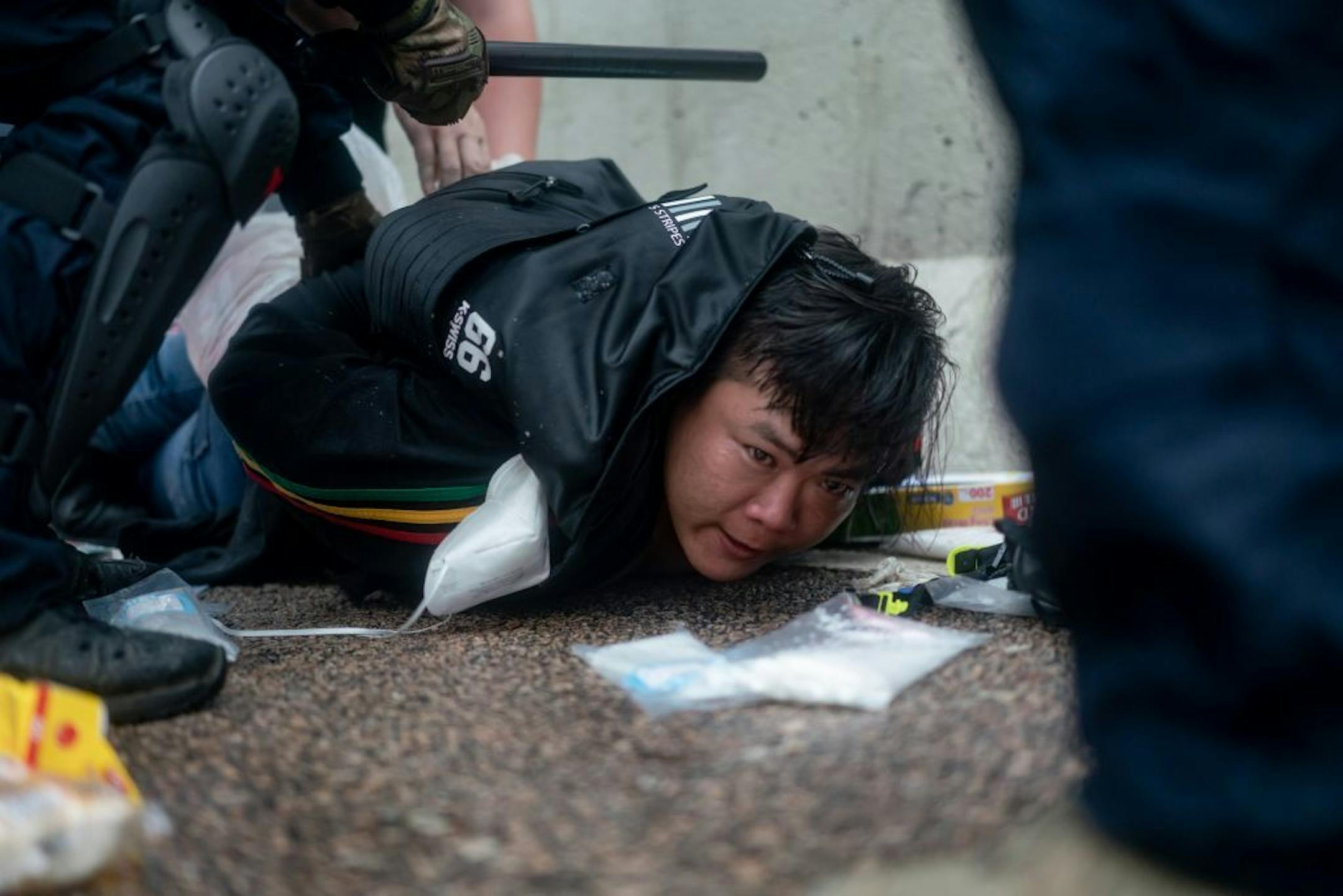
That, approximately, is what's happening this week in Hong Kong.
An estimated 1 million people — nearly 1 in 7 city residents — have taken to the streets to protest legislation that would allow local officials to arrest and extradite to the mainland any person accused of one of 37 types of crime. Political offenses are, in theory, excluded from the list, but nobody is fooled: Contriving criminal charges against political opponents is child's play for Beijing, which can then make its victims disappear indefinitely until they are brought to heel.
In 2015, mainland authorities abducted five Hong Kong booksellers known for selling politically sensitive titles and held them in solitary confinement for months until they pleaded guilty to various offenses. In 2017 Chinese billionaire Xiao Jianhua was abducted by Chinese authorities from the Four Seasons in Hong Kong. He hasn't been seen publicly since, while his company is being stripped of its holdings.
The extradition bill is the next evolution in this repressive trend. It probably won't be the last.
Hong Kong's relationship with the mainland is supposed to be governed by the principle of "one country, two systems." But as with any form of pluralism, it's a principle that poses inherent dangers to Beijing. It was little West Berlin that, merely by being free, helped bring down the mighty (as it seemed at the time) Honecker regime in East Germany in 1989. The Chinese supreme leader, Xi Jinping, isn't about to let that happen to him via Hong Kong.


