
Trump easing offshore drilling safety rules from Deepwater

The Associated Press
May 3, 2019 at 11:05AM
FILE - In this April 21, 2010 file photo provided by the U.S. Coast Guard, fire boat response crews spray water on the burning BP Deepwater Horizon offshore oil rig. An April 20, 2010 explosion at the platform killed 11 men, and the subsequent leak released an estimated 172 million gallons of petroleum into the gulf. (U.S. Coast Guard via AP, File)
FILE - In this April 21, 2010 file photo provided by the U.S. Coast Guard, fire boat response crews spray water on the burning BP Deepwater Horizon offshore oil rig. An April 20, 2010 explosion at the platform killed 11 men, and the subsequent leak released an estimated 172 million gallons of petroleum into the gulf. (U.S. Coast Guard via AP, File) (The Minnesota Star Tribune)

PORT FOURCHON, La. — The Trump administration moved Thursday to give oil and gas companies more flexibility in meeting safety requirements imposed after the 2010 BP Deepwater Horizon explosion, which killed nearly a dozen people and was the worst offshore oil disaster in U.S. history.

The revised rules, which govern safety standards at offshore wells, come as the administration pushes to expand drilling off the U.S. coast, although court challenges and opposition from many coastal states have slowed its efforts.

The new safety changes were sought by the industry but fiercely challenged by environmentalists.

Interior Secretary David Bernhardt said in a statement the administration was acting to eliminate "unnecessary regulatory burdens while maintaining safety and environmental protection offshore."

Officials picked Louisiana's Port Fourchon, a hub for drilling in the Gulf of Mexico, to announce the changes. Port workers in hard hats and reflective safety vests applauded speakers' calls for easing regulations.

"We're more open to invention," Scott Angelle, a safety regulator at the Interior Department, told the crowd. "We tell them what to do," he said. "How they do it is up to them."

Officials estimate the Trump administration revisions will save the oil industry over $1.5 billion over the next 10 years.

Governors and lawmakers from both Republican- and Democratic-led states have fought the Trump administration's plans for expanded offshore drilling. And a federal judge ruled last month that President Donald Trump had exceeded his authority when he ordered that the Arctic and parts of the Atlantic be opened to oil and gas development.
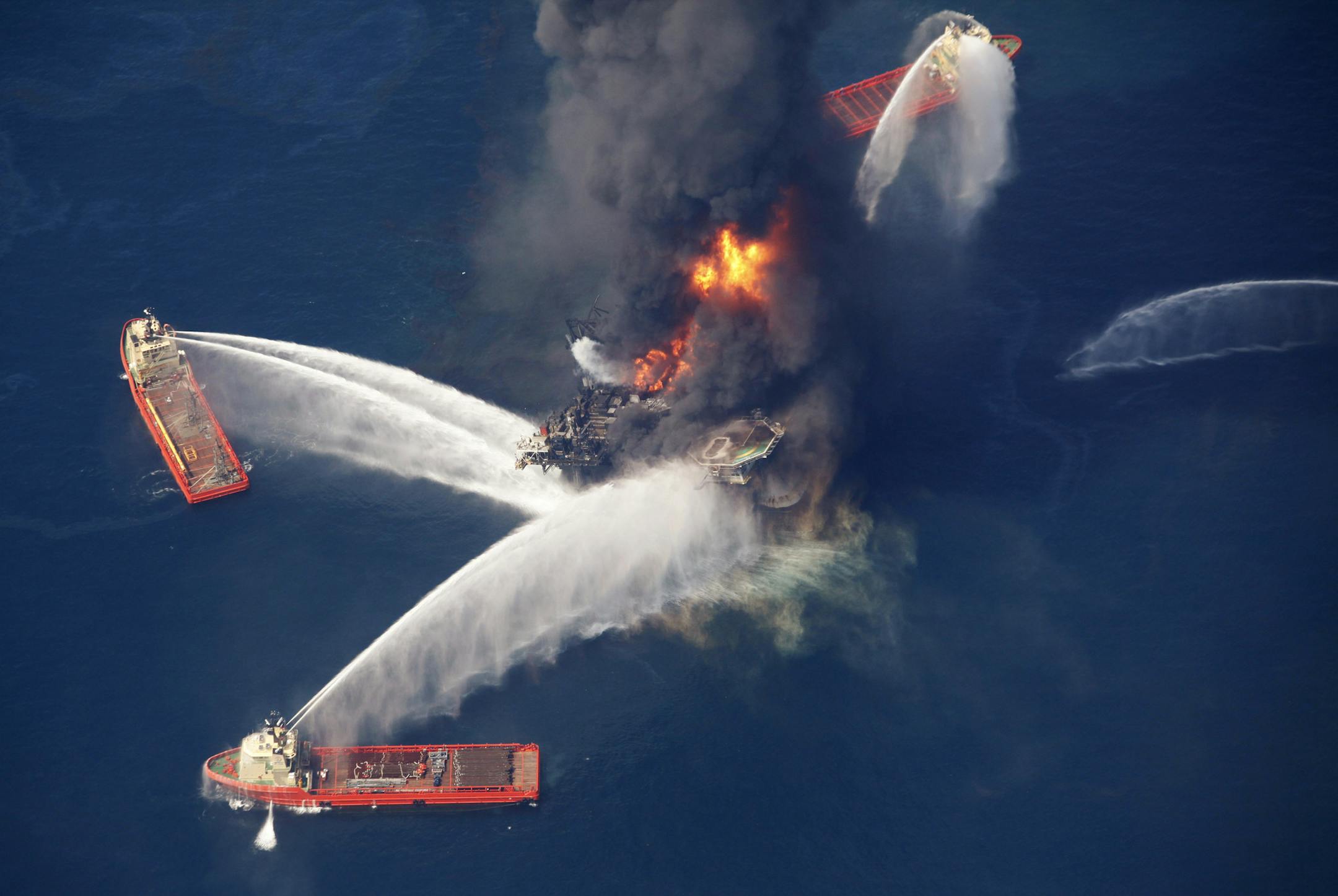
Eleven people died in April 2010 when the Deepwater Horizon exploded, ultimately releasing more than 3 million barrels of crude into the Gulf of Mexico. Crews finally capped the well in July 2010, three months after it began gushing oil from the bottom of the sea in a spectacle captured live on video.

Conservation groups say the toll to wildlife included more than 1 million dead birds, and the government declared a fisheries disaster. BP says its costs in the blowout and spill continue to mount, and have topped $60 billion.

The explosion prompted a major overhaul of the agency that oversees offshore drilling, as investigators concluded regulators were too cozy with industry. The explosion and resulting oil spill also focused attention on blowout preventers, devices intended to monitor and control oil and gas wells to prevent uncontrolled release of crude oil or natural gas from a well.

In the aftermath, the Obama administration imposed more precise operating requirements for offshore crews in tracking pressure in underwater wells, more real-time monitoring by oil companies and more rigorous inspections of blowout preventers on the offshore facilities, among other measures.

Vuong Vo, 31, who traveled to Port Fourchon from New Orleans for a kayaking tournament, said his father, a shrimper, was left with permanent skin and nasal problems after a few months working on the cleanup after Deepwater Horizon.

"It takes one accident to affect so many people," he said.

The Trump administration and oil industry say the revised rule preserves 80 percent of the Obama-era regulation.

Erik Milito, a vice president of the American Petroleum Institute, said the slate of safety measures adopted under the Obama administration was "simply too prescriptive, curtails innovation and can make it hard for the company to move forward."

"We haven't identified anything in the rule that's taking a step backward on safety," Milito said, referring to the Trump administration revisions, which take effect 60 days after they are published in the Federal Register.

BP declined comment on the new rules.

Donald Boesch, a marine scientist on the presidential commission that investigated the Deepwater Horizon disaster, said even with the new changes, "we're still better off probably than we were before the blowout" in terms of offshore drilling safety.

"But I'm not convinced we're safer than we were two years ago," Boesch said.

As far as giving the industry more discretion in how it complies with the post-Deepwater Horizon safety rules, "That's what we thought before the BP blowout," Boesch said. "We let the industry decide and what happened was people took chances. That's the reason why we need hard and fast standards."

Courtney Kemp Robertson's husband, Roy Wyatt Kemp, died during the Deepwater Horizon blowout, but she said Thursday that she continues to advocate for the oil industry, where many of her family members and friends work. She said she hadn't seen the specific changes the Trump administration announced, but "As long as our men are safe, as long as the companies are not making shortcuts and costing people their lives by doing so I'm all for it."

She said just having more regulations doesn't mean companies or bosses won't pressure workers to cut corners.

"It's not the fact that we need to have more (regulations). It's the fact that we need to have the ones that we do have enforced," she said.

FILE - In this April 21, 2010, file photo, the Deepwater Horizon oil rig burns in the Gulf of Mexico following an explosion that killed 11 workers and caused the worst offshore oil spill in the nation's history. A federal judge in New Orleans granted final approval on Monday, April 4, 2016, to an estimated $20 billion settlement, resolving years of litigation over the spill. (AP Photo/Gerald Herbert, File)
FILE - In this April 21, 2010, file photo, the Deepwater Horizon oil rig burns in the Gulf of Mexico following an explosion that killed 11 workers and caused the worst offshore oil spill in the nation's history. A federal judge in New Orleans granted final approval on Monday, April 4, 2016, to an estimated $20 billion settlement, resolving years of litigation over the spill. (AP Photo/Gerald Herbert, File) (The Minnesota Star Tribune)
about the writers

about the writers

JANET McCONNAUGHEY

ELLEN KNICKMEYER

More from Minnesota Star Tribune

See More
card image
J. SCOTT APPLEWHITE, ASSOCIATED PRESS/The Minnesota Star Tribune

The "winners" have all been Turkeys, no matter the honor's name.

In this photo taken Monday, March 6, 2017, in San Francisco, released confidential files by The University of California of a sexual misconduct case, like this one against UC Santa Cruz Latin Studies professor Hector Perla is shown. Perla was accused of raping a student during a wine-tasting outing in June 2015. Some of the files are so heavily redacted that on many pages no words are visible. Perla is one of 113 UC employees found to have violated the system's sexual misconduct policies in rece