WASHINGTON — Speaking out against weekend mass shootings that rocked a nation, President Donald Trump called for bipartisan solutions to the bloodshed but offered few details and faced pointed questions from Democrats about whether he had the moral authority to rally America against the spasm of violence and racism.
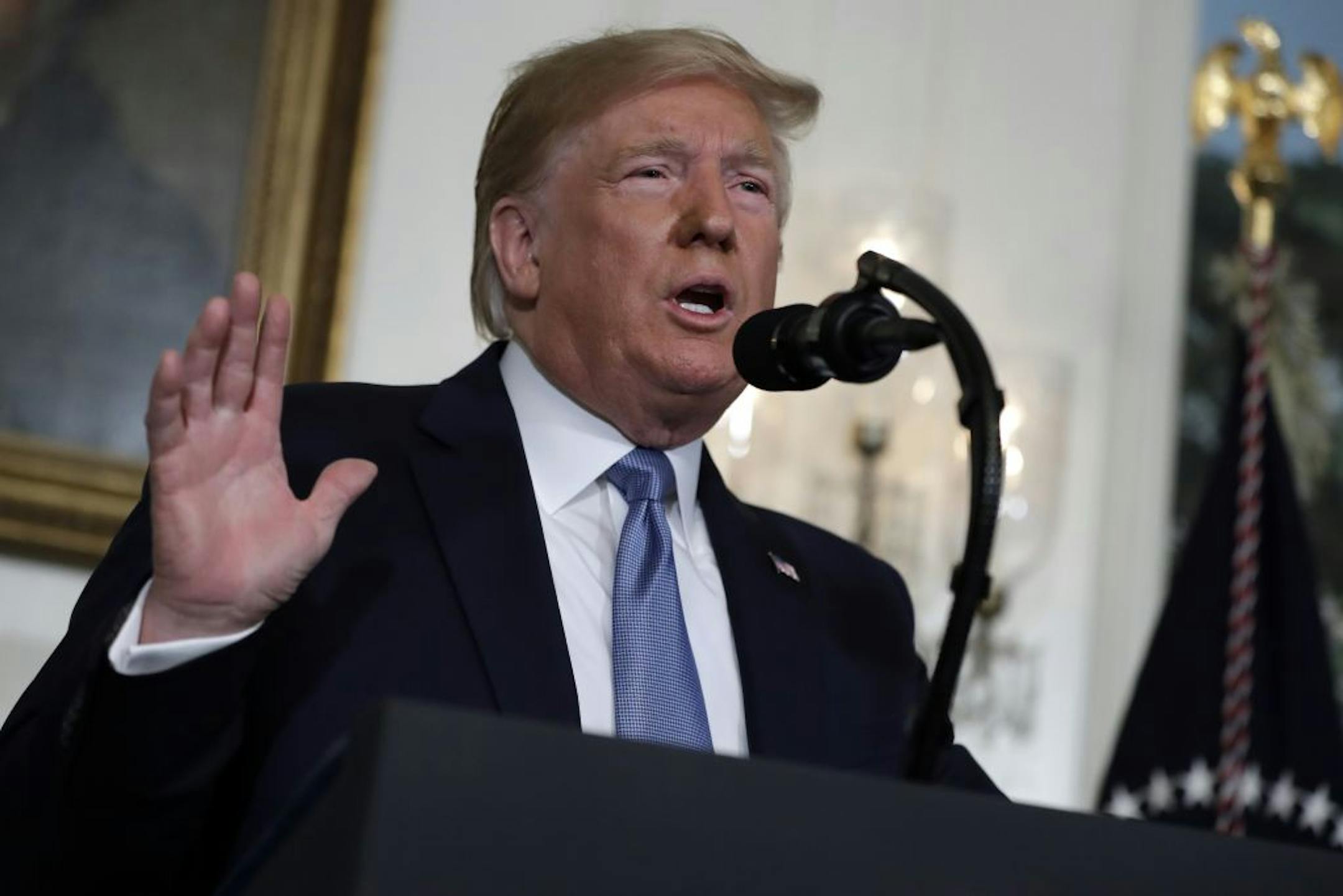
Trump, back at the White House on Monday after remaining largely out of view for two days at his New Jersey golf club, declared the shootings in Texas and Ohio barbaric crimes "against all humanity" and called for unity to respond to an epidemic of gun violence. He blamed mental illness and video games but made no mention of more limits on the firearms that can be sold.
Trump said he wanted legislation providing "strong background checks" for gun users, though he has reneged on previous promises along that line after mass attacks. He seemed to abandon his latest idea of linking gun control legislation to immigration policy just a few hours after proposing it.
"We vow to act with urgent resolve," Trump said as the death toll from the shootings in El Paso and Dayton reached 31 late Monday. His scripted remarks included a solitary denunciation of white supremacy, which he has been reluctant to criticize, and he made no mention of the anti-immigration rhetoric found in an online screed posted just before the El Paso attack that mirrored his own incendiary language. Detectives sought to determine if it was written by the man who was arrested.
The mayor of El Paso said at a news conference that Trump would visit the city Wednesday, though some local lawmakers and others signaled opposition, and the Federal Aviation Administration advised pilots of a presidential visit to Dayton.
At the White House, Trump declared, "In one voice, our nation must condemn racism, bigotry and white supremacy."
He said he had directed the FBI to examine steps to identify and address domestic terrorism. "These sinister ideologies must be defeated. Hate has no place in America," he said.
In the past, the president's calls to the nation's better angels, without renouncing his own divisive language about immigrants and political opponents, have proved fleeting. His path to the White House was built on the politics of division, and aides say he views his road to reelection on again sowing discord and unease about cultural, economic and demographic changes.