

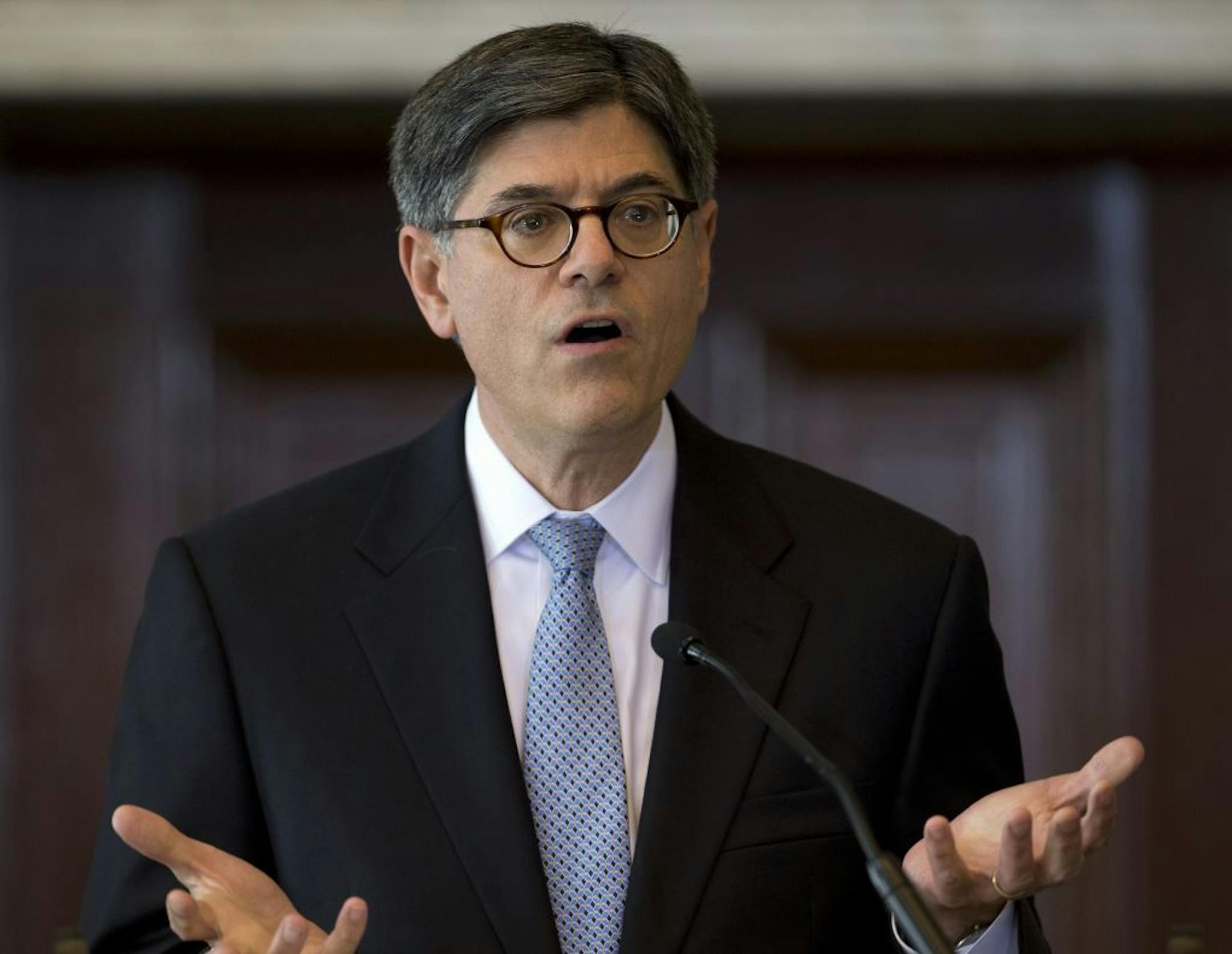
WASHINGTON – The U.S. Treasury Department will decide "in the very near future" if it has the power to take away some tax incentives to American corporations relocating to foreign countries, Treasury Secretary Jacob Lew said Monday.
Lew believes action is required now to control the rising number of U.S. corporations shifting their legal residences abroad to avoid taxes while keeping operational headquarters here. If that action is retroactive, as the Obama administration says it should be, it could make Medtronic Inc.'s pending $43 billion acquisition of Covidien untenable in its current form.
"The Treasury Department is completing an evaluation of what we can do to make these deals less economically appealing, and we plan to make a decision in the very near future," Lew said in a speech at a business tax reform seminar at the Urban Institute. "Any action we take will have a strong legal and policy basis, but will not be a substitute for meaningful legislation — it can only address part of the economics."
Lew did not name individual companies, but he described tactics being employed by Medtronic and others seeking to shift their legal residences overseas.
Fridley-based Medtronic wants to buy Dublin-based Covidien and move its legal residence to Ireland while keeping the bulk of its operations in Minnesota. The company says the purchase will help deliver more and better medical devices to customers. But it also will allow Medtronic to avoid $3.5 billion to $4.2 billion in U.S. taxes on foreign profits it now holds while letting the company reorganize to avoid many billions more in U.S. taxes on future profits.
Lew took direct aim at the practice in general.
"This may be legal," he noted, "but it is wrong, and our laws should change."
"By effectively renouncing their citizenship but remaining here, these companies are eroding America's corporate tax base," Lew explained. "That means all other taxpayers — including small businesses and hardworking Americans — will have to shoulder more of the responsibility of maintaining core public functions that everyone, particularly U.S. businesses, depends on. We are talking about our national defense, education, medical research, courts and vital infrastructure such as roads, bridges and airports. And if we allow the incentives to pursue these deals to remain in place, we run the risk of undoing the progress we have made to reduce our federal budget deficit."


