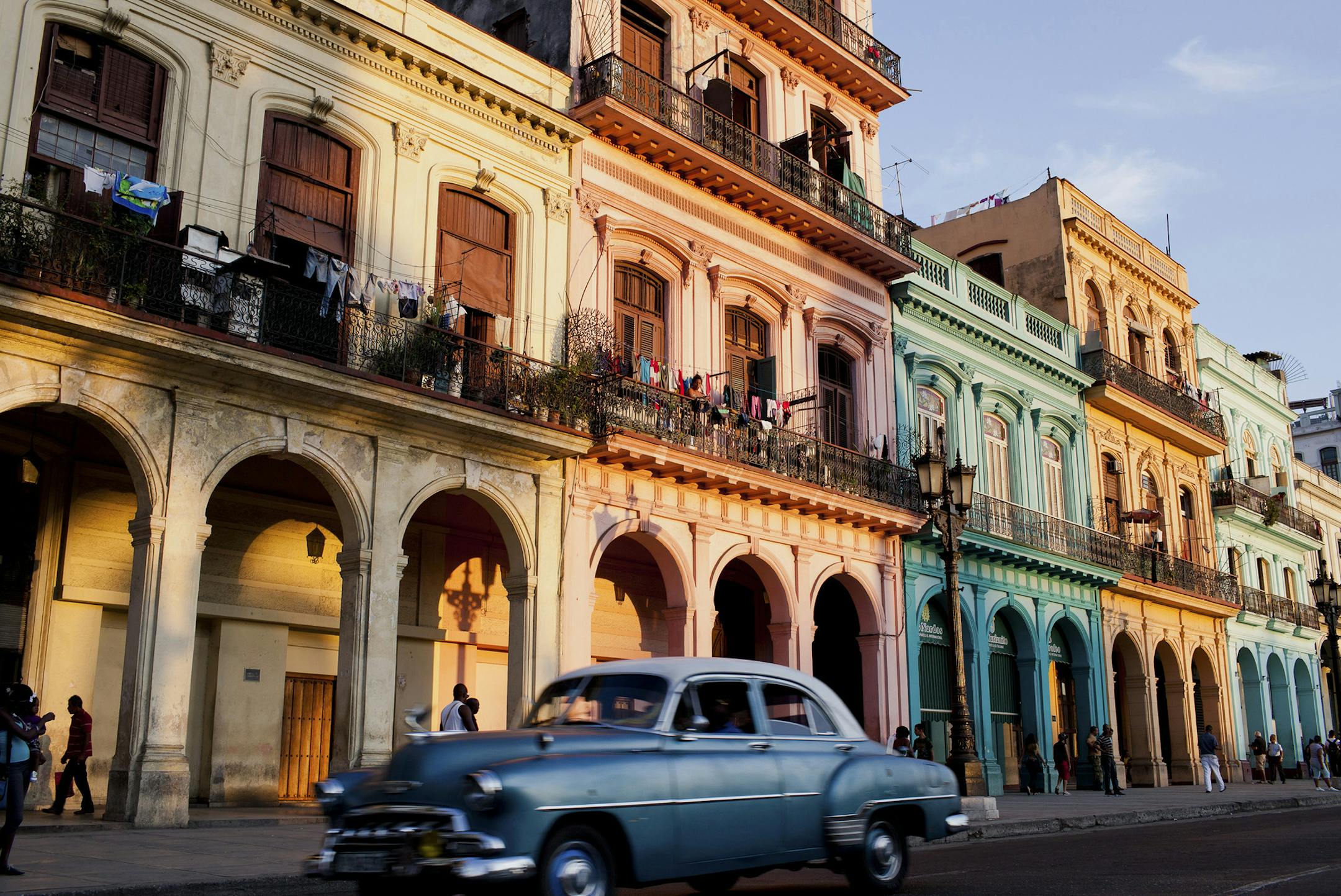
Young adults gathered outside the large front windows of the opulent Hotel Parque Central, in the cultural core of Old Havana. Many wore designer jeans. They raised their arms high. For a moment, I thought they were holding lit matches, rock-concert style. Then I moved close to see what glowed in their hands.
Smartphones.
Those teens and 20-somethings, whose entire lives were shaped by the United States' 54-year embargo, had come to access the hotel's Wi-Fi. They were using 21st-century technology to connect to a vast world, just as we giddy Americans arrived to devour the lost-in-time mysteries of their long forbidden island.
Of every marvelous, multicolored memory I could share about my September trip to Cuba, this one is my favorite. Even then — three months before President Obama's dramatic call to "chart a new course" through the re-establishment of diplomatic ties and the easing of sanctions — I sensed profound change.
During an eight-day "people-to-people" educational exchange, my group of 18 saw a nation in flux. That was evident as we walked beneath blocks-long scaffolding abutting architectural restoration projects. We tasted it at numerous privately owned restaurants, called paladares, springing up throughout Havana. We heard it straight from the Cuban people, gracious, welcoming and surprisingly candid about their political and economic frustrations.
The new rules, in part, allow U.S. citizens to travel to Cuba without a special government license, though they will still need to declare one of 12 purposes, including family visits, professional research, humanitarian projects and educational activities. U.S. travelers can bring back up to $400 in souvenirs, including $100 worth of rum and cigars, two no-nos before December.
But as exciting as Obama's announcement is, "Planet Cuba," as our captivating Cuban tour guide called it, will remain elusive, and expensive, at least until the country's infrastructure catches up with pent-up demand.
With the exception of high-end options, hotel rooms are limited. The bed-and-breakfast industry is promising, but young.