

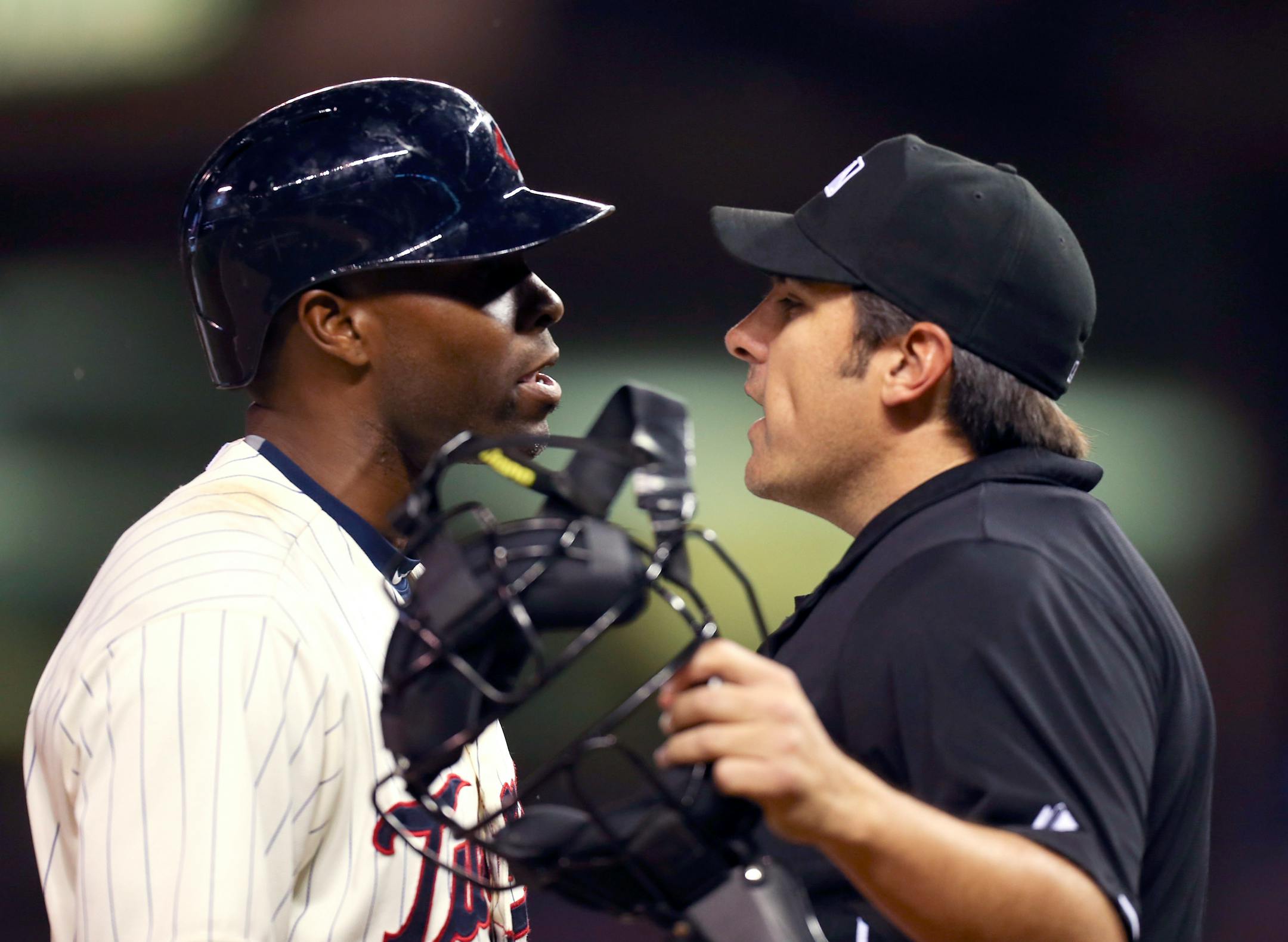
I wasn't at the ballpark on Wednesday night and thus didn't have a chance to talk to Torii Hunter directly after his comedic meltdown toward umpire Mark Ripperger.
There was a postgame quote that tells us what triggered this, and it wasn't some distorted view of leadership by Torii, some futile attempt to fire up his teammates.
It was this:
"I thought it was a ball,'' Hunter said. "The pitch before that, I thought it was a little up. He called it a strike, that's fine. I thought the last pitch he called a strike was revenge because of what I said about the pitch before that … because it [strike three] was definitely a ball.''
So that was the trigger:
It's wasn't that Rippeberger missed a pitch for strike three. It was that in Torii's mind, Rippeberger missed the pitch on purpose, to get back at Hunter for a complaint a moment earlier.
I don't think umpires intentionally put the screws to a player or a manager as often as was the case in former times … meaning the '70s, '80s and '90s. Umpires had such unilateral power then that they basically were allowed to be both vengeful and incompetent, with little risk to their jobs.
The union was broken in the late '90s, a new union took over 2000 and the umpires became subject to more intense monitoring from the Commissioner's Office.


