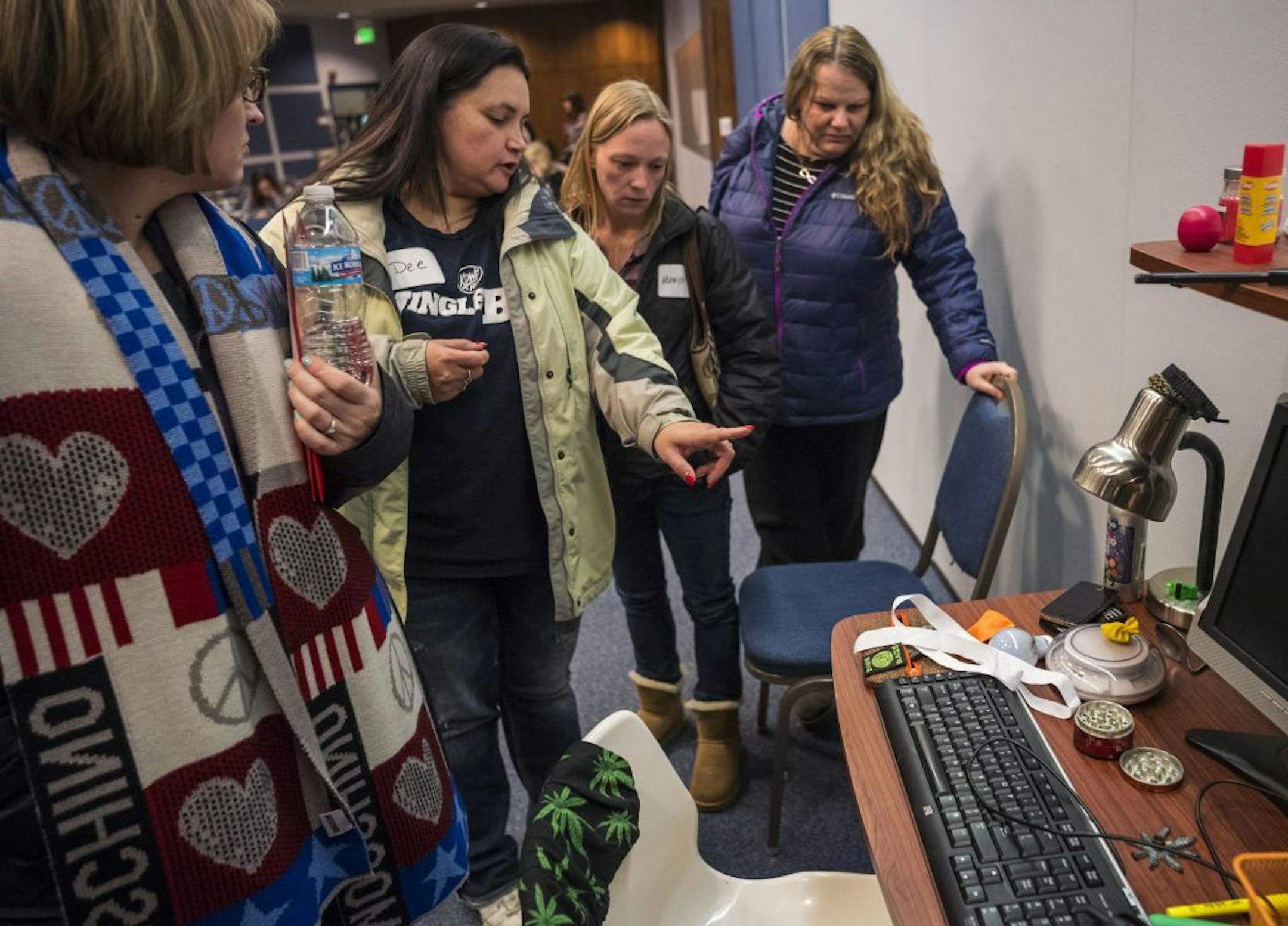
Dee Johnson tiptoed around a life-size model of a teenager's bedroom cluttered with hundreds of hidden warning signs of substance use, depression and eating disorders.
The exhibit revived a series of painful flashbacks. Her oldest daughter, now 21, smoked cigarettes and drank alcohol, eventually turning to heroin and other opioids. Johnson is now pushing to keep her two teen sons from following in their sister's path to addiction.
"We went through all of that with her," said Johnson, walking friends through the room strewn with fake soda cans, aluminum foil and alcohol-infused gummy bears. "I was clueless before, but now I want to be aware."
Johnson was among more than 75 parents who filled the Educational Service Center at the Anoka-Hennepin School District offices this week to learn about the Top Secret Project, a traveling exhibit created to help parents and professionals who work with teens detect warning signs of addiction or other destructive behaviors. The project, led by the Hazelden Betty Ford Foundation, Anoka County and the Minnesota Adult & Teen challenge, walked parents through 150 seemingly harmless items that could be used to stash illegal substances.
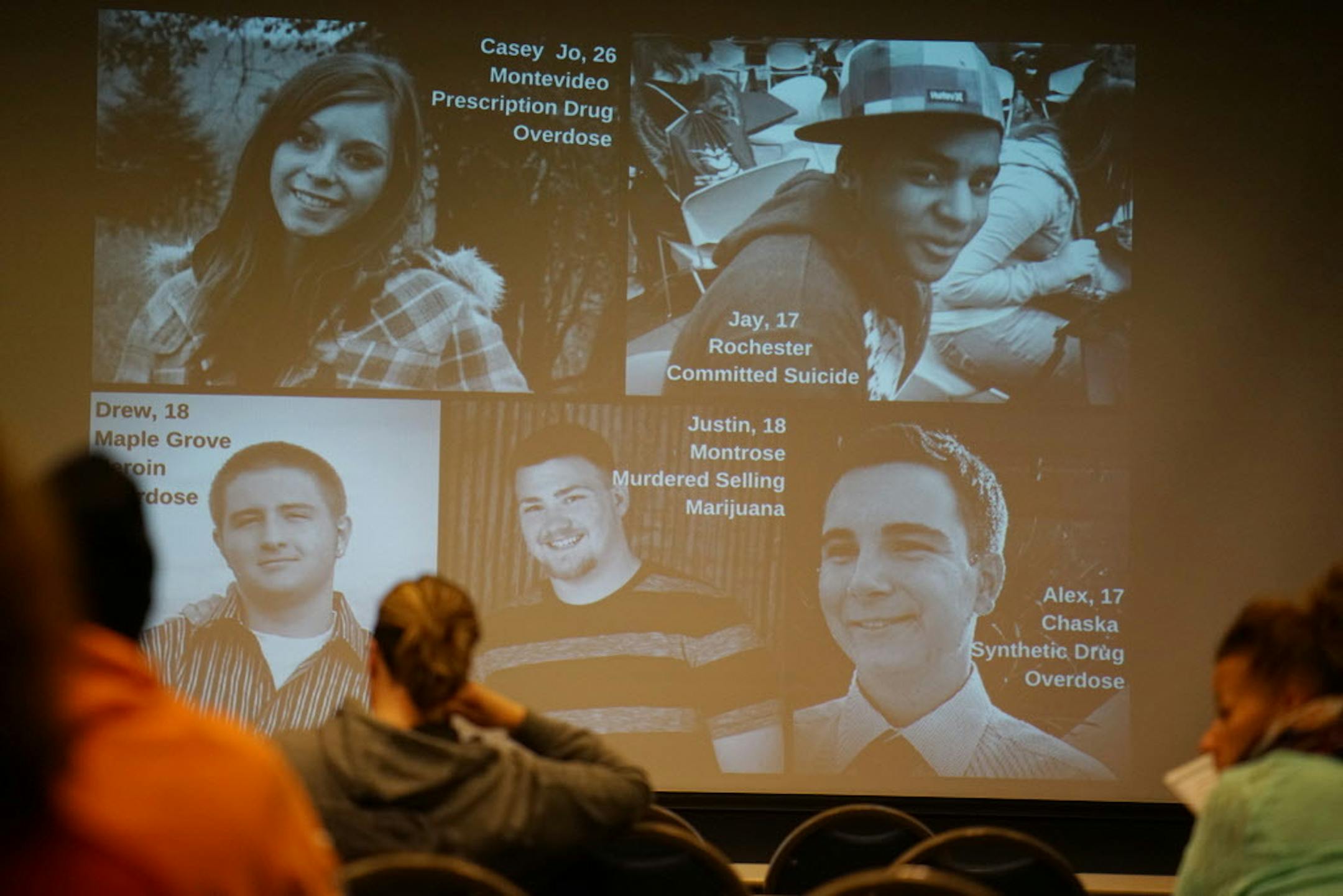
As rates of addiction, drug use and overdose fatalities climb locally and nationally, Anoka-Hennepin school officials and health advocates say it is crucial for parents to be aware of the warning signs of drug use and learn about ways to intervene, support and find treatment for their children.
This year, the school district launched a chemical health advisory committee to spread awareness of drug use and prevention. The district said a growing number of its students have reported using e-cigarettes, marijuana and alcohol.
"We know that teens who are using drugs, alcohol and prescription drugs are less likely to do well in school," said Jennifer Cherry, the district's director of student services and chairwoman of the chemical committee. "Our job as a school district is to make sure that we're addressing those issues and creating additional awareness so we can work with parents to curb that use."
At the exhibit, the drug paraphernalia included clothes with discreet compartments, a grinder, a scale, highlighters, an apple, a trumpet mouthpiece and cleaning materials. Health advocates emphasized the idea is to help prevent dangerous behavior before it escalates. They also urged parents to remain calm if they spot some of the items in their child's room. Instead, parents were encouraged to watch for behavioral changes and worsening academic performance.
![Angela Schutta who has a 12-year old boy in the school system, was stunned by all the facts about drug addiction that were presented.]the Top Secret Project and Minnesota Adult & Teen challenge programs, parents will look through 150 signs of alcohol and drug use in a teen's makeshift bedroom.Richard Tsong-Taatariiïrtsong-taatarii@startribune.com](https://arc.stimg.co/startribunemedia/GUT4N5VE4QW4ZFDYGOLUUPICSU.jpg?&w=1080)