

On the opening day of law school, I always counsel my first-year students never to support a law they are not willing to kill to enforce.
Usually, they greet this advice with something between skepticism and puzzlement, until I remind them that the police go armed to enforce the will of the state. And if you resist, they might kill you.
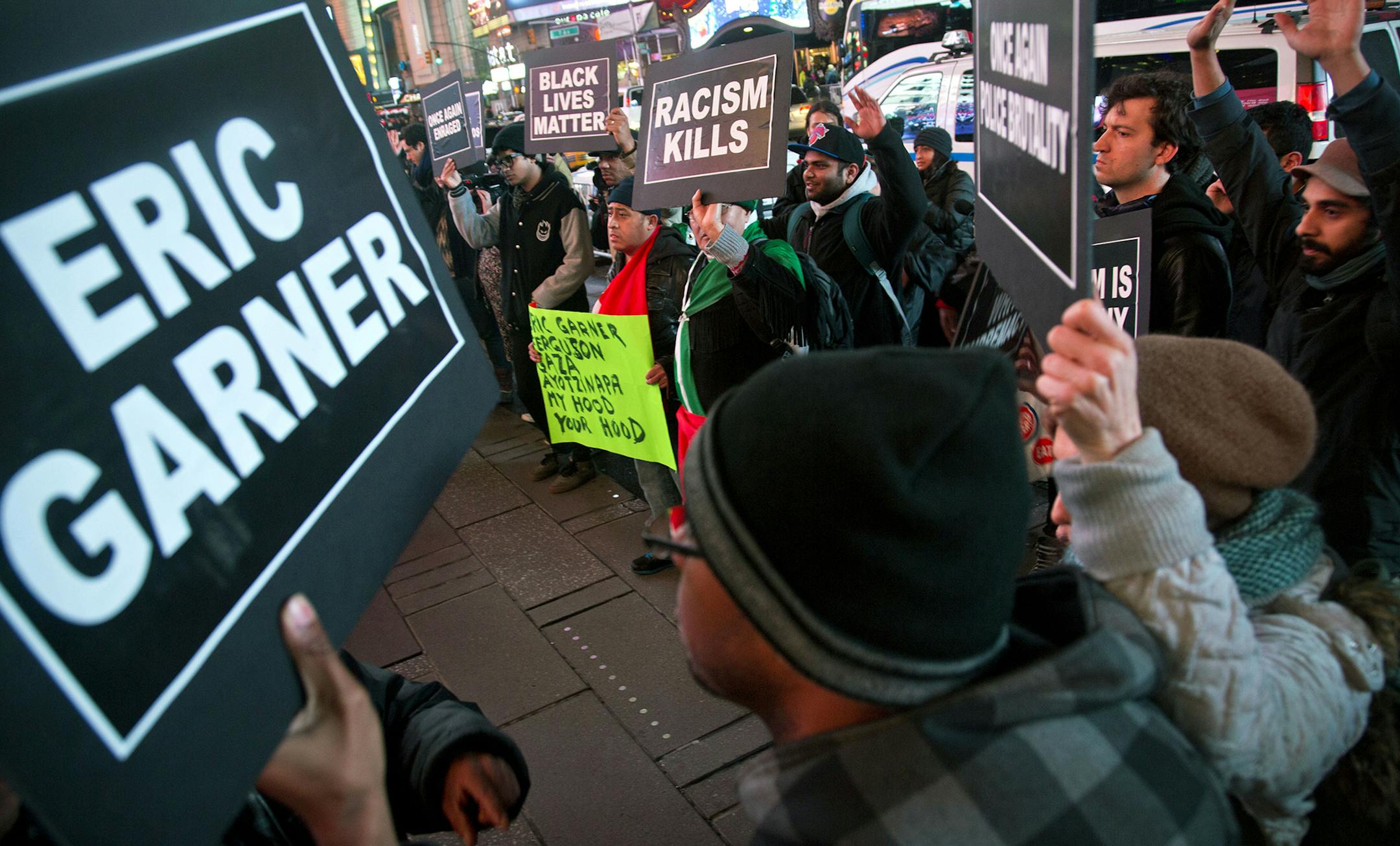
I wish this caution were only theoretical. It isn't. Whatever your view on the refusal of a New York City grand jury to indict the police officer whose chokehold apparently led to the death of Eric Garner, it's useful to remember the crime that Garner is alleged to have committed: He was selling individual cigarettes, or loosies, in violation of New York law.
The obvious racial dynamics of the case — the police officer, Daniel Pantaleo, is white; Garner was black — have sparked understandable outrage. But, at least among libertarians, so has the law that was being enforced. Wrote Nick Gillespie in the Daily Beast: "Clearly, something has gone horribly wrong when a man lies dead after being confronted for selling cigarettes to willing buyers." Republican U.S. Sen. Rand Paul of Kentucky, appearing on MSNBC, also blamed the statute: "Some politician put a tax of $5.85 on a pack of cigarettes, so they've driven cigarettes underground by making them so expensive."
The problem is actually broader. It's not just cigarette tax laws that can lead to the death of those the police seek to arrest. It's every law. Libertarians argue that we have far too many laws, and the Garner case suggests they're right. I often tell my students that there will never be a perfect technology of law enforcement and that, therefore, it is unavoidable that there will be situations where police err on the side of too much violence rather than too little. Better training won't lead to perfection. But fewer laws would mean fewer opportunities for official violence to get out of hand.
The legal scholar Douglas Husak, in his excellent 2009 book "Overcriminalization: The Limits of the Criminal Law," points out that federal law alone includes more than 3,000 crimes, fewer than half of which are found in the Federal Criminal Code. The rest are scattered through other statutes. A citizen who wants to abide by the law has no easy way to find out what the law actually is — a violation of the traditional principle that the state cannot punish without fair notice.
In addition, Husak writes, an astonishing 300,000 or more federal regulations may be enforceable through criminal punishment in the discretion of an administrative agency. Nobody knows the number for sure.
Husak estimates that more than 70 percent of American adults have committed a crime that could lead to imprisonment. He quotes the legal scholar William Stuntz to the effect that we are moving toward "a world in which the law on the books makes everyone a felon." Too dramatic? Husak points to studies suggesting that more than half of young people download music illegally from the Internet. That has been a federal crime for almost 20 years. These kids, in theory, could all go to prison.


