
Those are fightin' words: Cancer patients take issue with likening disease to war

Terms like "winning" and "losing" can rub patients' families the wrong way.

Chicago Tribune
March 16, 2019 at 2:24AM
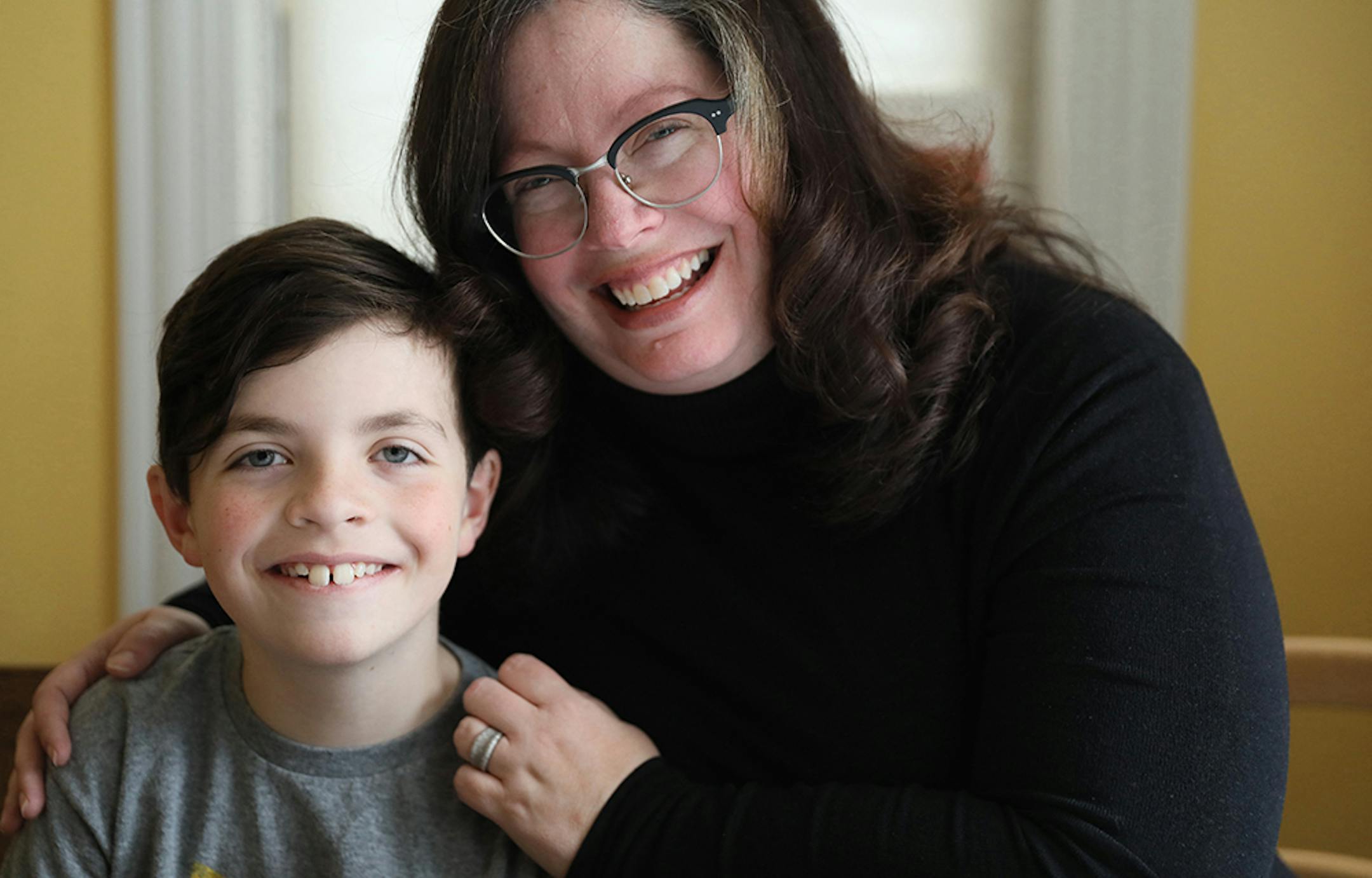
Jay Quirke Hornik, left, 9, poses with his mother Sheila Quirke on Friday, April 13, 2018 in their Chicago home. They planned to travel together Sunday, April 15, 2018 to Washington D.C. for training in a push for more cancer research funding. Sheila's daughter Donna died at age 4 from cancer. (Chris Walker/Chicago Tribune/TNS)
Sheila Quirke with son Jay Quirke Hornik in their Chicago home in 2018. Quirke's 4-year-old daughter died of cancer. “I don’t understand the war metaphors and how they came to be attached to people given a diagnosis of cancer,” she said. “It assumes a modicum of control, which is false.” (Marci Schmitt — TNS/The Minnesota Star Tribune)

When Alex Trebek announced that he has stage 4 pancreatic cancer, he vowed, "I'm going to fight this." He certainly wasn't trying to irritate the families of other cancer patients, but that's what he ended up doing.

It's the sort of language we frequently hear used about cancer — fight, battle, defeat, win, lose. Trebek has plenty of company in employing such terminology; the late Sen. John McCain announced his diagnosis the same way. But it doesn't always sit well with families whose lives have been forever changed by the disease.

Sheila Quirke's 4-year-old daughter, Donna, died from cancer. So did Quirke's mom and dad. The Chicago resident advocates for a different set of words around the disease.

"I don't understand the war metaphors and how they came to be attached to people given a diagnosis of cancer," she said. "It assumes a modicum of control, which is false."

She made it clear that she wasn't criticizing Trebek. She tweeted: "I wish the best for Alex, a man of great charm and presence. [But] I am struck, yet again, by the language in which we speak of cancer and its treatment. 'Beating' and 'winning,' applied to disease, frames death as losing. We need better words."

In a society that lauds winners and mocks losers, she is worried about the implications of such labels.

"People who die from their cancer diagnosis are not weak, have not lost, are not losers," she said. "People who survive their cancer diagnosis are not winners who beat a mighty foe."

Survivors, she said, have cells that responded to treatment and intervention.

"That is a hopeful and wonderful and sometimes mysterious thing, but does it make them stronger, more deserving or victorious than those whose cells did not respond in a preferred way?" she said. "No, it makes them lucky. I wish every cancer patient had cells that responded to available treatments. Sadly, it doesn't work that way."

Quirke admits that early in Donna's treatment, she took a battle approach.

"I, myself, took to calling her a warrior," she said. "I needed to see her that way. I needed to believe she had superpowers that could defeat what was happening inside her body. It was my projection onto her that reassured me she would survive her cancer.

"Then one day, after some procedure or other, seeing her so vulnerable and just, tiny, I realized she was no warrior. She was a little girl being treated for cancer that did not seem to be responding to anything. I could see her for who she was, not who I needed her to be. She fought no battle, she had no weapons, she did not lose."

Quirke challenges anyone who writes or talks about cancer to think about their language.

"Allow cancer patients to define themselves, always, but stop contributing to a paradigm of war for this specific disease," she said. "Never refer to someone as having 'lost their battle' with cancer. Never say someone 'fought hard,' only to 'succumb.' Never suggest a cancer patient has the ability to 'beat' their disease."

Quirke urges us to think about how our language lands on the ears of people living without their children, siblings, parents, friends who died from cancer.

"The war metaphor serves survivors, but not those who die from their cancer diagnosis, nor those who love them," she said.

about the writer

about the writer

Heidi Stevens