

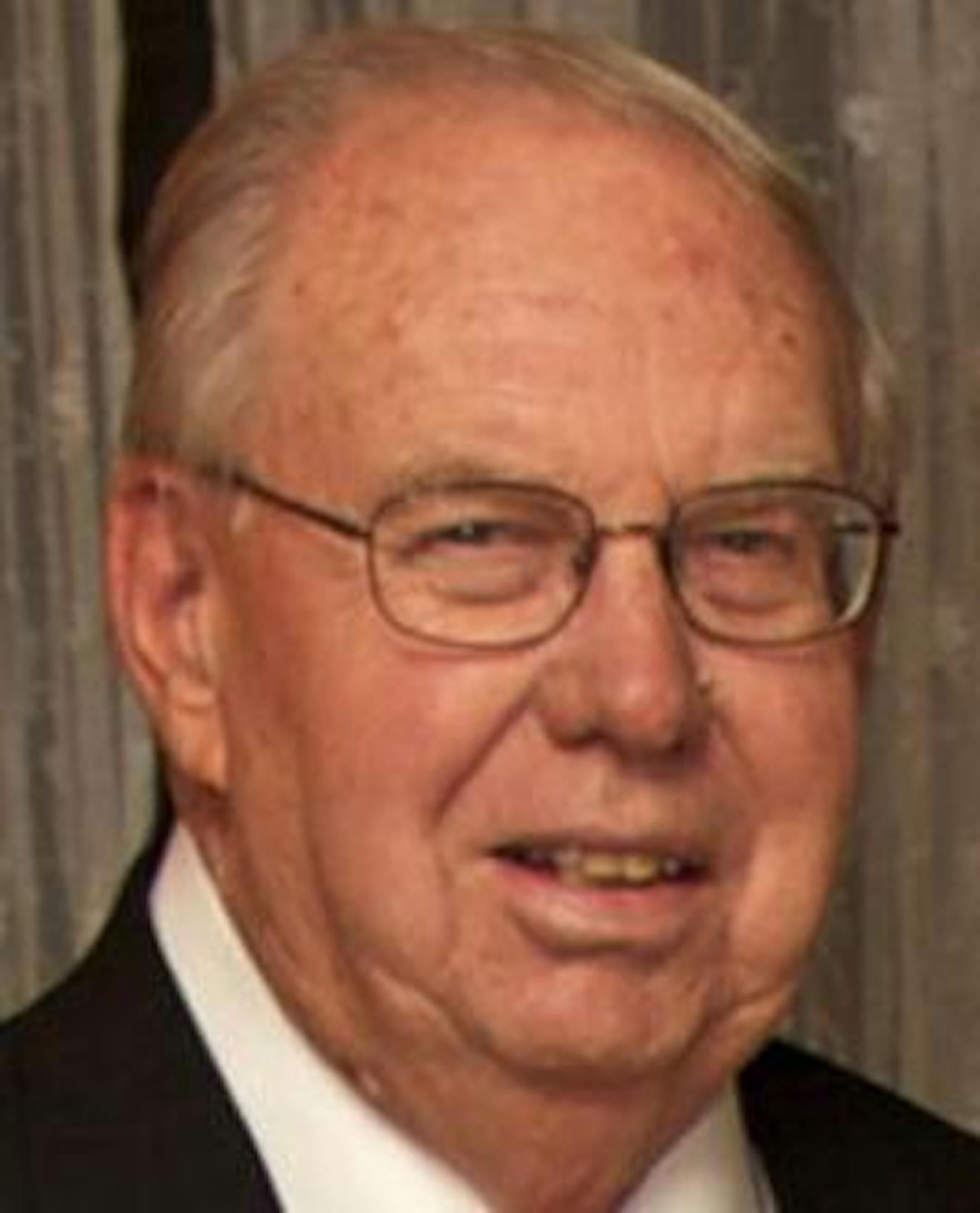
Thomas Thompson's mark can be felt all around downtown Minneapolis, from the Nicollet Mall to the interconnected skyway system.
As Minneapolis' first city coordinator appointed by the City Council, Thompson served as the "city's own master builder," promoting the creation of many of the landmarks that define the City of Lakes. The role earned Thompson widespread admiration but also exposed him to public flak.
Thompson died Jan. 2 at age 94.
"He truly loved and was dedicated to the city of Minneapolis and its positive and forward movement not just in downtown but throughout the neighborhoods," said Bob Viking, who used to work with Thompson at the city.
Thomas A. Thompson, known simply as "Tommy" to most, was born Feb. 1, 1925. He was raised in Lakefield, Minn., a small farming community about two hours southwest of the Twin Cities. His father was a prominent businessman and civic leader, and growing up, Thompson worked at his dad's clothing store. As a child, Thompson enjoyed hunting, fishing and camping. In high school, he participated in band and football. Thompson met his future wife of 70 years, LaVonne, when her family moved in across the street.
At 17, Thompson joined the Navy. He served as a repair officer in the Philippines on the USS Proserpine during WWII. After the war, Thompson married LaVonne, and they settled in Minneapolis, where they would raise four children.
Thompson graduated from the University of Minnesota in 1948 as a civil engineer. The next year, he joined the city's water department as a junior engineer. He would go on to become an assistant traffic engineer and city engineer before he was chosen as city coordinator in 1967.
Thompson's ascension to the city coordinator role came with many changes to the office that augmented the position's power. The 1967 Legislature had made the office appointive when it previously had been a civil service job, with Thompson becoming the first coordinator appointed by the City Council. Under Thompson's leadership, the office grew from five people to become the city's largest department with about 400 employees. The office was responsible for planning, development, research of city programs, inspections and some social programs. One of the coordinator's main tasks was preparing the city's budget proposal.


