

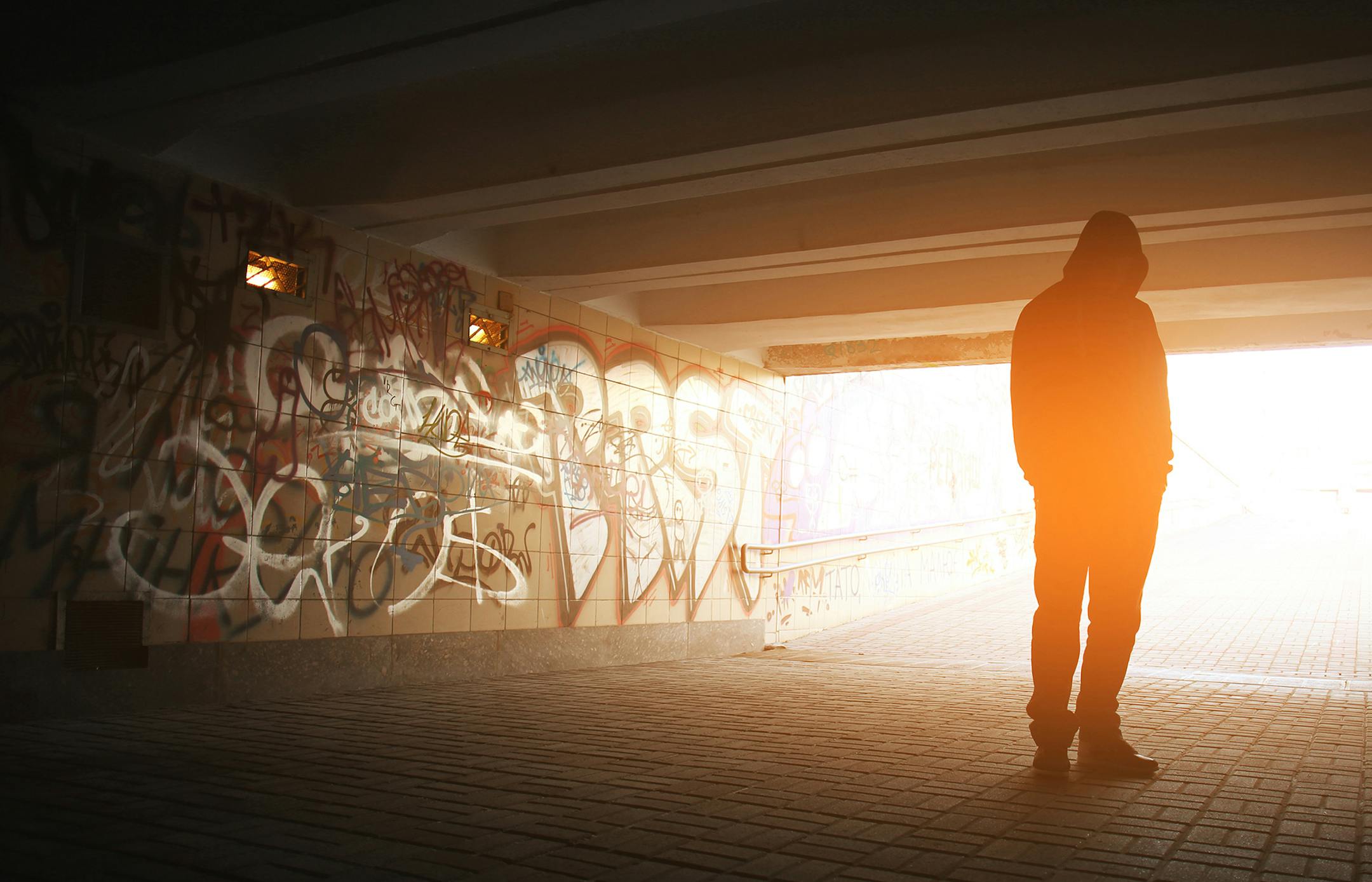
At the lowest point in my life, I almost did the most horrible thing imaginable.
I grew up in a chaotic and violent household. My mother tried to take care of my brother and me, but she too was a victim of my father, a violent and evil man.
My stepfather was not much better, replacing outright horror with drugs and crime. At 14, I was kicked out of my house for brawling with him. By 11th grade, I was a quiet, sensitive, obese social outcast with an affinity for poetry and comic books. I had no home and often slept outdoors; I felt alone and unloved.
The isolation and bullying eventually became unbearable, and at 16, having already dropped out of my Denver high school, I tried to reach out for help. I went to a mental health clinic I'd passed to discuss my anger and my suicidal thoughts. I had no idea whether it was the right place to go. I knew only that the sign said "mental health," and I needed some help on that front.
I met with a very young "care provider" who did not seem trained to identify my problems and did not agree that I needed inpatient care. She sent me home.
Facing utter hopelessness, I snapped. I tried to get a gun; I wanted to take out as many people as possible — people who had tortured or ignored me — and then kill myself.
It was 1997, and I had two possible locations mapped out: my school and a mall food court. I wanted to be heard. The abuse I'd suffered had closed me off, and I wanted to feel an emotion other than pain. I wanted to feel, for once, like I was in control, even if that meant spreading destruction and death.
But two things happened that stopped me. First, I couldn't quickly get a gun. The gun store seemed out of the question, because I was under 18 and raised with a deep fear of authority, thanks to frequent evictions, drug use at home and my own truancy.


