

For all of the advanced statistics and in-depth video analysis available to us, no one has devised a simple, one-stop-shopping destination for evaluating quarterbacks.
In baseball, WAR offers an imperfect but relevant snapshot of a player's overall value. To judge an NFL quarterback, you need to study basic statistics, advanced statistics and new-age statistics while understanding that play-calling, the quality of teammates and opposing defenses, coaching, nagging injuries, NFL rules and the way they are interpreted, running and scrambling ability and situational play all can skew performance and judgment.
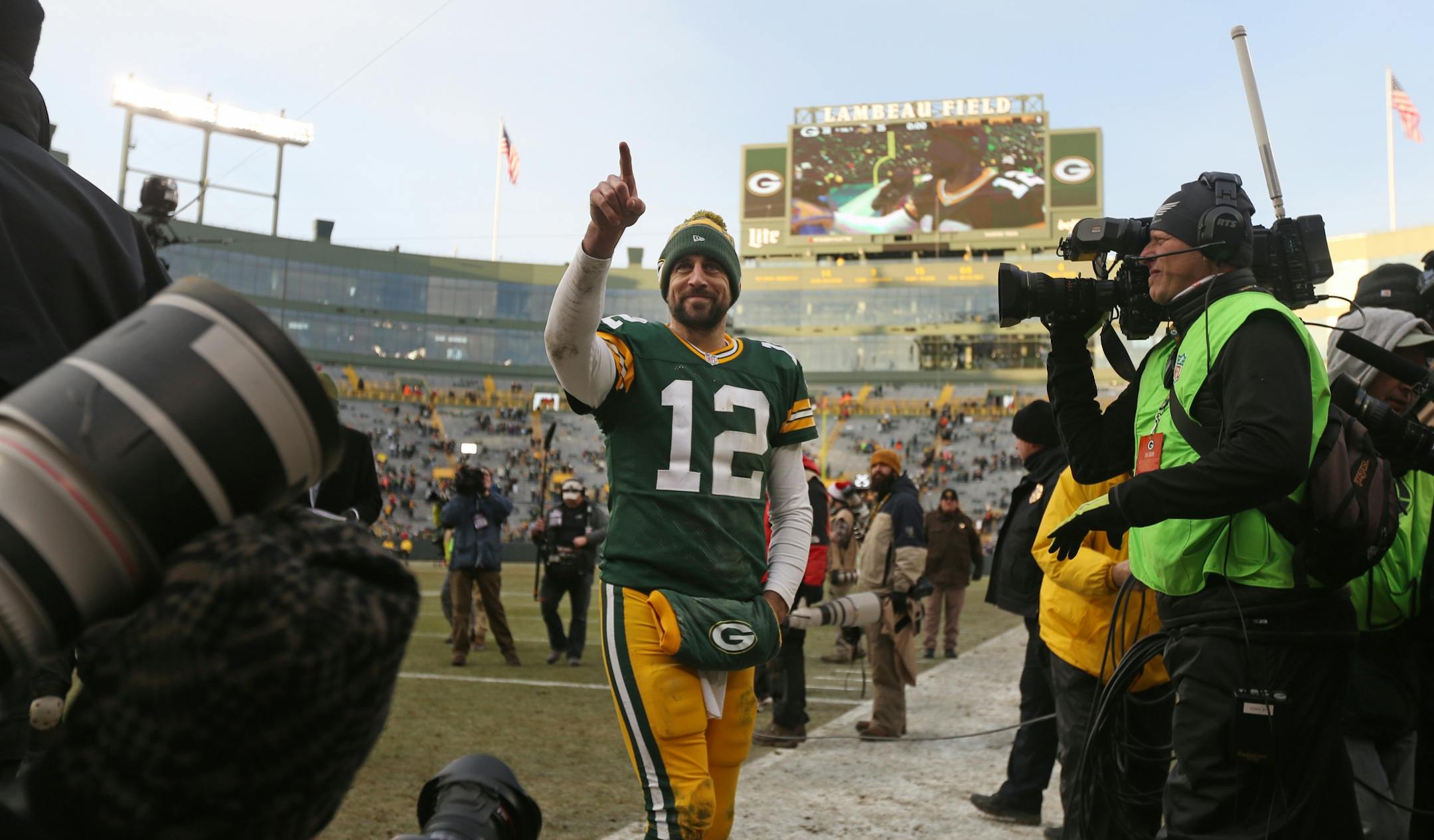
On Sunday, Aaron Rodgers will play at U.S. Bank Stadium. There is no sure way to accurately compare him to Otto Graham, Johnny Unitas, Joe Montana or even Tom Brady. There is no logical way to compare him to Jim Brown, Jerry Rice, Lawrence Taylor or Dick Butkus.
But if you combine statistical analysis with the eye test, you can find a path to calling Rodgers the greatest quarterback in NFL history. And if he's the greatest quarterback in NFL history, that would make him the most valuable player in league history, and perhaps the greatest football player ever.
Brady is the most accomplished quarterback in NFL history, if you combine regular-season efficiency and postseason achievements. He has won the most Super Bowls (five), has been Super Bowl MVP four times, has won two league MVP awards, and has thrived whether playing with such greats as Randy Moss or with undrafted free agents.
Peyton Manning is the greatest regular-season quarterback in history. His statistical profile is unparalleled. His postseason performances were disappointing.
Brett Favre was even more durable and had a stronger arm, but he made far more mistakes than Rodgers.
What statistics and eyeballs tell us is that Rodgers is better than Brady. Rodgers has won "just'' one Super Bowl, but this is where context matters.


