

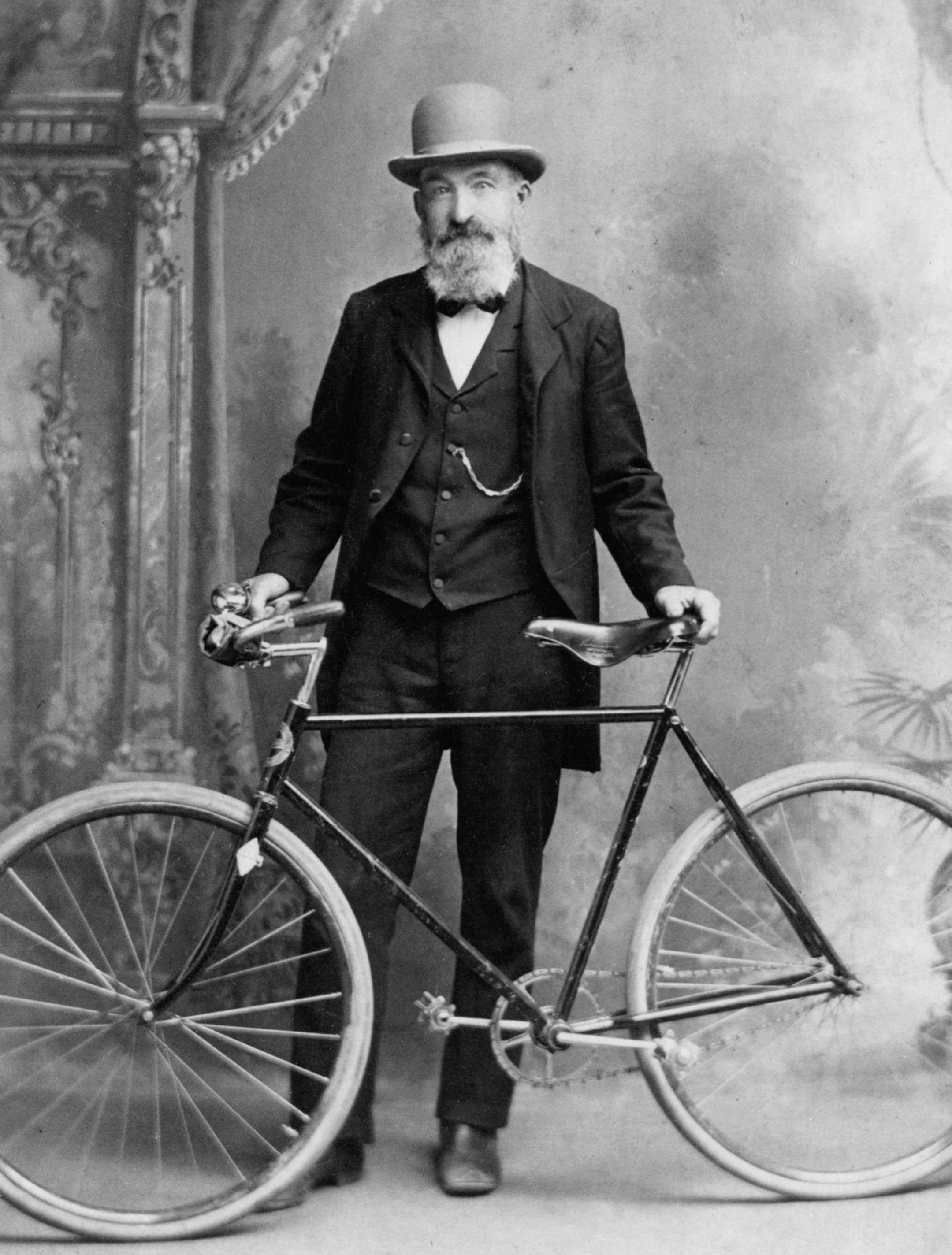
The framed photograph on the mantel shows an older-but-dashing man wearing a derby, three-piece suit and bow tie — the chain from a pocket watch dangling from his vest's button hole.
Ebenezer Hodsdon, the last pioneer farmer along a Minneapolis city lake, was 81 when the photo was taken in 1902. He doesn't look that old, perhaps because he's firmly gripping the handlebar and seat of his beloved bicycle.
"The cool bearded guy with the bike looks down on us when we eat," says Steffanie Musich, a Minneapolis Park Board member who lives across the street from what is now called Lake Nokomis.
When visitors ask about the guy with the bike on the mantel, Musich admits, "I get really animated — you have no idea."
She first ran across Hodsdon's picture in the Minneapolis Collection at the downtown Central Library a few years ago while researching the history of city lakes. That led to an online purchase of a hard-to-find family history, written in 1963 by Hodsdon's granddaughter, Beatrice Morosco.
Turns out, Hodsdon was born on Maine's rocky coast in 1820 and sailed the high seas on trading voyages between ages 14 and 26 — twice going around South America's Cape Horn. He married Jane Wardwell in 1845 and she had other ideas.
"Grandma Jane insisted he settle down as a land lubber," Morosco wrote in her book "The restless ones: a family history."
Giving up the mast for the pulpit, Hodsdon became a preacher. In the 1850s, his aging uncle Isaac — who fought in the Revolutionary War — urged him to seek his fortune in the Minnesota Territory. Treaties with the Dakota people had opened up land for white settlers west of the Mississippi and an ad in a Maine newspaper boasted " … the climate is as warm as California and cattle can graze all winter."


