

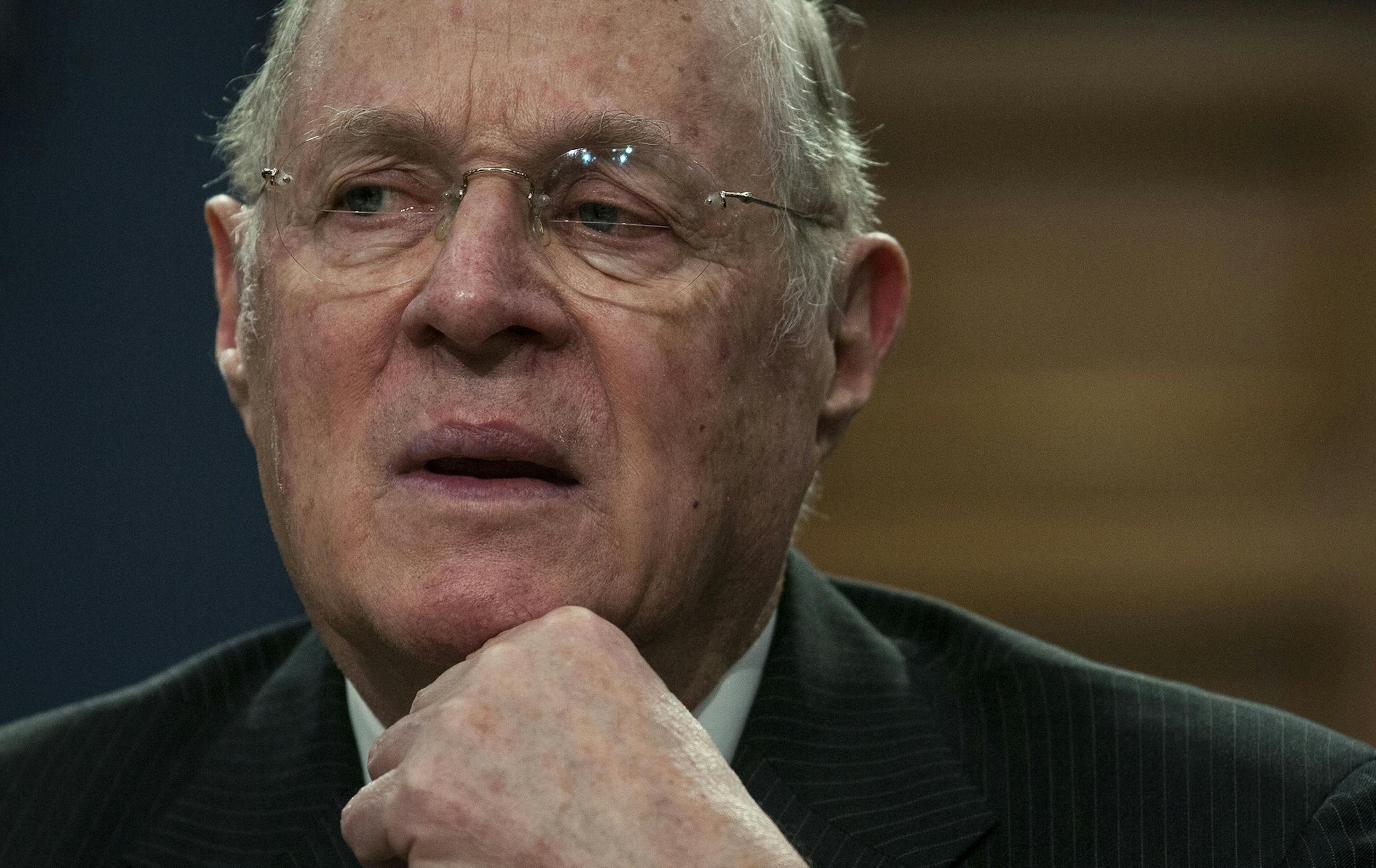
In a powerful opinion that will become part of Justice Anthony Kennedy's growing liberal legacy, the Supreme Court held in a split opinion Monday that a jury's verdict may be reopened if there is evidence of racial bias by the jurors. The decision confronted a legal contradiction between the interest in treating jury verdicts as a black box not to be opened and the imperative of racial justice — and opted for the latter.
The decision is unusually honest and direct about how race in America has historically tainted the fairness of the judicial system.
Peña-Rodriguez v. Colorado stemmed from a jury's conviction of Miguel Angel Peña-Rodriguez of sexually assaulting two teenage sisters. After the trial was over and the verdict submitted, two jurors signed sworn affidavits stating that one of the jurors had told the others that he was a former law enforcement officer and that in his experience, "Mexican men had a bravado that caused them to believe they could do whatever they wanted with women." For good measure, the juror said that "nine times out of ten Mexican men were guilty of being aggressive toward women and young girls." And he concluded that "I think he did it because he's Mexican and Mexican men take whatever they want."
But the evidence of racial bias wasn't the end of the question, because of a common-law rule going back to the 18th century that says evidence of juror misconduct can't come from the testimony of jurors themselves.
That rule is generally pretty useful. It assures that once the verdict has been reached, its finality is respected throughout the legal system.
Practically, lawyers never quite want to know why a jury did what it did — the lawyers are afraid the rationale may be too far from what the law requires, which would upset the apple cart of the judicial system.
Indeed, jury verdicts are often treated a bit mystically by the law. It's almost as if they descend from the magic of trial by ordeal — which in a sense, they do.
To his credit, Kennedy in his opinion for five justices didn't play down the importance of finality. Instead he acknowledged that the case "lies at the intersection" between the finality rule and "decisions seeking to eliminate racial bias in the jury system."


