

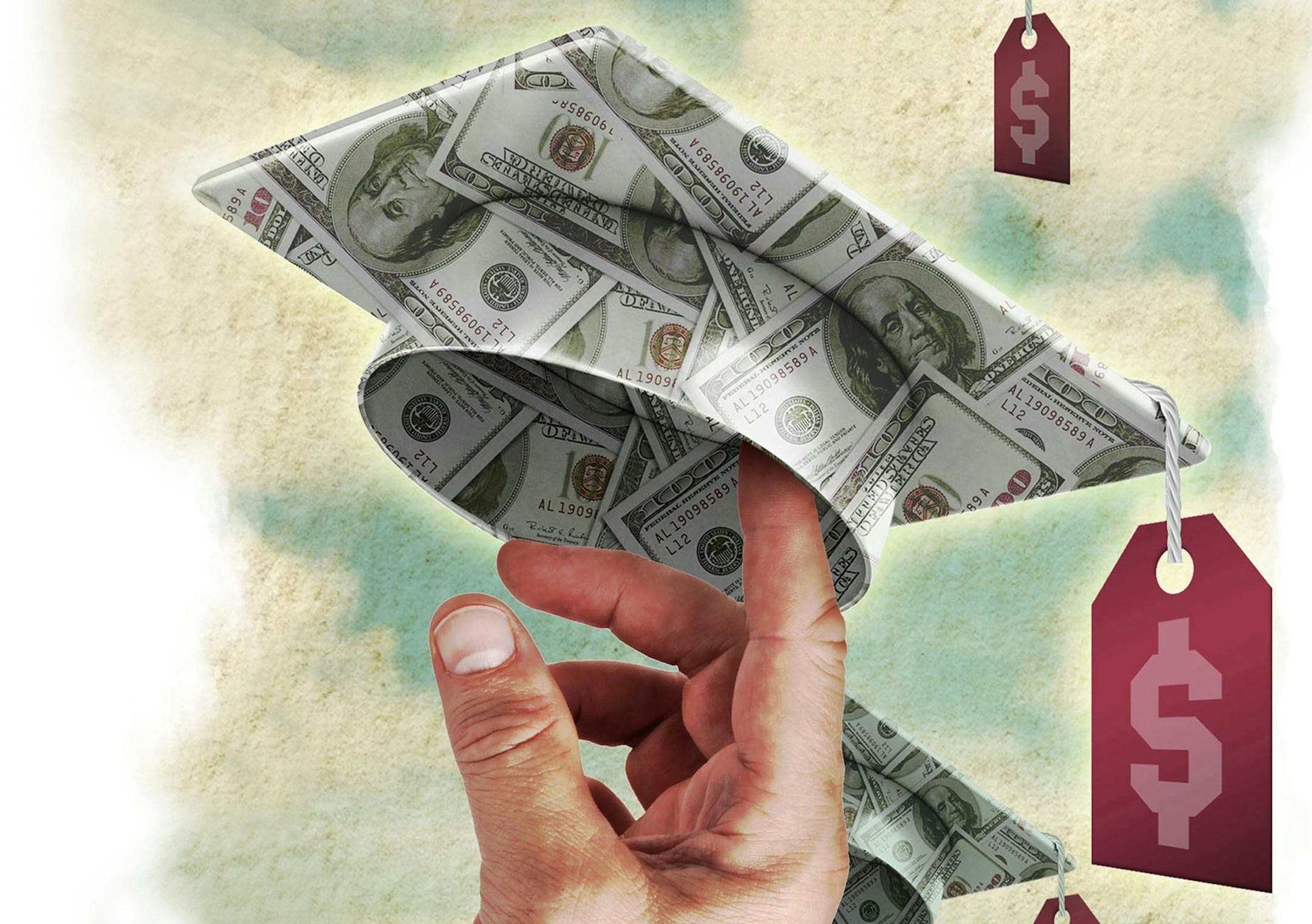
We must help our students avoid racking up so much school debt. Many students come to my office feeling scared and hopeless, begging me to help them with their mountain of debt, because they have graduated without finding a job or are working at such low-paying jobs that they are unable to make payments.
Let's call them "students in need." Their families are unable to financially assist them, forcing them to borrow unbearable amounts in student loans.
For instance, several students who had attended a for-profit school came to me for help. They had been told a few months before graduation that they would not, in fact, be graduating. They were left with more than $100,000 in debt and no prospect of employment in the field they had so diligently studied for. Another student was unable to pass the bar exam despite several attempts, leaving $150,000 of debt and no prospect of a profession producing a commensurate income.
Furthermore, student loans are never dischargeable in bankruptcy except in cases of severe physical hardship. This is abusive.
Our country has done more to help our failing big businesses, big banks and defaulting homeowners than we have done for young people who don't understand the significant financial ramifications of borrowing for their college tuition.
Let's review the facts. As of 2013, a student who chose to attend four years in the University of Minnesota undergraduate program would pay $101,496 ($25,374 per year) for tuition, fees, books, personal miscellaneous expenses, and room and board. Add another three years of law school at $176,338 for a total of $277,834 over seven years.
This is like a mortgage without a house.
If this student amortized a $277,834 debt over 25 years at 6.5 percent interest, the monthly payment would be $1,875 — $22,500 annually. Many new graduates are not making the income that would allow them to pay such student loans back, forcing many to use income-based repayment options or chronic deferment, causing interest to accrue exponentially.


