

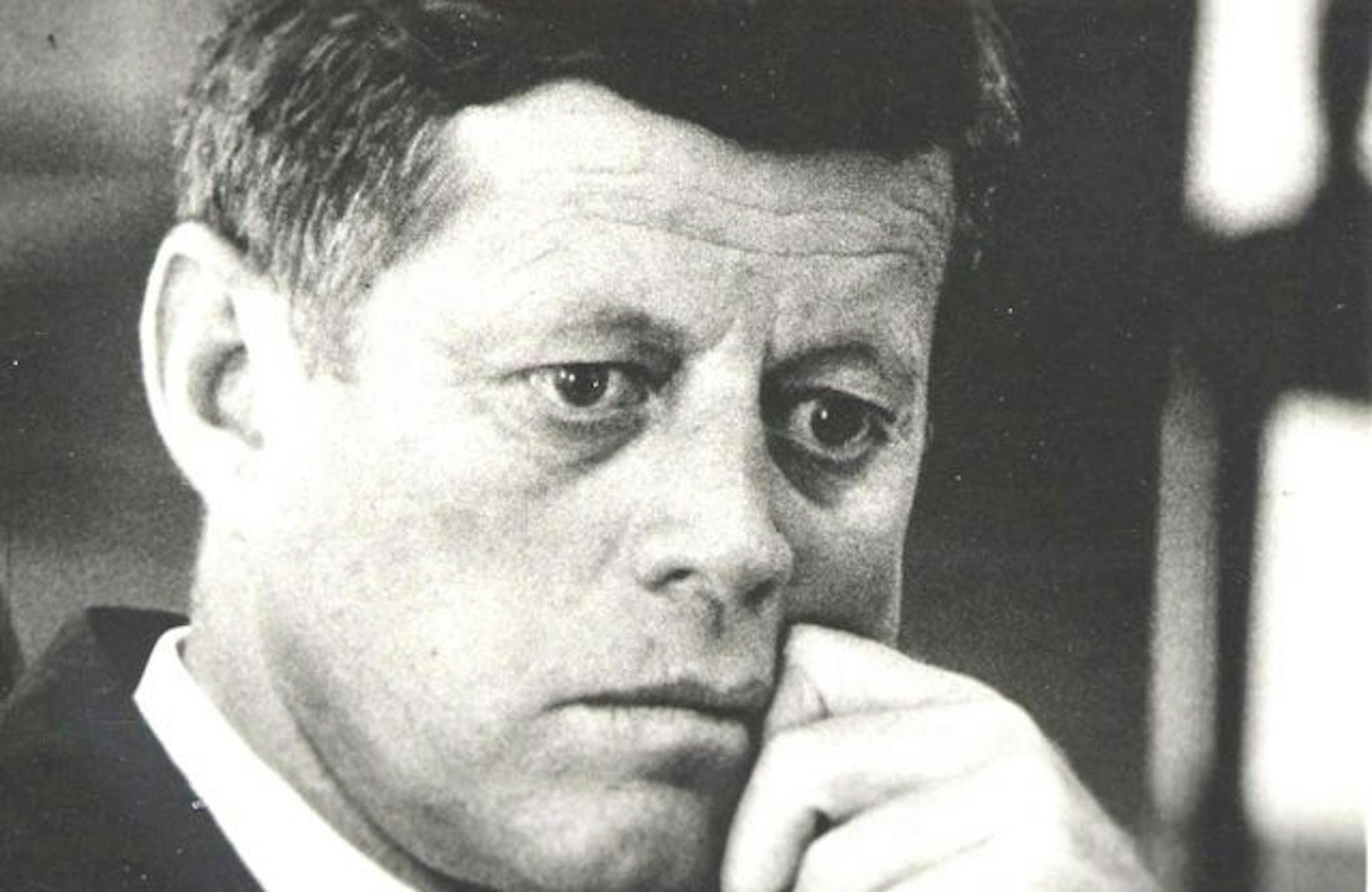
Fifty one years after a young president from Massachusetts delivered a stirring inaugural address on a frigid day in the nation's capital, contemporary politicians still aspire to the Kennedy mystique.
It's easy to see why. John Fitzgerald Kennedy was first in a dawning media age to make a profession dominated by an old guard of aging men ... well, cool.
The adoration for JFK was not a matter of being drawn to an ideological soulmate (Kennedy's convictions were always elusive -- he once told a journalist he didn't read a story about Barry Goldwater because he wasn't concerned with challengers "who say they would rather be right than be president") nor was it the homespun attraction to an elderly father figure. Kennedy had the enigma of star quality, with just a touch of danger.
So it's not surprising that as the years have passed since the tragedy in Dallas, both ends of the political spectrum have claimed the martyred 35th president as their own.
The right likes to point to the tax-cutting anticommunist as a model for the mainstream Democrat before the 1960s got a hold of the party. But Kennedy, of course, was the '60s.
Though Byron (Whizzer) White was indeed mainstream, JFK's appointment of Arthur Goldberg helped put the Supreme Court on a collision course with traditional precedent, especially in the arena of newfound "privacy rights" and abortion.
Even his much touted supply-side tax cut (passed posthumously) for the rich was, in the mind of its architect, Keynesianism in drag. After the president's famous speech to the conservative Economic Club of New York, Kennedy told an aide, "I gave them straight Keynes and Heller, and they loved it." What the administration loved about it was its deficit spending, not the beneficial effects of cutting taxes on the margin.
Kennedy had long championed higher federal spending, especially on health care, and his 1962 executive order establishing collective bargaining "rights" for federal employees was pure political pandering and has as much to do with today's bloated bureaucracy as anything.


