

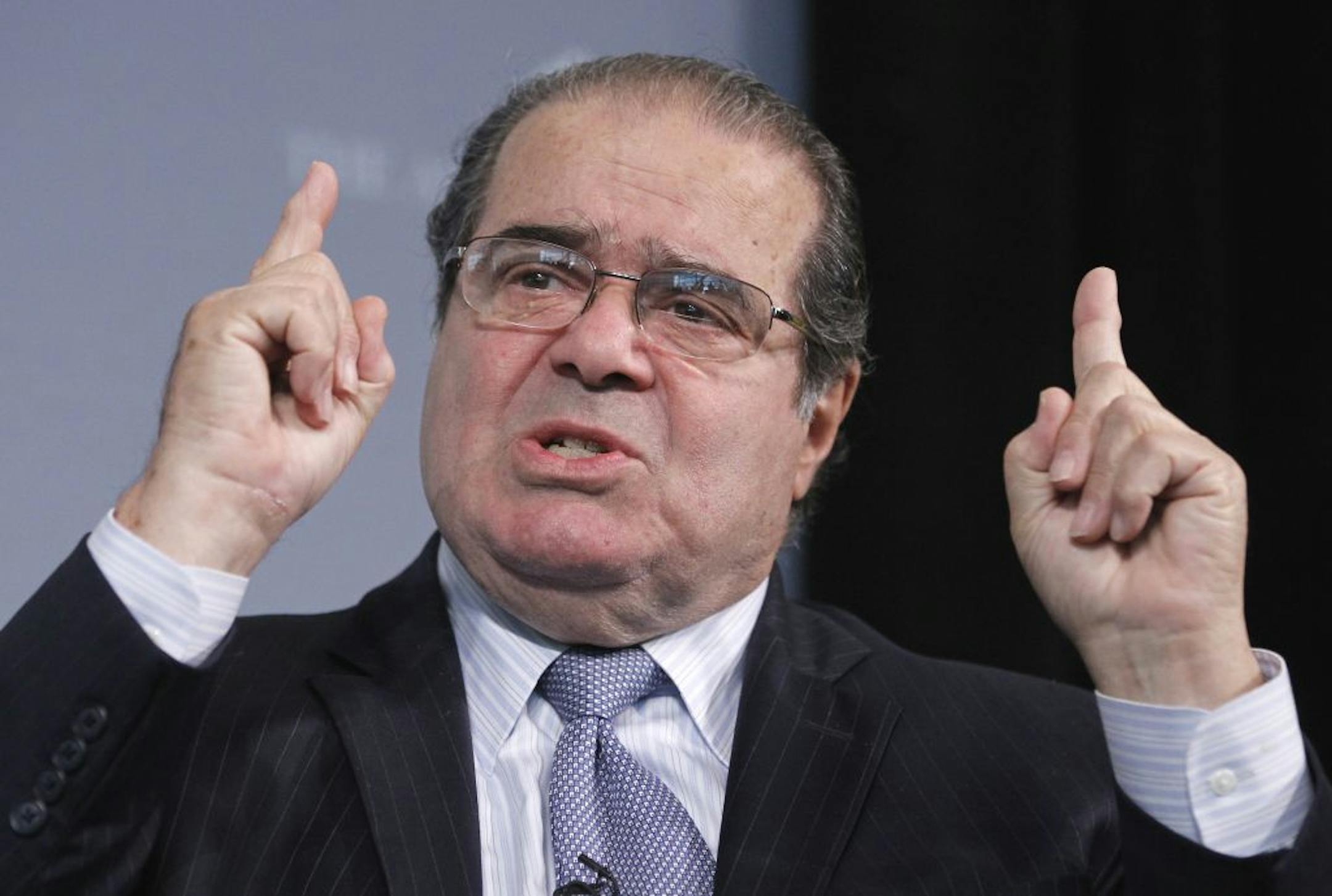
We are all overloaded these days with well-intended articles about the meaning and scope of the Second Amendment. However, most don't bother to examine the Supreme Court's opinion in District of Columbia vs. Heller, the 2008 case that set forth the controlling principles.
In the first place, the case squarely holds that the amendment protects an individual right to possess a firearm unconnected with service in a militia, and to use that firearm for traditionally lawful purposes such as self-defense within the home.
This makes irrelevant discussions about what constitutes a "militia" or what uses are permitted to protect a "free state." The case invalidated a District of Columbia ordinance restricting the possession of handguns.
The holding is based on the idea that the handgun is "the most preferred firearm in the nation to 'keep' and use for the protection of one's home and family."
However, if we read Justice Antonin Scalia's opinion, we find that Second Amendment rights are not unlimited. Here's what the court said:
"Like most rights, the right secured by the Second Amendment is not unlimited. From Blackstone through the 19th-century cases, commentators and courts routinely explained that the right was not a right to keep and carry any weapon whatsoever in any manner whatsoever, and for whatever purpose. … Although we do not undertake an exhaustive historical analysis today of the full scope of the Second Amendment, nothing in our opinion should be taken to cast doubt on long-standing prohibitions on the possession of firearms by felons and the mentally ill, or laws forbidding the carrying of arms in sensitive places such as schools and government buildings, or laws imposing conditions and qualifications on the commercial sale of arms.
"We also recognize another important limitation on the right to keep and carry arms. Miller [a 1939 ruling allowing restrictions upon sawed-off shotguns] said, as we have explained, that the sorts of weapons protected were those in common use at the time."
Those who contend that the amendment prohibits background checks, or control of military-type weapons, just haven't read the case.


